
This user has no description yet

natannn1
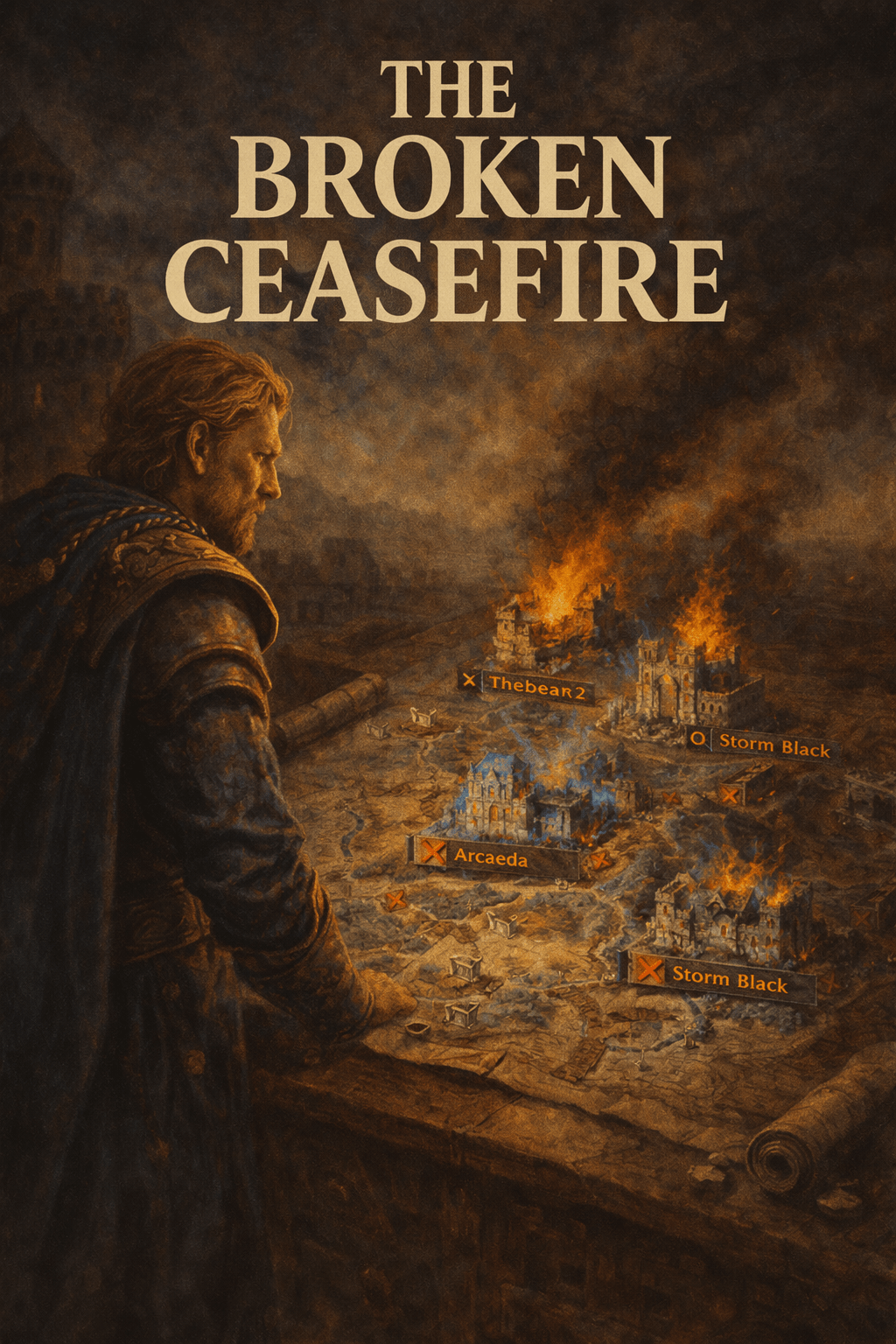
The night in K94 was calm. Campfires lit the roads, and small groups returned from long gatherings. A cold wind swept through the castle. Soldiers walked around the kingdom, and quiet messages arrived through messengers coming from nearby villages. Nothing suggested alarm. The kingdom rested in a fragile peace, sustained by silent agreements between alliances.
Phantom walked toward the hall where the kingdom maps were kept updated. The voices inside spoke only of construction levels, troops in training, and routine movement schedules. No rumors of war. No red alerts. Still, the silence carried weight. Experienced leaders knew ceasefires were never permanent. There were pauses, nothing more.
The agreement with the tSV alliance had been made days earlier. Written quickly, sealed by promises of neutrality. tSV would remain within its territory, away from trade routes and kingdom farms. In return, the kingdom would avoid hostile action in that sector. Since then, caravans moved freely, and smaller players gathered without fear. On the surface, the arrangement held.
That calm cracked when Phantom received three messages almost at once, delivered by exhausted riders from distant villages. Each report told the same story. Isolated attacks against small castles on K94. Fast attacks, quiet, timed during shift changes. Not open war, but deliberate pressure. And every report pointed to the same direction, a shadow advancing slowly from the north.
Inside the strategy hall, Phantom studied the map without haste. Scouts had marked recent movements with dark ink. The lines converged toward the same sector, where tSV castles were positioned. Neutrality was being broken, not with words, but with action. From that moment on, the ceasefire no longer existed.
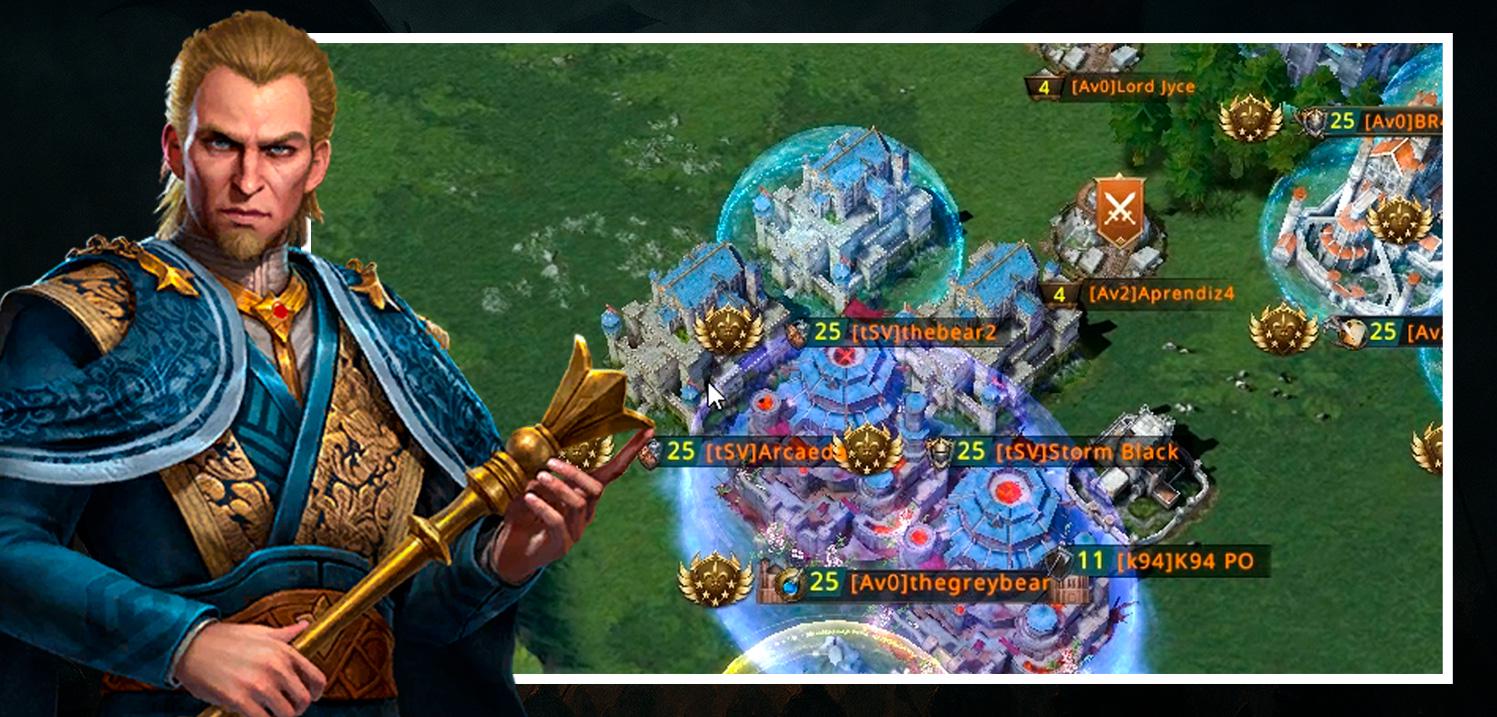
Phantom traced the markings and noticed the pattern of reinforcements between two larger castles in that area. One stood forward, holding the line. The other remained just behind, sustaining and coordinating. The positioning was deliberate. Organized. Hostile. It threatened the balance of the map directly.
Waiting would only give advantage to tSV. Phantom summoned his officers and laid out the plan. There would be no public statements, no messages in kingdom chat, no requests for explanation. tSV had broken the agreement through action. The response would be the same. The order was simple: remove the core before it could grow.
Phantom stepped onto the high balcony, where rows of towers stretched toward the horizon. A messenger arrived with updated reinforcement data. Movement near the tSV border was increasing. Smaller castles were grouping and sending troops inward. Preparation was underway.
Phantom decided in silence. The campaign would begin.
With the targets identified, Phantom ordered the invasion on K94. He chose to attack Arcaeda first, positioned on the frontline and blocking a key passage used by the kingdom’s resource routes.
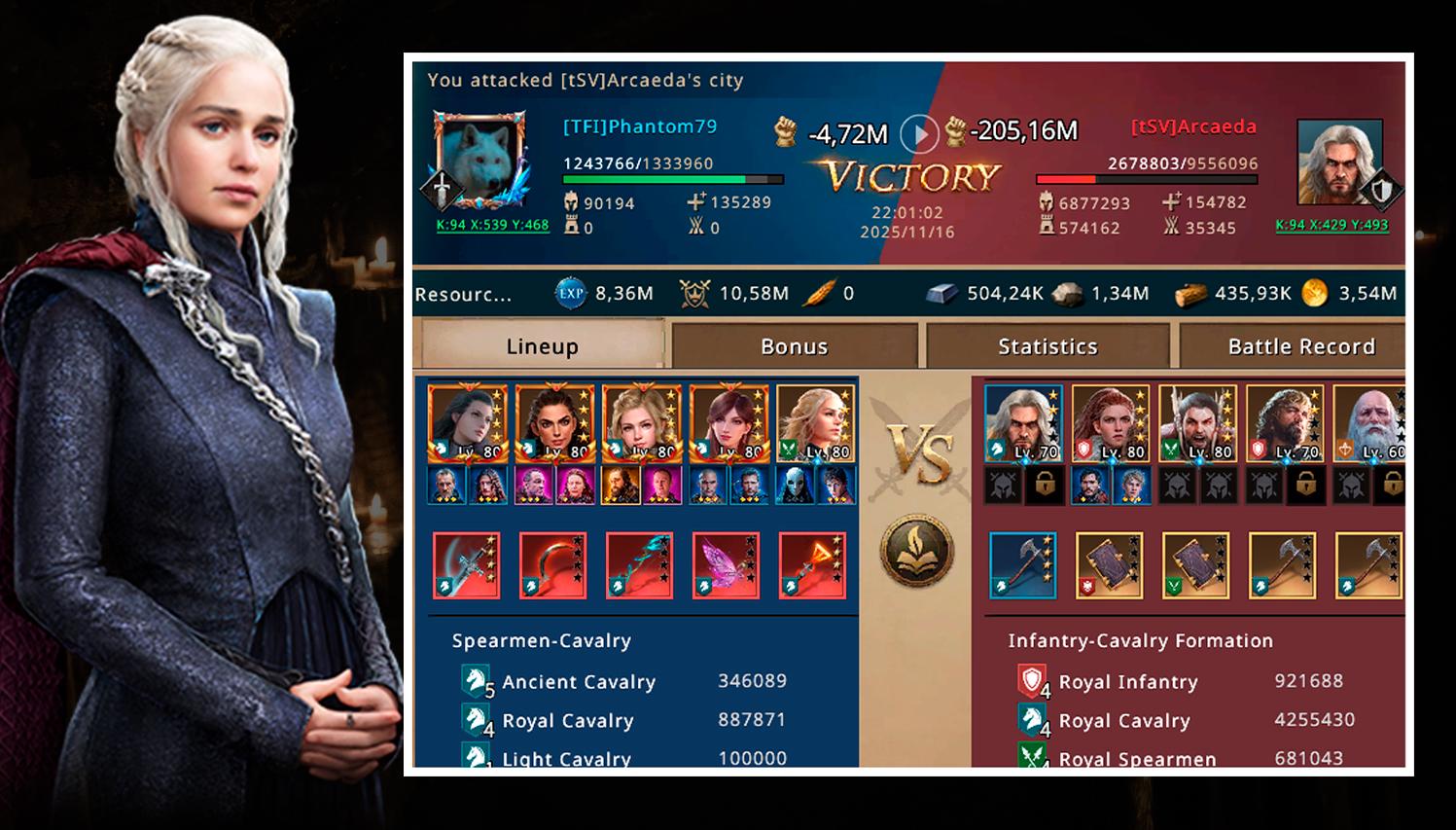
The troops moved before dawn. The strike focused on the outer wall and visible garrison formations. The report arrived shortly after. Phantom lost 90K soldiers while Arcaeda lost 6.8M.
The difference was huge. The defensive structure broke immediately. Still, Phantom paid a real cost. Every loss reduced offensive capacity and increased strategic risk if resistance followed. The first impact spread. Nearby castles raised shields. Defensive routes shifted. Confidence began to fracture.
Phantom allowed no time for recovery. The second attack was launched before reinforcements could fully mobilize.
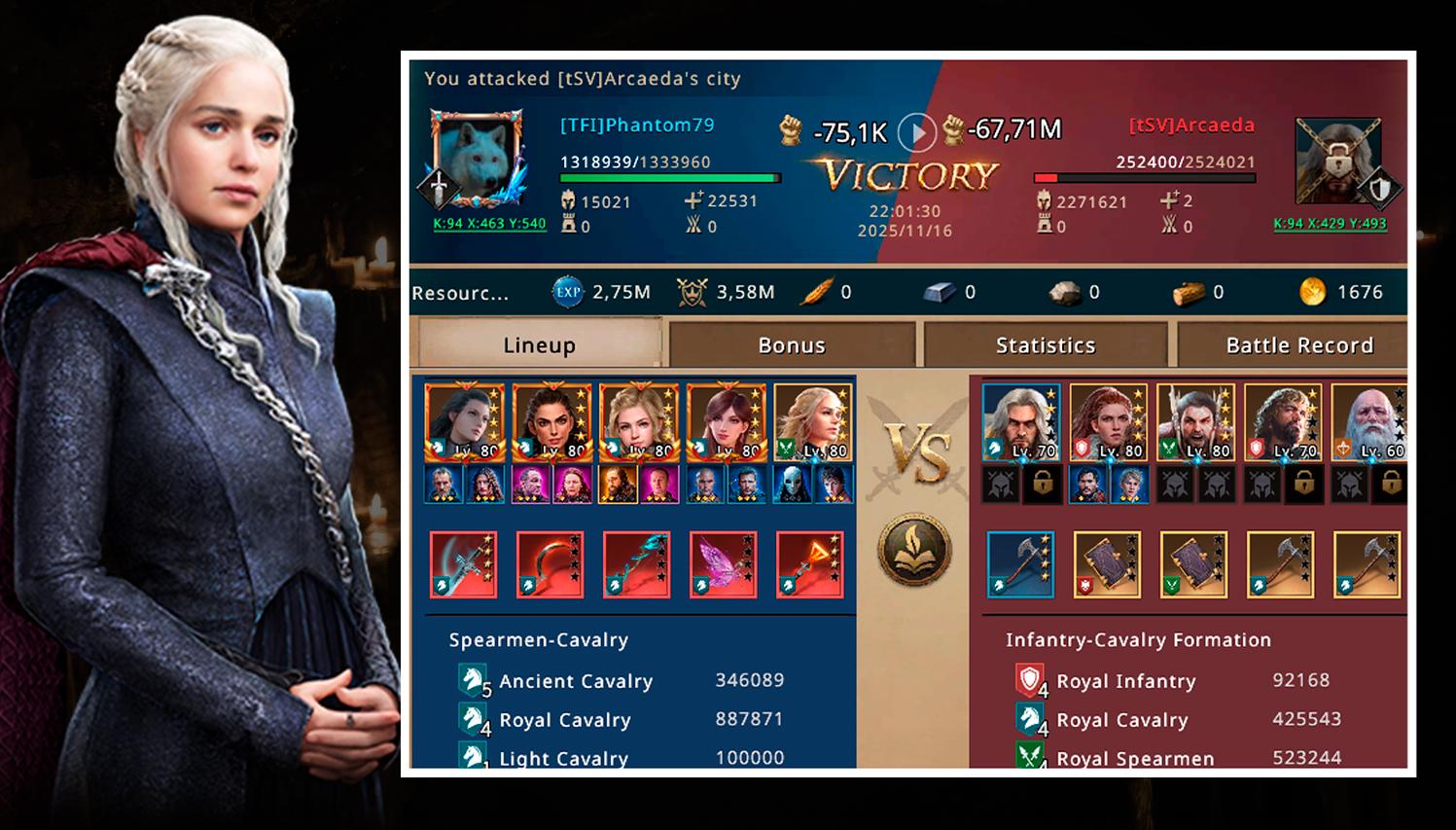
On the second attack, Phantom lost 75K troops, and Arcaeda lost another 2.2M. The inner garrison weakened further. Reinforcements arrived too late. On the map, nearby storage markers began fading, showing loss of territorial control. The frontline pillar was collapsing.
With Arcaeda neutralized, Phantom turned to the command center behind the line. Storm Black coordinated reinforcements and troop volume. Leaving him active would allow regrouping. That could not happen.
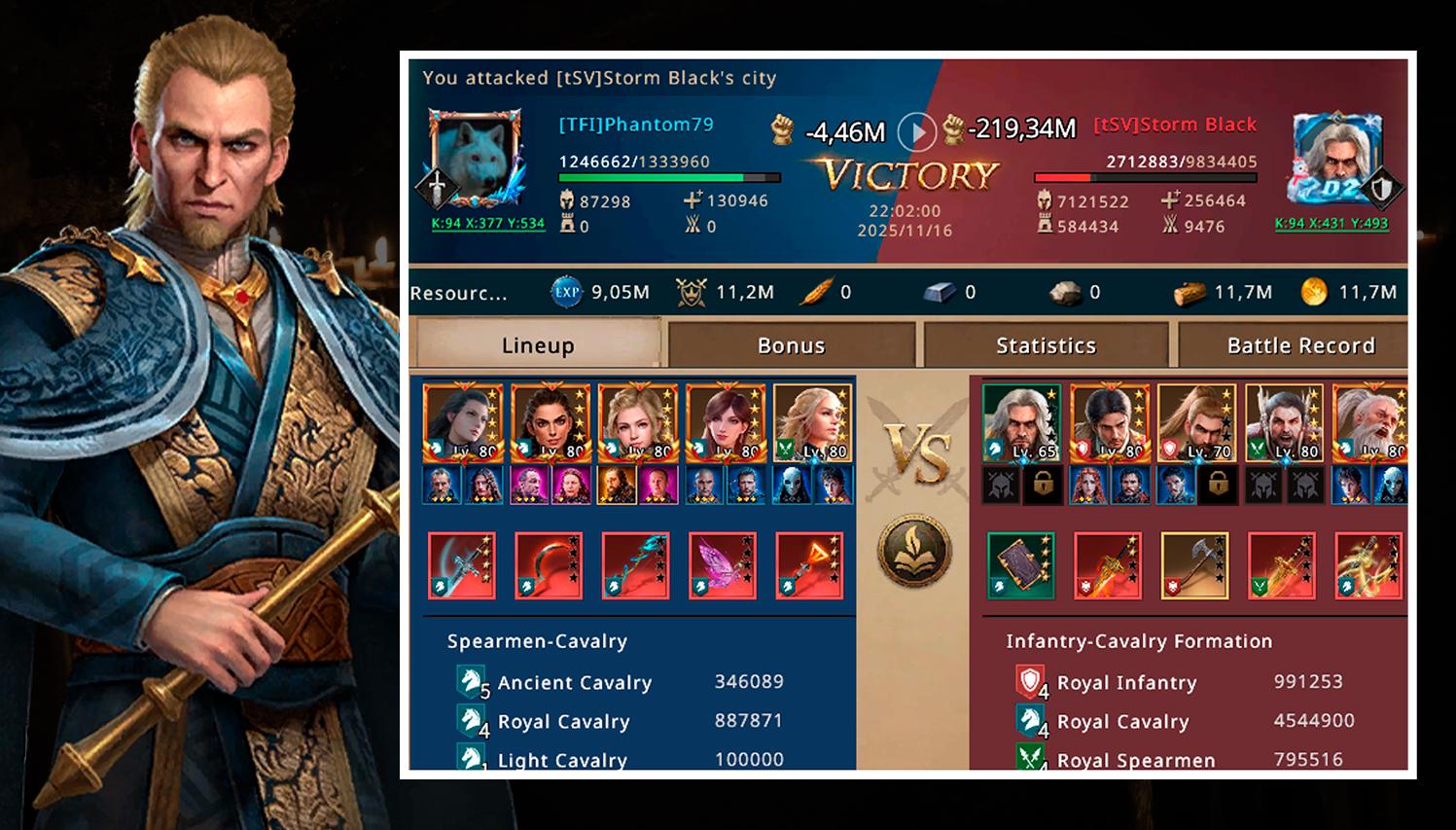
The advance was direct and forceful. Troops struck the internal formations guarding the main gate.
Phantom lost 87K soldiers, while Storm Black lost approximately 7.1M men. The effect was immediate. Reinforcement markers vanished. Troop flow ceased. Defensive coordination collapsed before it could react. Only one task remained: removing Storm Black’s remaining ability to resist.
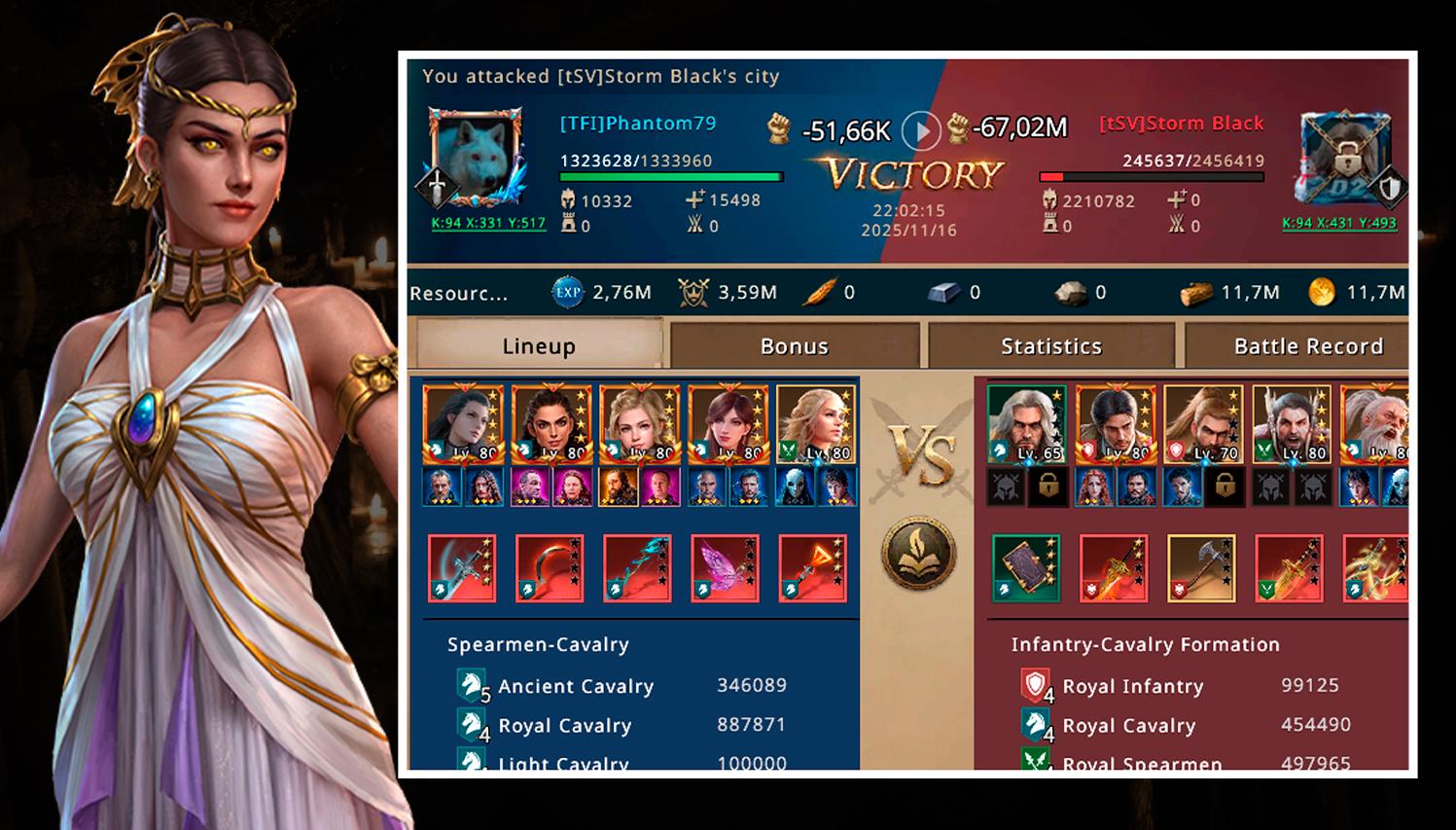
The final attack was directed at what remained of Storm Black’s command structure and reserves.
The attack was calculated, not rushed. Phantom committed his troops knowing the cost would be real, and it was. He lost 10K soldiers in the exchange. Storm Black, however, lost more than 2.2 million men. With those losses, the castle no longer had the capacity to defend its position. Reinforcements failed to arrive, supply lines collapsed, and the routes that once connected Storm Black to the rest of tSV vanished from the map. In practical terms, the alliance lost its operational foothold in the area.
With four attacks completed, the tSV cluster unraveled quickly. Castles that had relied on shared defense either pulled back or raised shields. No new rallies formed. Trade routes reopened, and movement across the sector returned to normal. The map stabilized, Phantom issued no follow-up assaults. Instead, he ordered light patrols to monitor the region, ensuring it could not be used again as a pressure point against the kingdom.
There were no messages sent and no statements made. The outcome spoke through numbers and position alone. Reports circulated quietly among leadership, and the early hours passed in silence. Peace has finally returned to that kingdom.
Translate

Popular Posts
1

The Devil's Hunt: Invasion K76, K163 & K9
12 discussions 17 views
2

The Broken Ceasefire - K94
7 discussions 15 views
3
Ultimate Conquest Lsk vs HO$
12 discussions 21 views