
This user has no description yet

fictions
💠Introduction
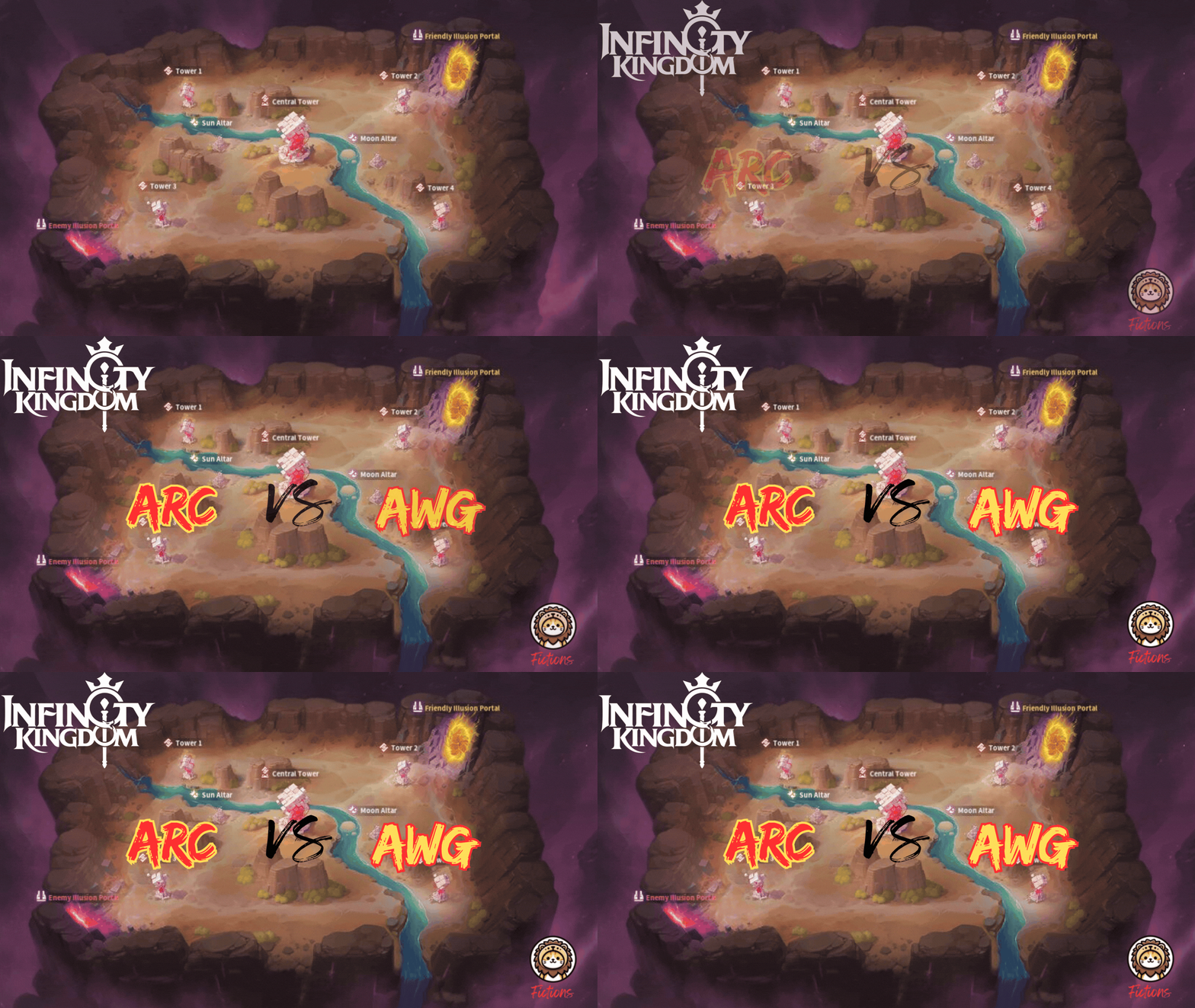
What’s up, folks? Welcome back to my Illusion Battlefield League(IBL) series, where I take a closer look at different matches. The IBL tournament differs from regular IB in that everyone will construct marches and skill builds using a fixed set of skills. At different stages of the tournament, more immortals and skills will become available. Everyone has access to the same immortals and the same skills. Castle skins and Lord Talents do not affect the more fast-paced battles of IBL. Relocations and marching speed are also faster. The event is one of the most entertaining events in Infinity Kingdom, and players enjoy spectating, almost like a sporting event. In this article, I’m going to take a closer look at the match between Server 73’s The Arcane(ARC) and Server 136’s Along With The Gods(AWG).
💠Table of Contents
- Overview
- Starting Positions and Talents
- Tower 1
- Tower 4
- Central Tower
- Altars
- Home Towers
- Play-by-Play
- Summary
💠Overview
ARC entered the playoffs with a 7–1 record, with their only loss coming against AoW. They cruised through their first two playoff matchups against HMB and HK to reach the Gold Bracket finals against AWG. AWG played only three matches during the Points Phase and won all three before narrowly defeating ICE and demolishing TOS in the playoffs. AWG generally fields around 20–25 players per match, while ARC typically brings 25–30. Based on both attendance and recent performance, ARC entered the matchup with a clear advantage.
💠Starting Positions and Talents
ARC
- Started with 29 players and ended with 30
- 20 Attack talents
- 7 Defense talents
- 2 Support talents
AWG
- Started with 16 players and ended with 19
- 9 Attack talents
- 5 Defense talents
- 1 Support talent
Both teams heavily favored Attack talents, but the biggest difference was attendance. ARC started with 13 more players and maintained a massive advantage throughout the match, while AWG gained only three additional players. With such a large numbers deficit, AWG needed to be especially selective about which objectives to contest rather than spreading its limited roster across the entire map.
💠Tower 1
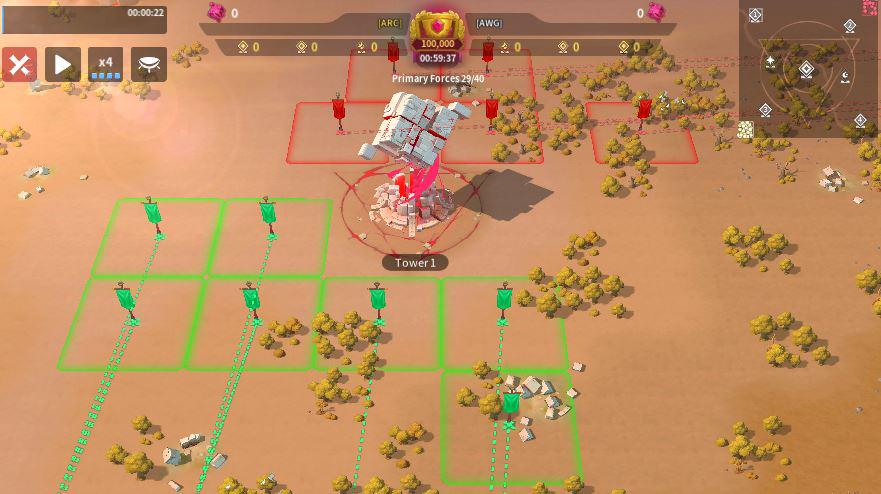
ARC sent eight players to Tower 1 in a standard formation, while AWG committed six, with two positioned farther away from the main group. Normally, as the top-sided team, AWG would prioritize Tower 4 over Tower 1 because of the natural spawn advantage. However, AWG lacked favorable spawns for Tower 4 in this match and had much better positioning for Tower 1, making their decision to contest it reasonable despite ARC’s numbers advantage.
💠Tower 4
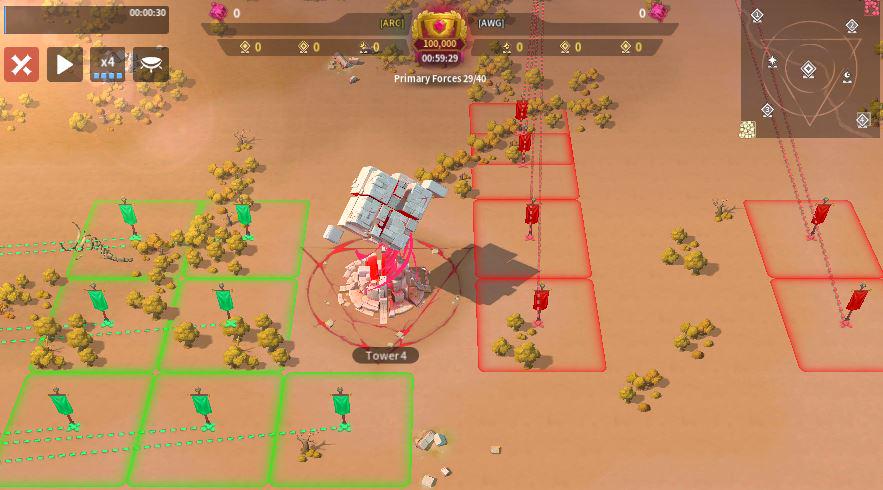
ARC sent seven players to Tower 4, while AWG committed six with one overlapping relocation. Once again, two of AWG’s players were positioned farther away from the main group, and without any favorable edge spawns to block ARC’s relocations, AWG opted for a standard formation around the tower. Given their overall attendance disadvantage, AWG would have been better off conceding Tower 4 entirely and concentrating their limited forces at Tower 1 and the Central Tower, where they could have created a stronger local numbers advantage. Trying to contest every opening objective left AWG undermanned everywhere instead of giving them a realistic chance to win somewhere.
💠Central Tower
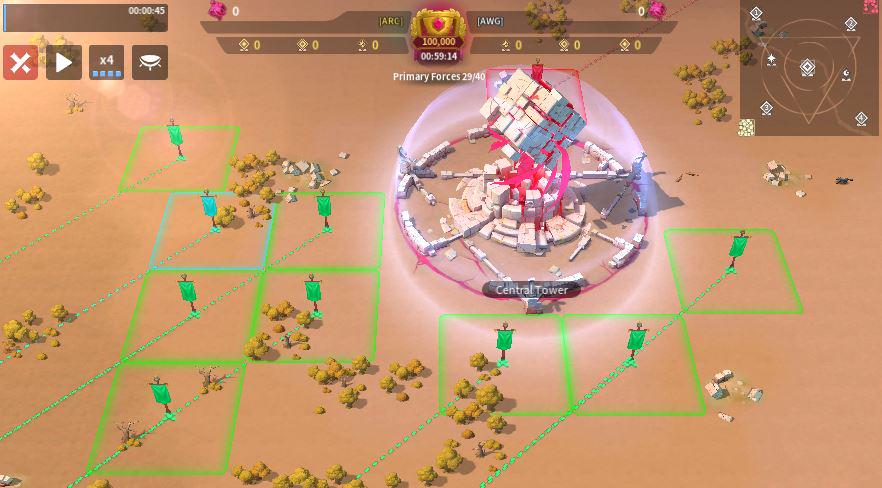
ARC sent nine players to the Central Tower, while AWG committed only two. If AWG was only willing to send a couple of players to the middle, they would have been better off conceding the objective entirely and using those players to overload the side towers instead. However, giving up the Central Tower creates another major problem because its superior point generation makes it extremely difficult to win by relying solely on side towers. AWG’s opening allocation therefore put them in the worst possible position: they did not commit enough players to realistically contest the center, but they also spread too many players across the side objectives to create a meaningful advantage elsewhere.
💠Altars
Neither team sent anyone to either altar, showing that both sides prioritized early tower control rather than spreading players across lower-value objectives. Given the importance of the opening towers and ARC’s attendance advantage, this was a reasonable decision for both teams.
💠Home Towers
Both teams stationed one player at their home tower. This was enough to prevent an immediate uncontested steal, but one defender alone would not be sufficient against a coordinated rotation, so both teams still needed to monitor incoming relocations and reinforce quickly.
💠Play-by-Play
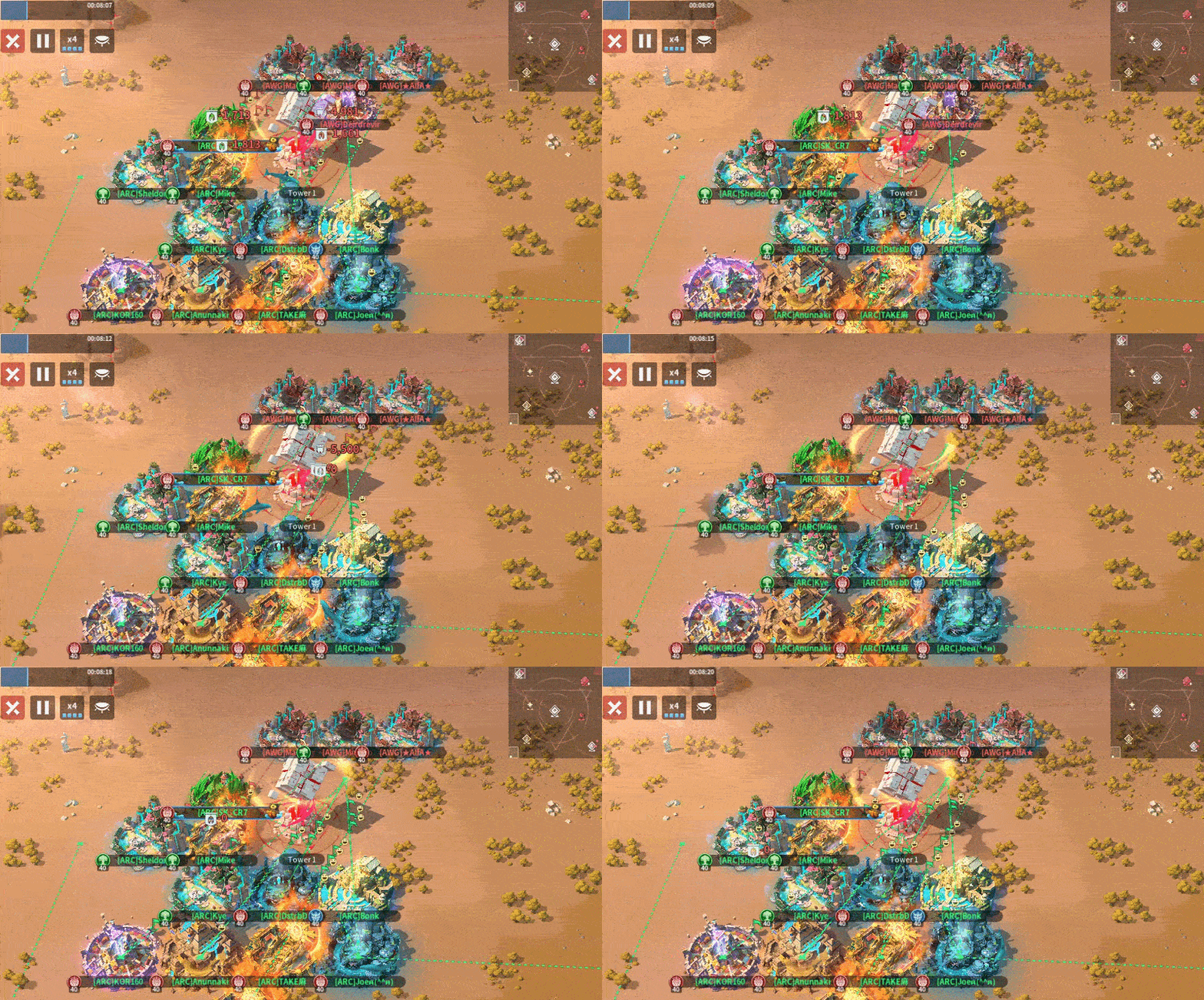
At Tower 1, ARC focused on eliminating AWG’s players while AWG concentrated primarily on capturing the objective. ARC took the initiative by zeroing one player and forcing another to shield, while AWG’s rallies and solo attacks failed to break through ARC’s defenses. ARC zeroed another defender, began sieging the tower, and brought in two additional reinforcements to strengthen its position. After eliminating another AWG player, ARC captured Tower 1 at the 9-minute mark, cleared out the remaining enemies, and immediately began advancing toward AWG’s home tower.
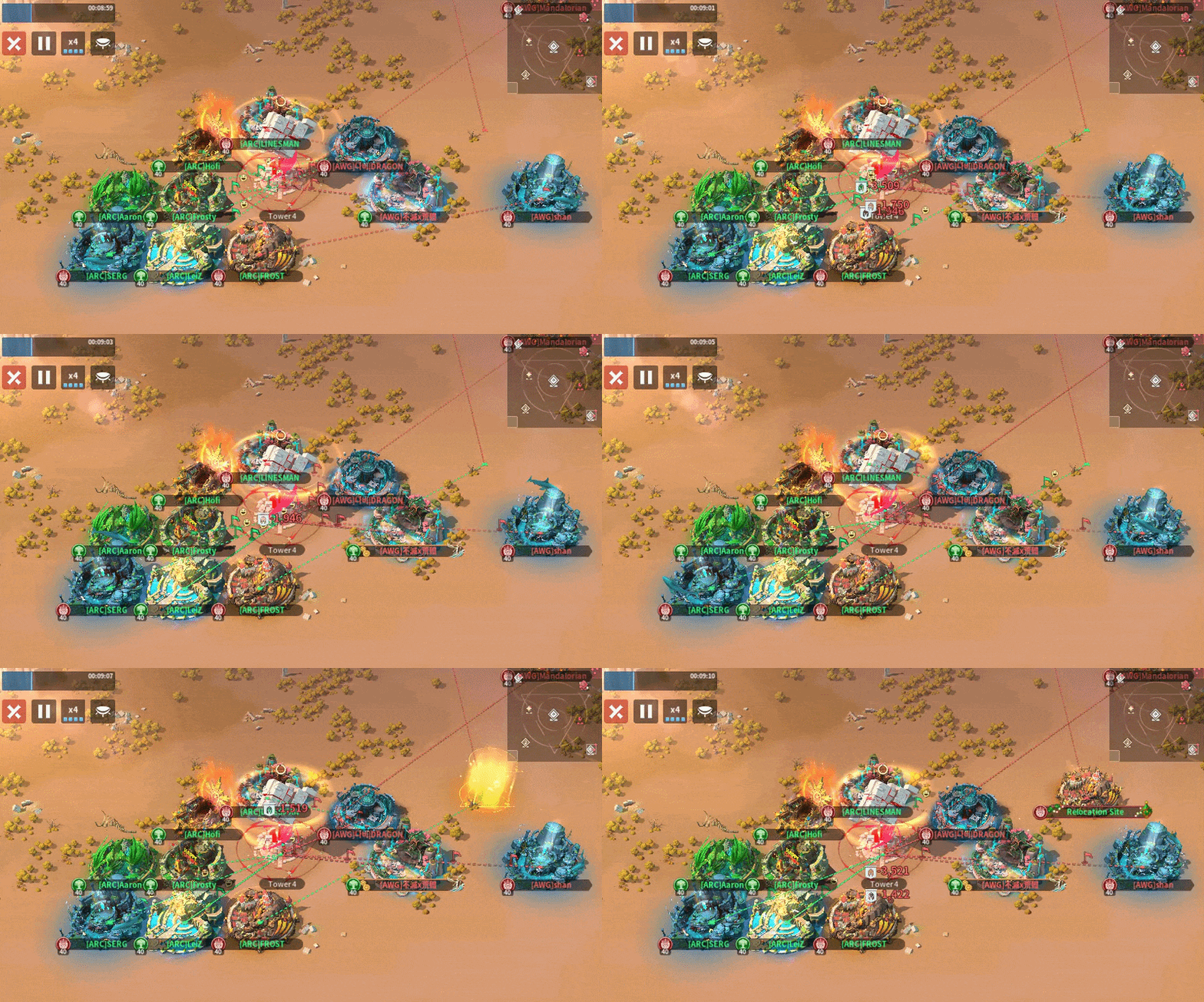
At Tower 4, ARC immediately began sieging the objective, but AWG repeatedly interrupted their attempts. ARC eventually shifted its focus toward eliminating the defenders, zeroing three AWG players before surrounding the tower and resuming the siege. With AWG’s resistance significantly weakened, ARC captured Tower 4 at the 12-minute mark and quickly cleared out the remaining defenders.
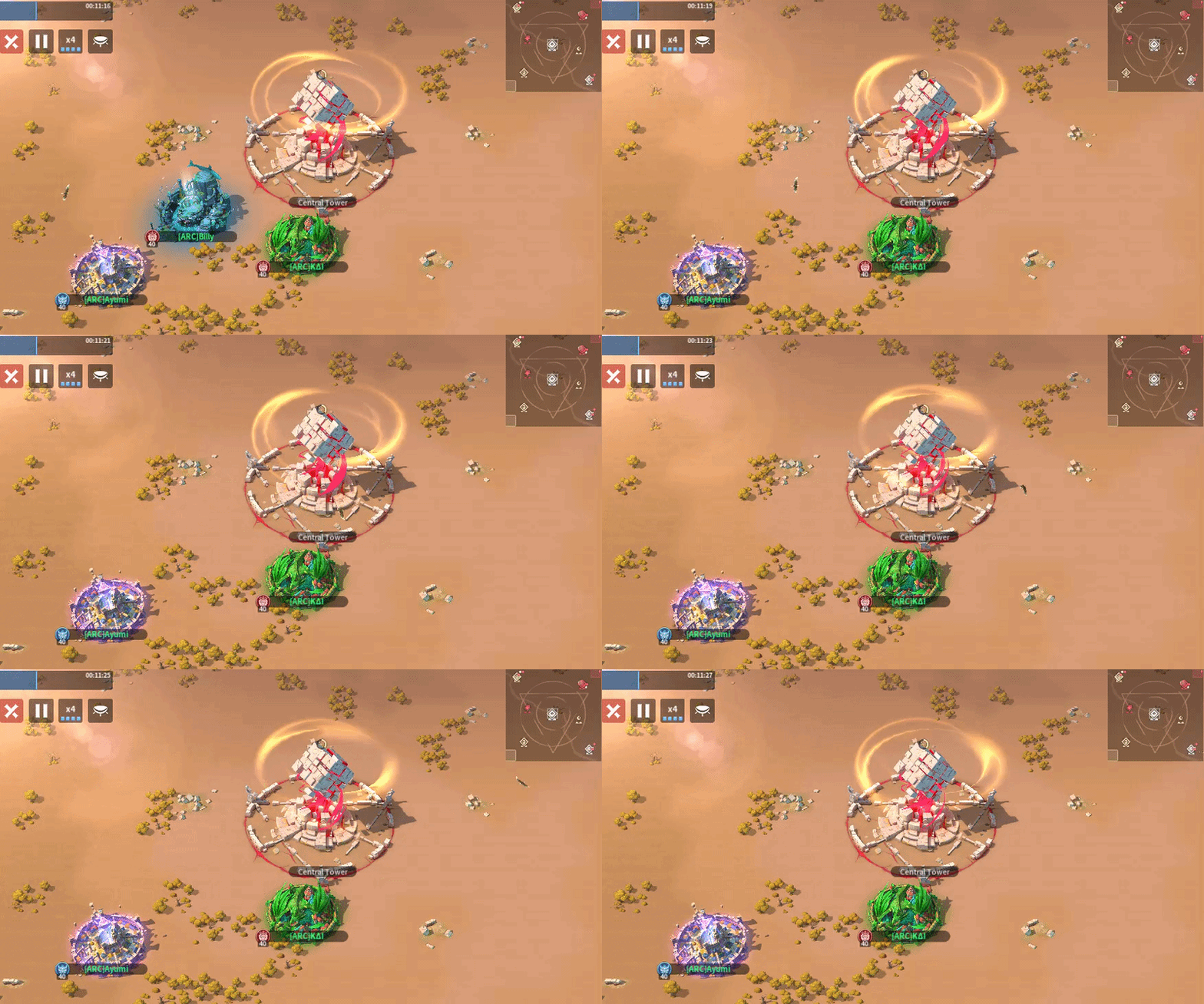
In the middle, ARC made quick work of AWG’s two players, zeroing both before the five-minute mark. With no resistance remaining, ARC took complete control of the area and captured the crucial Central Tower 12 minutes into the match. After securing the objective, ARC began moving players toward AWG’s home tower in an attempt to increase their individual scores.
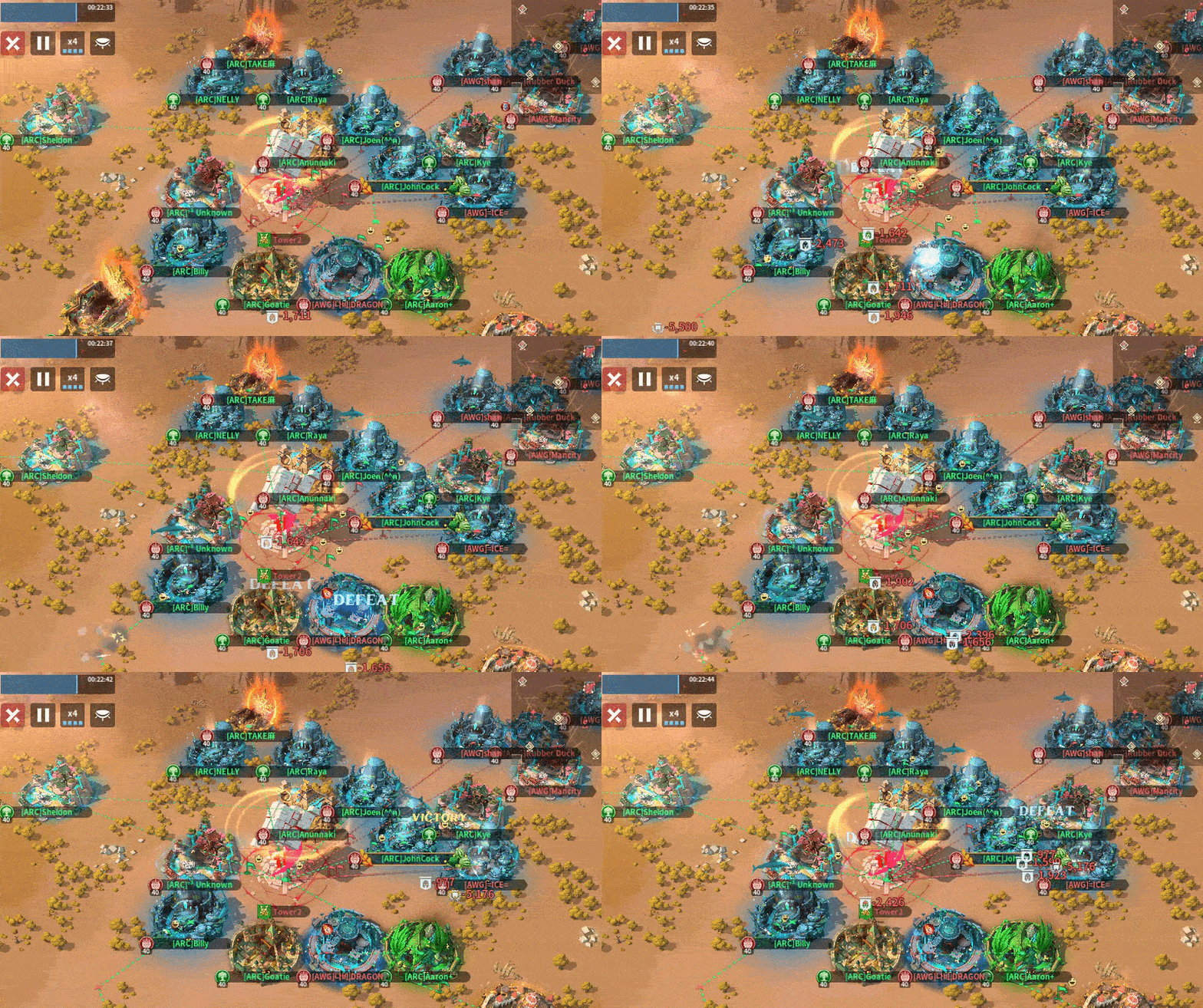
ARC began relocating toward AWG’s home tower as early as the five-minute mark, where only two guards were defending. AWG failed to destroy any of the incoming relocations, with one defender even moving away from the objective in an unsuccessful attempt to block one. ARC initially captured the tower halfway before intentionally backing off so their players could continue earning individual points for additional rewards. AWG repeatedly sent reinforcements to defend their home tower, but they were unable to push ARC out of the area. With AWG also failing to gain ground anywhere else on the map, ARC eventually finished the capture at the 23-minute mark. By that point, ARC had complete control of the match, and AWG had no realistic path back into contention.
💠Summary
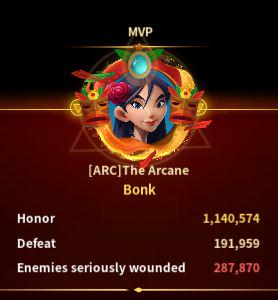
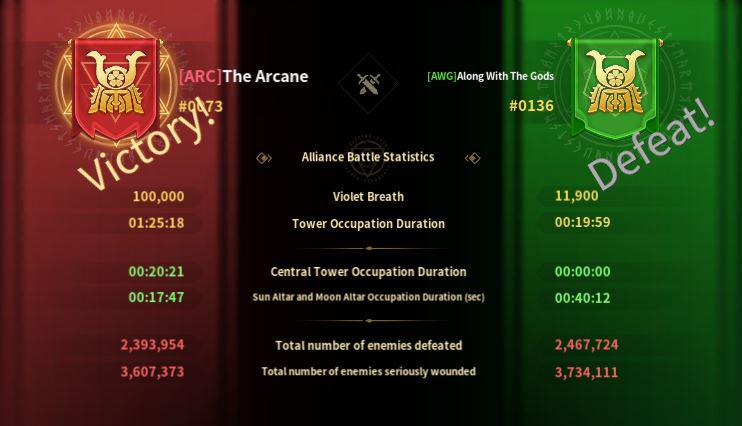
ARC dominated AWG 100,000 to 11,900, with Bonk earning MVP. AWG’s poor early attendance put them at an immediate disadvantage, and their opening allocation made that problem even worse. Knowing they were heavily shorthanded, AWG should have concentrated their forces on two of the three opening objectives instead of spreading players across all three and creating unfavorable fights everywhere. ARC was largely uncontested throughout the match, winning most individual engagements without needing to rely heavily on rallies. However, with a numbers advantage at every major objective, ARC should have been able to convert that advantage into faster captures than they did. Their control was never seriously threatened, but cleaner execution could have ended the match even more efficiently. ARC secures a spot in the Top 16, while AWG gets one final opportunity to advance against HK in the Silver Bracket.
What matchup do you want to see next? Let me know in the comments below!
💠Related Links
Version 2.9.9
Infinity Kingdom Official Website
#infinitykingdom #arc #awg
Translate

Popular Posts
1
![[Review] Elemental Bond for Dummies: An Event Guide in Infinity Kingdom](https://oss.gtarcade.com/forum/gif/2026-09-28/439967_19e3e98f-0337-4d78-8eda-dff74b653d58_141123.gif?x-oss-process=image/resize,w_150,h_150)
[Review] Elemental Bond for Dummies: An Event Guide in Infinity Kingdom
360 discussions 461 views
2
![[Review] Analysis of NG+ vs BUNS in IBL in Infinity Kingdom](https://oss.gtarcade.com/forum/gif/2026-09-28/439967_252bb122-c335-4d39-9f12-0995c83359e9_133208.gif?x-oss-process=image/resize,w_150,h_150)
[Review] Analysis of NG+ vs BUNS in IBL in Infinity Kingdom
251 discussions 286 views
3
![[Review] Player's Digest: Weekly Summary of Recent News and Events in Infinity Kingdom](https://oss.gtarcade.com/forum/gif/2026-09-27/439967_e3b80198-1523-47d7-bcf3-04581244dfb6_082804.gif?x-oss-process=image/resize,w_150,h_150)
[Review] Player's Digest: Weekly Summary of Recent News and Events in Infinity Kingdom
242 discussions 338 views