
This user has no description yet

fictions
💠Introduction
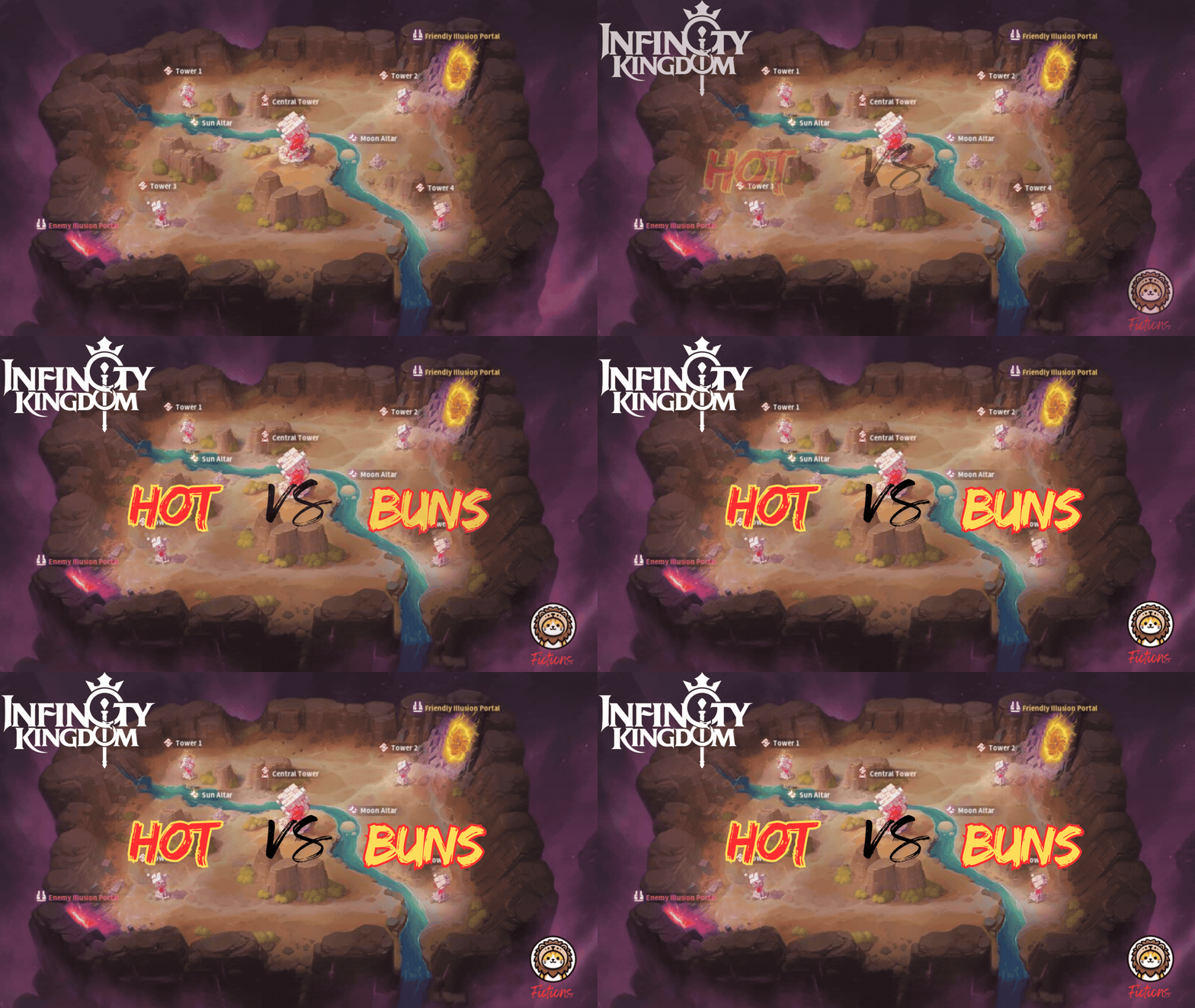
What’s up, folks? Welcome back to my Illusion Battlefield League (IBL) series, where I take a closer look at different matches. The IBL tournament differs from regular IB in that everyone constructs marches and skill builds using a fixed set of available skills. At different stages of the tournament, more Immortals and skills become available, but every player has access to the same options. Castle skins and Lord Talents do not affect the faster-paced battles of IBL, while relocation and marching speeds are also increased. The event is one of the most entertaining in Infinity Kingdom, with players often spectating matches almost like a sporting event. In this article, I’m going to take a closer look at the matchup between Server 73’s Snugglebunnies (BUNS) and Server 344’s Hot Crew (HOT).
💠Table of Contents
- Overview
- Starting Positions and Talents
- Tower 1
- Tower 4
- Central Tower
- Altars
- Home Towers
- Play-by-Play
- Summary
💠Overview
BUNS finished the Points Phase with a 3–0 record before steamrolling through their playoff bracket with dominant victories over OF, SJ, and NG+ to secure a Top 16 berth. They continued their impressive run by dismantling RH to advance to the quarterfinals. HOT finished the Points Phase with a 7–1 record, suffering only a narrow loss to HVN, before cruising through the playoffs with convincing victories over DE, NB, and ToW. They then defeated CD to secure their own spot in the quarterfinals. While BUNS generally fields fewer players than HOT, they have a more experienced roster and benefit from being a farm alliance, allowing them to spend Gems freely on relocations, recalls, and marching speedups without worrying as much about resource conservation. HOT should have the attendance advantage, but BUNS’ superior experience, relocation control, and flexibility could make this a much closer matchup than the raw numbers suggest.
💠Starting Positions and Talents
BUNS
- Started with 24 players and ended with 26
- 15 Attack talents
- 7 Defense talents
- 2 Support talents
HOT
- Started with 29 players and ended with 30
- 8 Attack talents
- 19 Defense talents
- 2 Support talents
HOT began with a five-player attendance advantage and eventually finished with four more players, giving them more flexibility to spread across multiple objectives. However, their talent distribution was dramatically more defensive, with 19 Defense talents compared with only eight Attack talents, while BUNS leaned much more heavily toward Attack. HOT’s setup should have made them difficult to dislodge once established around an objective, but BUNS’ more aggressive talent distribution placed greater emphasis on eliminating players quickly and controlling relocations before HOT could make full use of its numerical advantage.
💠Tower 1
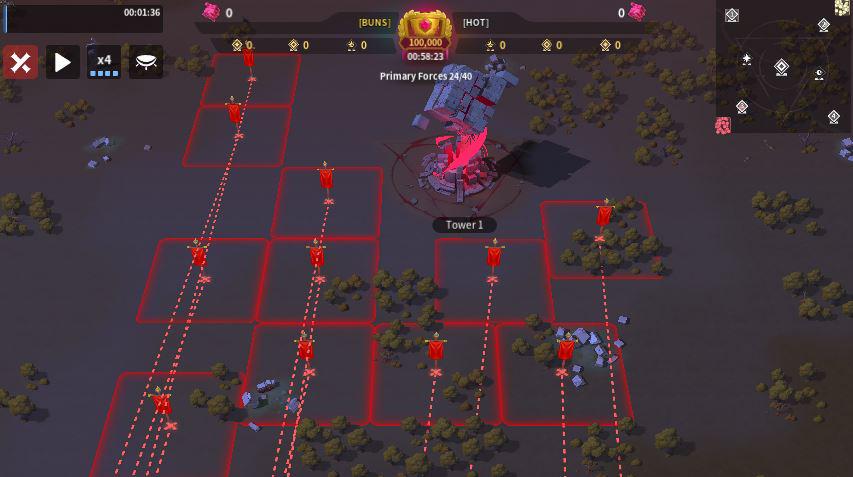
BUNS opted to concede Tower 1 as the top-sided team with lower attendance, choosing to concentrate their limited forces on more favorable objectives. HOT committed 11 players to the tower, an excessive allocation given the lack of opposition. Once HOT realized BUNS had no intention of contesting the objective, they should have canceled at least six of their relocations, allowing those players to relocate to the other towers as early as the three-minute mark rather than waiting until nearly seven minutes. With Tower 1 essentially uncontested, keeping so many players there unnecessarily tied up a significant portion of HOT’s roster and delayed their ability to reinforce the more important battles elsewhere.
💠Tower 4
At Tower 4, BUNS committed seven players, with two attempting to relocate to the bottom side of the tower to block two of HOT’s incoming relocations. HOT sent 11 players to the objective, giving them a significant numbers advantage. Although BUNS did not have many favorable edge spawns to exploit, a couple of their players were positioned to win the relocation races and potentially block HOT’s incoming players. If successful, those blocks would immediately reduce HOT’s local numbers advantage and give BUNS a much better chance of contesting the tower. This was especially important because BUNS had intentionally conceded Tower 1, meaning their entire opening strategy depended on converting superior positioning at Tower 4 and the Central Tower into enough control to offset HOT’s attendance advantage.
💠Central Tower
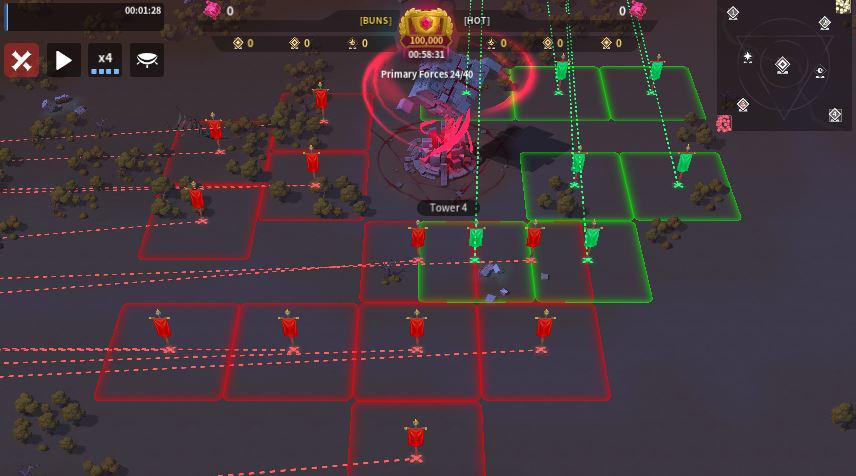
At the Central Tower, BUNS committed 16 players, heavily prioritizing the objective, while HOT opted to concede it entirely and instead overload both outer towers. Unlike HOT at Tower 1, BUNS should not cancel any of their relocations despite facing no opposition. The Central Tower is strategically positioned between the other objectives, allowing BUNS to quickly redistribute players and reinforce whichever tower needs support. Furthermore, if their subsequent relocations are blocked or destroyed, players returning to the center would have a shorter distance to travel before attempting to relocate again. Securing the Central Tower would therefore give BUNS both the highest-value scoring objective and a valuable staging ground for rotations, making HOT’s decision to concede it especially risky if they could not quickly secure both outer towers.
💠Altars
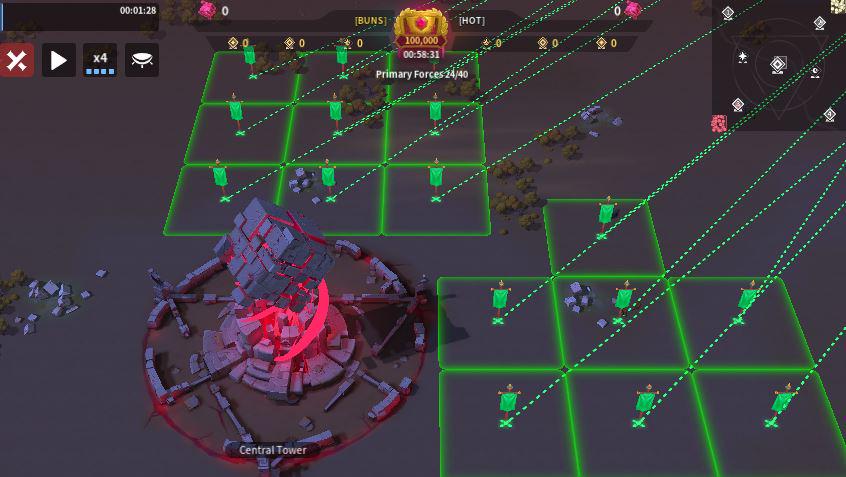
Neither team sent anyone to either altar, showing that both sides prioritized the major opening objectives rather than spreading players across lower-value areas. Given BUNS’ heavy commitment to the Central Tower and HOT’s decision to overload both outer towers, ignoring the altars was a reasonable choice for both teams during the opening phase.
💠Home Towers
BUNS stationed only one guard at their home tower, while HOT committed six players to defend theirs. HOT wasted far too many players on home defense instead of sending them to Tower 4, where their additional numbers could have overwhelmed BUNS and secured the objective much more easily. Since BUNS would not be able to launch an invasion of HOT’s home tower until around the seven-minute mark, there was little reason to commit so many defenders during the opening minutes. HOT could have stationed just one guard initially and relied on latecomers or returning players to reinforce the tower once an invasion became possible. By keeping six players at home, HOT unnecessarily weakened their presence at the contested objectives and squandered an opportunity to turn their attendance advantage into an overwhelming local numbers advantage.
💠Play-by-Play
At Tower 1, HOT completed all 11 of their relocations despite BUNS making no attempt to contest the objective. With no opposition in the area, HOT captured the tower without resistance before beginning to rotate players toward Tower 4. However, by failing to cancel any of their relocations, HOT unnecessarily delayed their ability to reinforce the more heavily contested objective. Had they canceled at least half of their relocations, those players could have moved to Tower 4 several minutes earlier, potentially overwhelming BUNS before they could establish control of the area. HOT secured the free objective, but they did so in one of the least efficient ways possible.
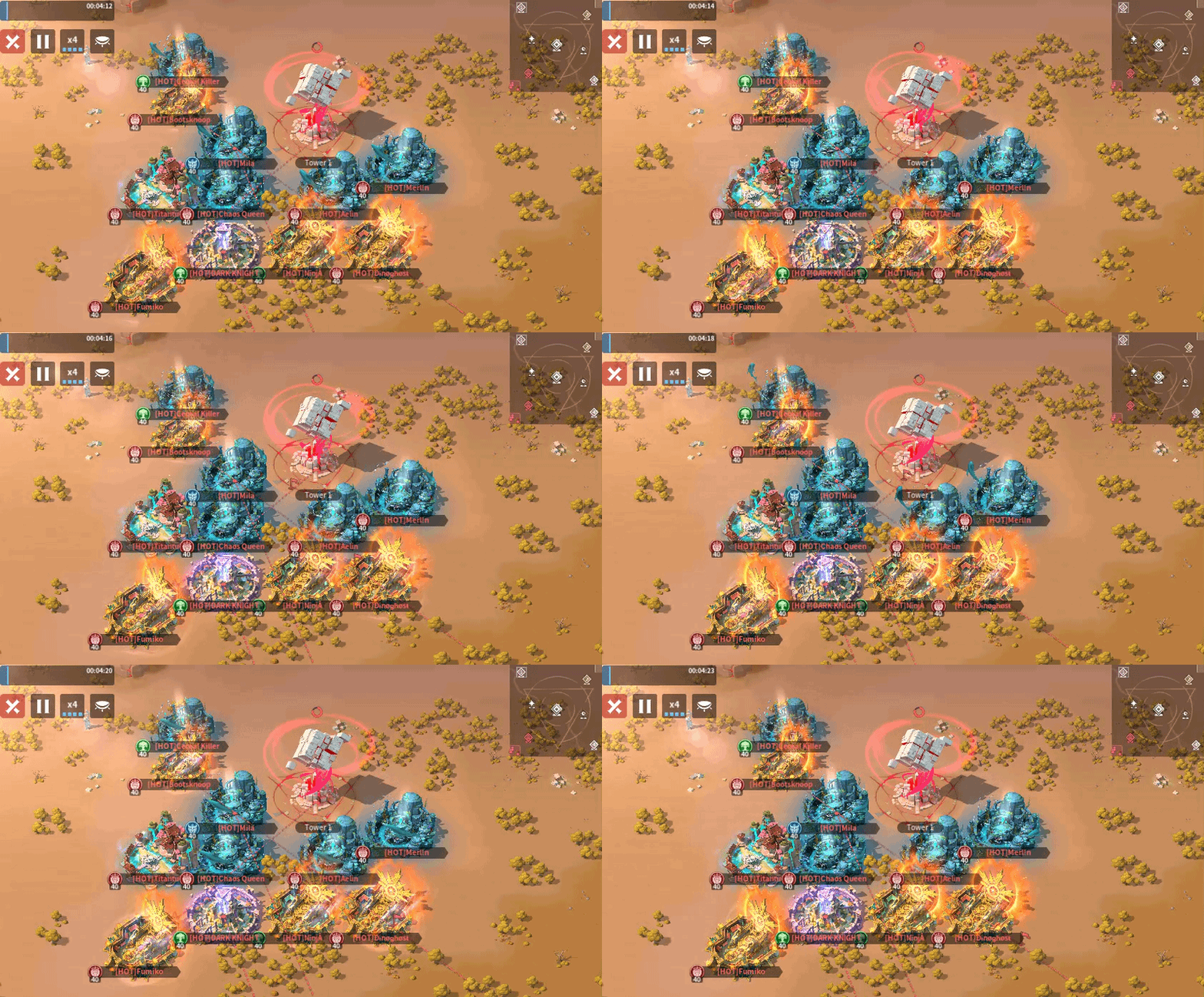
At Tower 4, BUNS blocked two HOT relocations and destroyed three more, completely neutralizing HOT’s initial numbers advantage. HOT demonstrated excellent coordination when garrisoning their teammates, but their rallies were considerably slower in comparison. BUNS continued pressing their advantage by destroying another incoming relocation before zeroing two HOT players. Once relocation cooldowns became available again, BUNS began sending reinforcements from the Central Tower, while HOT had to rotate players from Tower 1. With the Central Tower being much closer, BUNS could replace fallen players more quickly and maintain pressure throughout the exchanges. This allowed BUNS to gradually overwhelm HOT despite their lower overall attendance, eventually eliminating every HOT player positioned next to the tower. With no defenders remaining to interrupt the siege, BUNS captured Tower 4 at the 13-minute mark. This was the defining opening sequence of the match, as BUNS turned what should have been a major numerical disadvantage into local superiority through relocation denial and faster reinforcement routes.
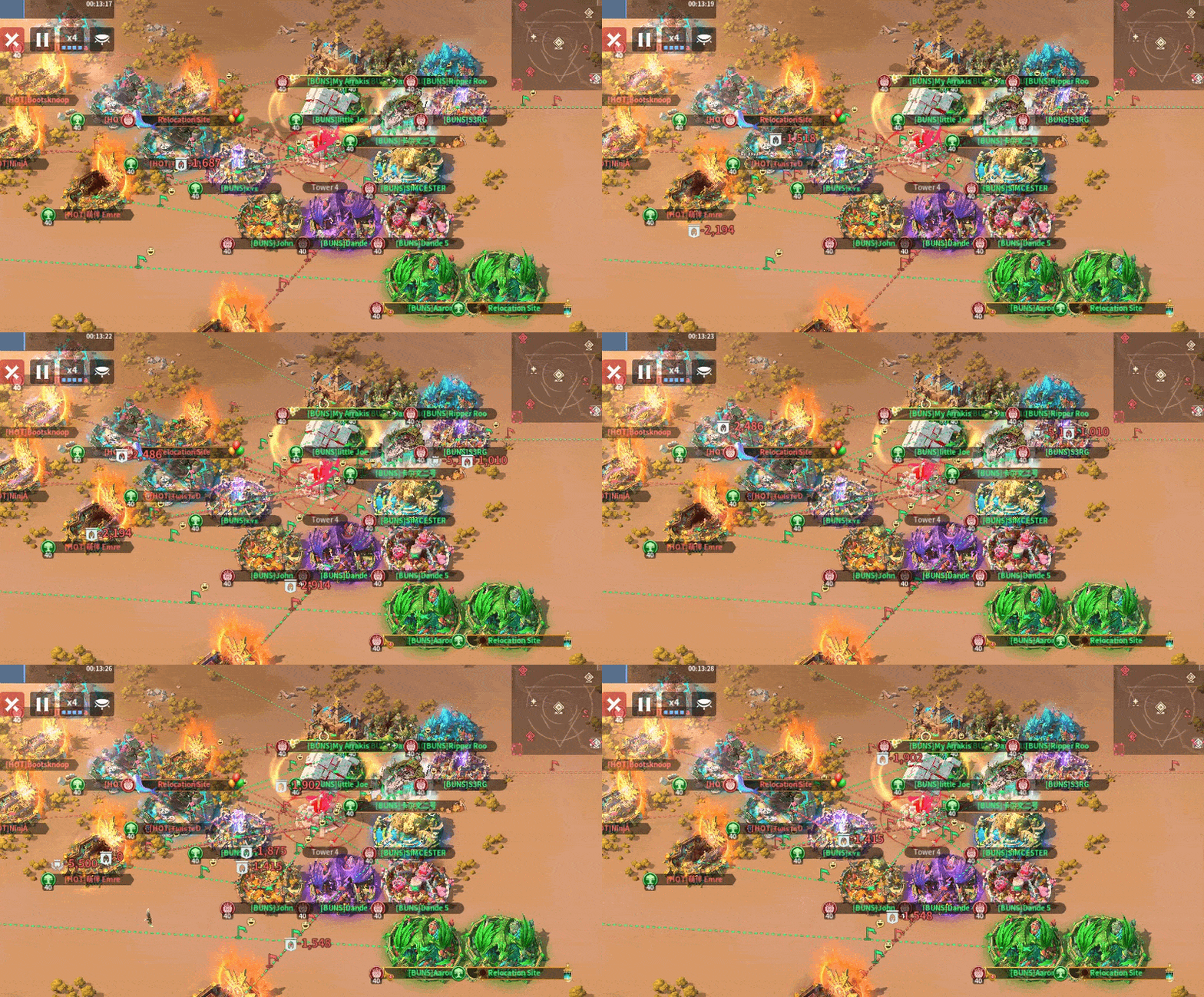
At the Central Tower, BUNS captured the most valuable objective uncontested at the 13-minute mark before beginning to rotate players toward Tower 4. With HOT having committed nobody to the center, BUNS was free to station a few guards at the tower while sending the rest of their forces to reinforce the battle elsewhere. This gave BUNS a major strategic advantage, as they could maintain control of the highest-scoring objective while also using it as a staging ground to reinforce Tower 4. HOT’s decision to completely concede the center was only viable if they could quickly secure both outer towers, and once BUNS captured Tower 4 as well, HOT’s opening strategy had effectively failed.
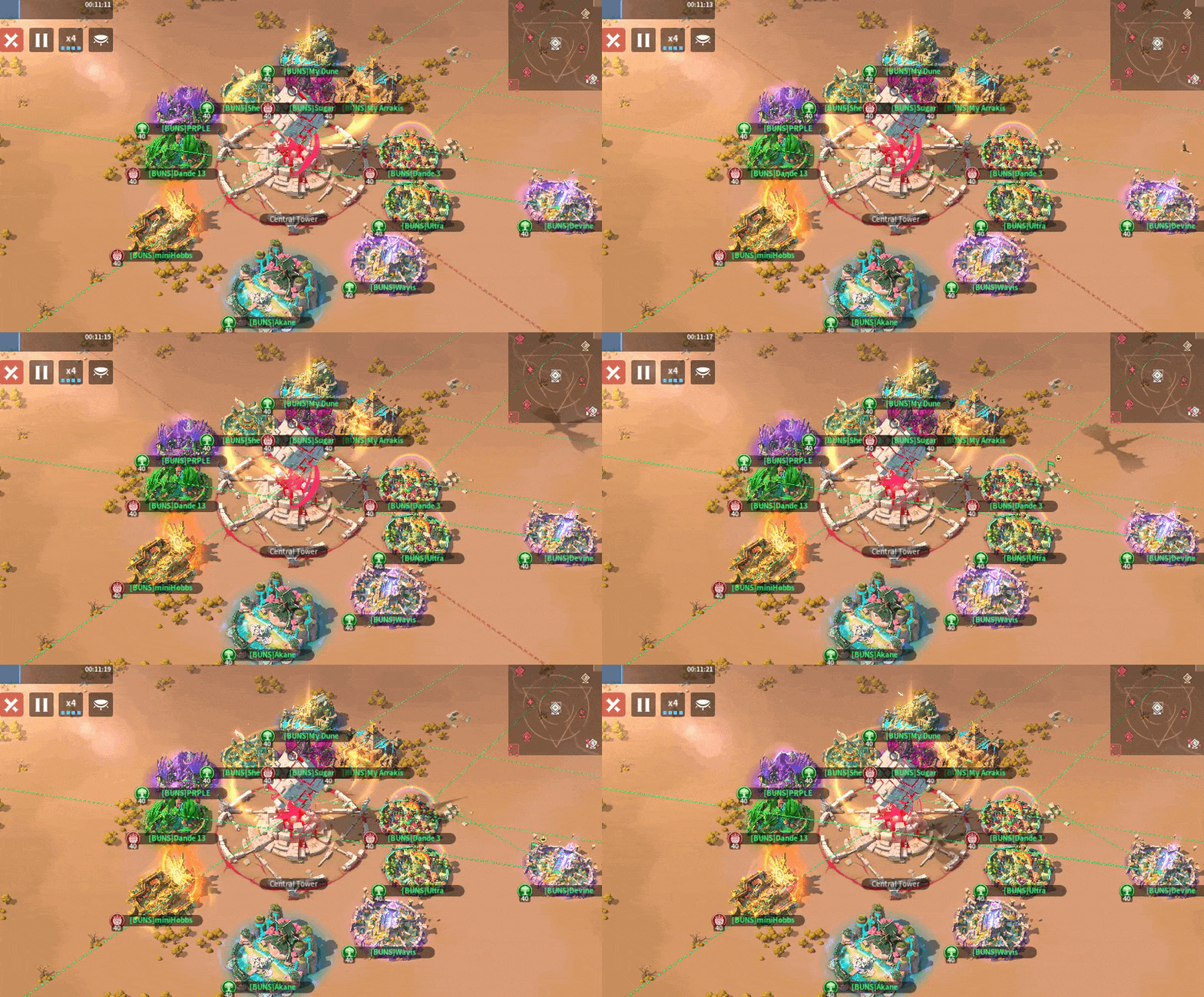
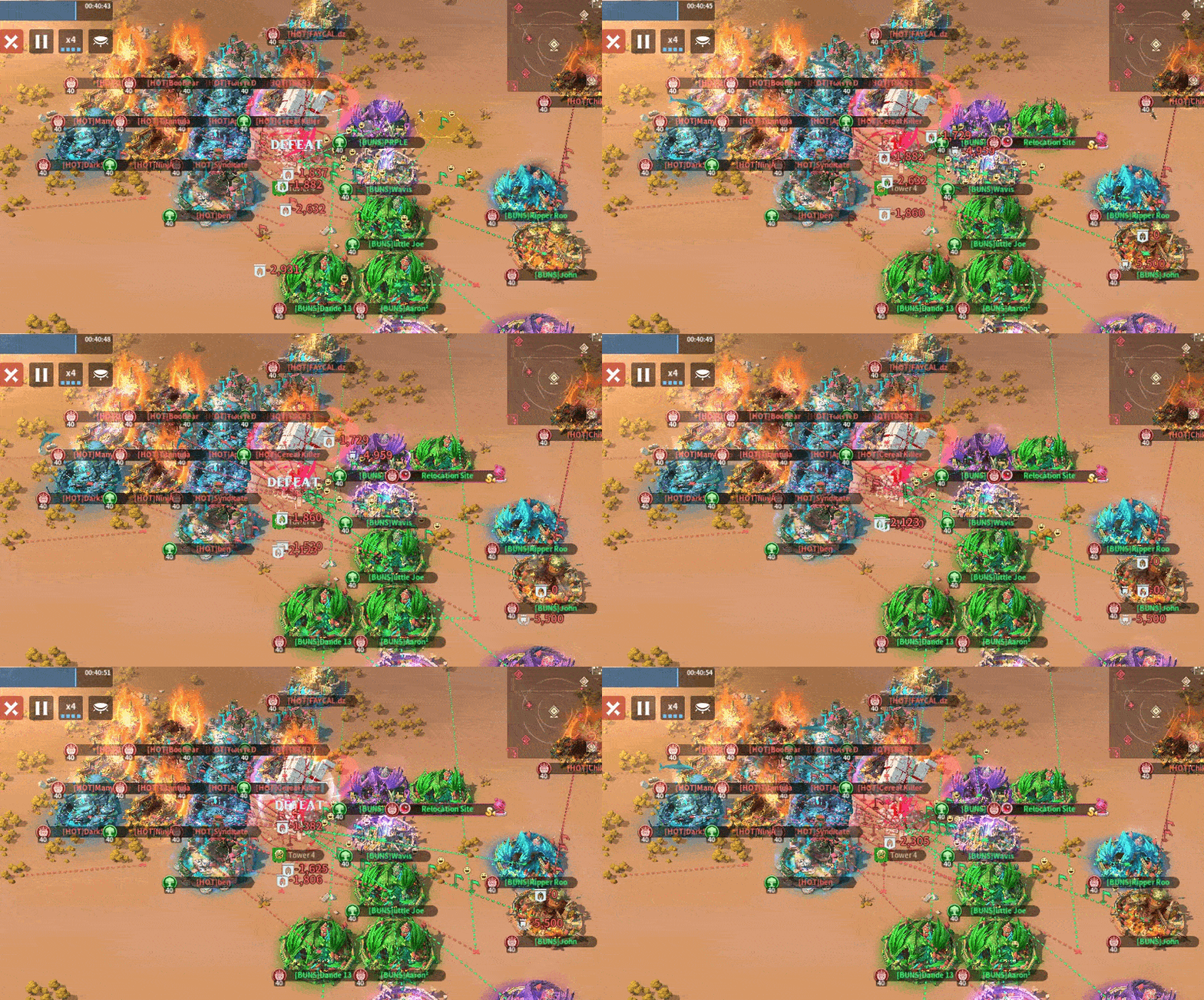
As the battle at Tower 4 dragged on, HOT continued sending players to the left side of the objective while BUNS maintained control of the surrounding area with roughly half their roster, eliminating HOT players one by one. Rather than repeatedly attacking from the same direction, HOT needed to spread out and surround the tower, putting pressure on BUNS’ backline players who were freely launching rallies and garrisoning their teammates without repercussions. Forcing BUNS players to defend themselves individually would have been far more effective, especially since HOT maintained a significant attendance advantage throughout the match. HOT eventually committed more than half their roster to Tower 4 and slowly pushed forward, gradually closing the distance to the objective. By the halfway point, BUNS had accumulated a 10,000-point lead, although they were steadily losing control of the tower. With HOT generating only 3,000 points every 10 minutes from three outer towers, they were already running out of time to overcome the deficit without capturing the Central Tower. BUNS stalled for as long as possible, but HOT eventually overwhelmed the remaining defenders and captured Tower 4 at the 41-minute mark. By then, however, BUNS had extended their lead to 19,000 points, leaving HOT without enough time to recover. BUNS simply maintained control of their remaining two towers and ran out the clock to secure the victory.
💠Summary
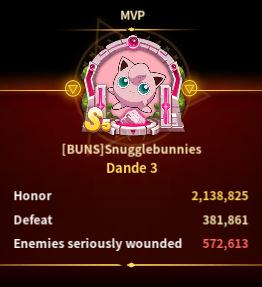
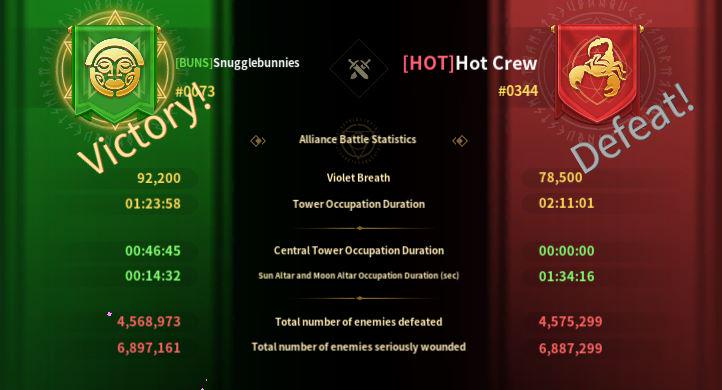
BUNS defeated HOT 92,200 to 78,500, with Dande earning MVP honors. HOT’s overall strategy of conceding the Central Tower and overloading the outer objectives was viable in theory, but their execution prevented them from taking advantage of it. They wasted too many players at the uncontested Tower 1 and their Home Tower, while poor opening relocations at Tower 4 allowed BUNS to block or destroy several players and erase HOT’s numerical advantage before the battle truly began. BUNS then exploited the Central Tower as both the highest-value scoring objective and a staging ground for faster reinforcements, allowing them to maintain pressure at Tower 4 despite having fewer players overall. HOT eventually captured the tower, but their slow rotations and repeated attacks from the same direction gave BUNS enough time to build an insurmountable lead. BUNS did not win because they had more players or better starting positions, but because they used their limited roster far more efficiently through superior relocation denial, positioning, and rotations. BUNS advances to face HK in the semifinals, while HOT is eliminated from the tournament.
What matchup do you want to see next? Let me know in the comments below!
💠Related Links
Version 3.0.0
Infinity Kingdom Official Website
#infinitykingdom #buns #hot
Translate

Popular Posts
1

God on the Mountain
191 discussions 225 views
2

[Review] Player's Digest: Summary of Recent News and Events in Infinity Kingdom
180 discussions 218 views
3
[Review] Analysis of BUNS vs HOT in IBL in Infinity Kingdom
152 discussions 190 views