
Infinity Kingdom Press Officer

m a ë l
At first glance, the event looked like another familiar seasonal event.
Tokens of Light returned. The Grail Shop opened once again. Glorious Challenge and Pinnacle Trial followed their usual rhythm, while the event battle pass delivered the expected stream of rewards and progression materials. On the surface, very little seemed different from previous seasonal cycles.
Yet as the days passed, a different picture began to emerge.
Instead of being defined by a new immortal, a major reward, or a single headline mechanic, Sky Paradise became an event shaped by decisions. When to spend resources. When to save them. Which objectives deserved immediate attention and which were better left for later. More than most seasonal events, Sky Paradise constantly encouraged players to think ahead.
Looking back, that tension ended up defining the entire experience.
Table of Contents
- A familiar event with a different focus
- Sky River Palace and seasonal progression
- Candy Defenders takes center stage
- The puzzle that kept returning
- Glorious Challenge and Pinnacle Trial
- Tokens, Grails, and difficult choices
- What made Sky Paradise memorable
- Final thoughts
Introduction
When seasonal events return to Infinity Kingdom, most veterans already know what to expect.
There will be Tokens of Light to collect, Eternal Grails to spend, challenge modes to complete, and a collection of rewards designed to support long-term account progression. Over the years, these events have developed a familiar structure, and Sky Paradise was no exception.
At least initially.
As the event unfolded, it became clear that two systems were driving most of the conversation: Candy Defenders and the recurring Sky Paradise Puzzle Challenges. Neither system was particularly difficult in isolation. In fact, both were relatively straightforward once their mechanics were understood.
What made them interesting was how they interacted with the rest of the event.
Progress in one area often affected decisions elsewhere. Resources that looked plentiful early in the event suddenly became more valuable later on. Objectives that seemed easy during the first few days became far more demanding once players realized they would need to be repeated several times throughout the event cycle.
Because of that, Sky Paradise often felt less like a race for rewards and more like an exercise in planning. The players who finished the event comfortably were not always the players who spent the most resources. Quite often, they were simply the players who kept enough flexibility to react when new objectives appeared.
And that gave this seasonal event a surprisingly different personality compared to many of its predecessors.^,
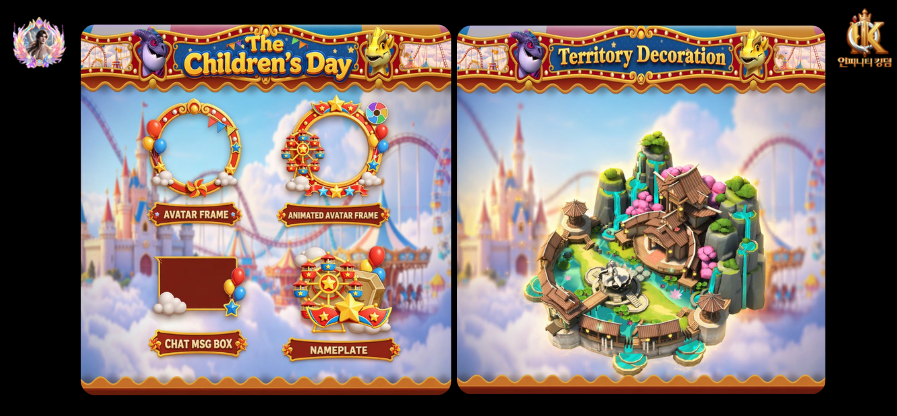
1. A Familiar Event With a Different Focus
One of the most interesting things about Sky Paradise was how ordinary it initially appeared.
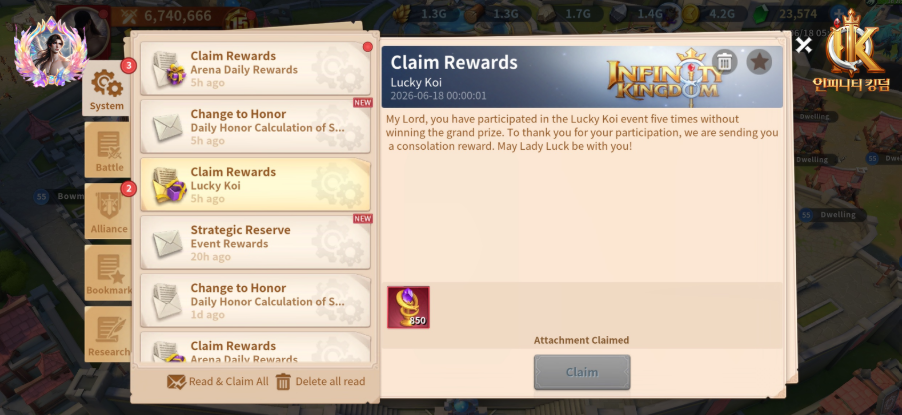
The event borrowed many of the ingredients players had already seen countless times before. Lucky Koi returned with its familiar Grail lottery and low-cost bundles. The battle pass offered the usual mix of Tokens of Light, resources, and cosmetics. Dazzling Wish remained the central gateway to Eternal Grails, while Glorious Challenge and Pinnacle Trial continued providing the daily rhythm that most seasonal events rely on.
Nothing felt revolutionary.
And honestly, that was part of the reason many players underestimated the event during its opening days.
Most of the familiar systems behaved exactly as expected. Players collected rewards, progressed through milestones, and slowly accumulated the resources needed for long-term account development. The Sky River Palace battle pass followed a structure veterans could navigate almost instinctively, while Lucky Koi once again provided one of the event's most recognizable recurring features.
Yet beneath that familiar surface, the event was quietly asking players to approach progression differently.
Unlike some seasonal events where resources could be spent almost immediately without consequence, Sky Paradise gradually rewarded patience. The longer the event ran, the more apparent it became that certain currencies, tokens, and progression materials would be competing for attention later in the cycle.
This wasn't obvious during the first few days.
In fact, early progression often felt relaxed. Players completed objectives, claimed rewards, and advanced through the event much as they had done countless times before. It was only later that the larger picture emerged and many began realizing that the event's most important decisions had very little to do with earning resources and far more to do with deciding when to use them.
That shift gave Sky Paradise a different personality from many previous seasonal events. The structure itself was familiar, but the way players interacted with it felt noticeably different by the time the event reached its final days.
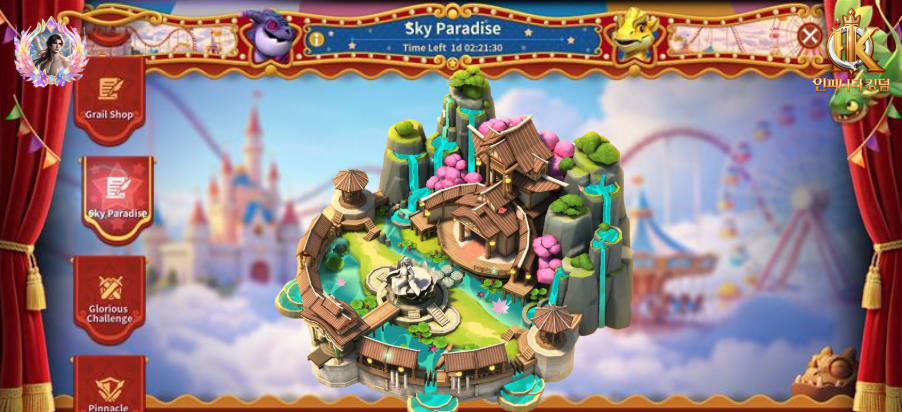
Maël's Opinion: I think this was one of the event's biggest strengths. Sky Paradise didn't need a brand-new immortal or a flashy mechanic to feel different. Instead, it used systems players already understood and simply changed how they interacted with them. Looking back, the event felt familiar enough to be comfortable but different enough to remain interesting throughout its duration.
2. Candy Defenders Takes Center Stage
If Sky Paradise had a defining feature, it was Candy Defenders.
Many seasonal events have a centerpiece mechanic that quietly dominates the entire experience, and this time that role clearly belonged to the event's boss progression system. While Tokens of Light, Grails, and battle pass rewards remained important, much of the event's momentum eventually revolved around collecting Candy and deciding when to use it.
The expansion from 10 levels to 15 levels changed the scale of the system considerably.
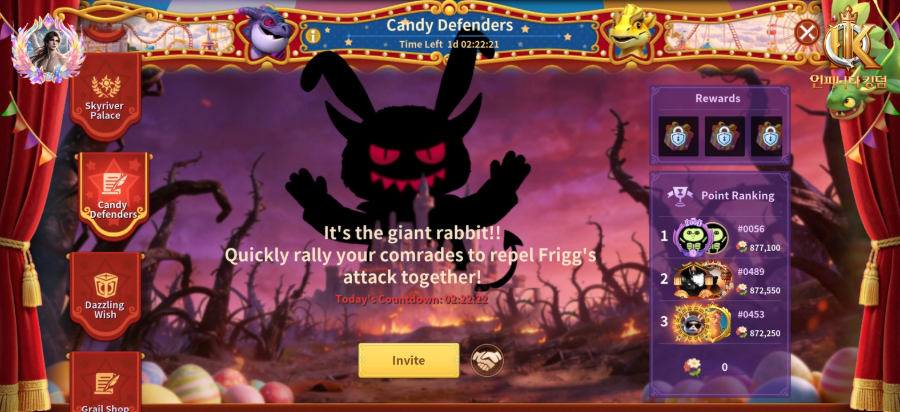
Suddenly, reaching the highest reward tiers felt like a much larger undertaking. Progression no longer happened naturally through casual participation alone. Players needed far more Candy than previous versions demanded, and the climb toward the final levels became a long-term objective rather than a short sprint.
What made the system interesting wasn't necessarily the gameplay itself.
Attacking bosses remained relatively straightforward. The challenge came from watching the event unfold and realizing how much additional Candy would become available later through Glorious Challenge, Pinnacle Trial, and other progression sources. Players who rushed into the system early often found themselves progressing steadily but inefficiently, while those who accumulated larger reserves were able to push much deeper once the event entered its later stages.
That dynamic created a very different feeling compared to previous versions of Candy Defenders.
Rather than encouraging constant interaction every day, the event almost encouraged restraint. Progression became less about immediate rewards and more about building toward larger pushes later in the cycle. As a result, Candy slowly transformed from a simple event currency into one of the most important resources in the entire festival.
By the final days, many players were paying closer attention to their Candy reserves than to their Grails.
And that alone says a lot about how central the system became.
Maël's Opinion: This was easily the feature that defined Sky Paradise for me. Not because the gameplay itself changed dramatically, but because it completely changed the pacing of the event. The jump to 15 levels made progression feel more ambitious, and for once the most important decision wasn't how much you earned, but when you decided to spend it. That's a surprisingly simple change, yet it gave the event far more depth than I expected at first.
3. The Puzzle That Kept Returning
If Candy Defenders became the event's centerpiece, the Sky Paradise Puzzle Challenges became its most persistent source of pressure.
At first, the system looked harmless enough.
Complete objectives, unlock puzzle pieces, progress through the board, claim rewards. Most players had already encountered similar mechanics before, and the early stages felt straightforward. In fact, many objectives completed naturally through normal event participation without requiring any special planning at all.
The surprise came later.
What initially appeared to be a simple progression path gradually revealed itself as something much more demanding once players realized the puzzle wasn't a one-time objective. Every few days, the board returned, bringing with it another cycle of milestones and another set of requirements to complete.
That changed the entire perception of the system.
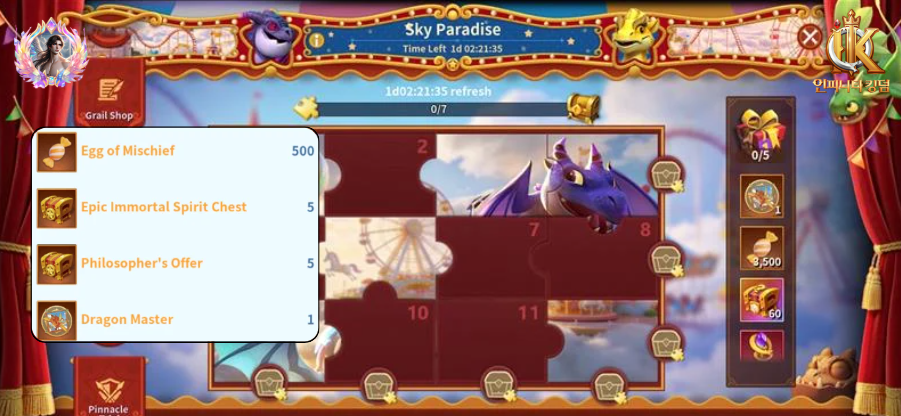
Suddenly, decisions made early in the event started carrying consequences. Tokens of Light that looked expendable during the first puzzle cycle became much more valuable later on. Grail generation mattered not only for Chaos progression but also for maintaining puzzle momentum. Resources that seemed abundant at the start slowly became tied to multiple objectives simultaneously.
And that's where the puzzle system became interesting.
Not because it was difficult mechanically, but because it constantly competed for resources that players wanted to use elsewhere. Every reset revived the same question: spend now, or keep options open for later?
By the final days of the event, many players weren't struggling to understand the puzzle itself. They were simply trying to balance it against everything else happening around it.
In that sense, the puzzle ended up becoming a perfect reflection of Sky Paradise as a whole.
Simple on the surface.
Much more demanding once the full event cycle revealed itself.
Maël's Opinion: I think the puzzle was the feature that caught the most players off guard. The mechanics themselves were easy to understand, but the repeated resets completely changed how valuable certain resources felt throughout the event. Looking back, this wasn't really a puzzle about completing objectives. It was a puzzle about planning ahead.
4. Glorious Challenge and Pinnacle Trial
While Candy Defenders and the Puzzle Challenges attracted most of the attention, the event's foundation still rested on two familiar pillars: Glorious Challenge and Pinnacle Trial.
Neither mode introduced major surprises this time around. Veterans already knew the routine. Daily attempts, progressive rewards, and the anticipation of Hard Mode arriving a few days into the event. Yet despite their familiarity, both systems ended up playing a much larger role than they initially appeared to.
The reason was simple.
They became some of the event's most important sources of Candy.
As the event progressed, players gradually realized that success in Candy Defenders wasn't tied solely to farming or spending. A significant portion of progression came from consistently completing these daily activities. Missing attempts didn't just mean losing a few rewards. It meant slowing progress across other parts of the event as well.
That interconnected feeling appeared everywhere throughout Sky Paradise.
Glorious Challenge continued serving as the event's primary daily activity, but the arrival of Hard Mode once again acted as a turning point. The first few days felt relatively straightforward, while later stages introduced a noticeable increase in both rewards and progression opportunities. As a result, many players found themselves planning around Day 4, knowing that a large portion of the event's value would only become available once Hard Mode unlocked.
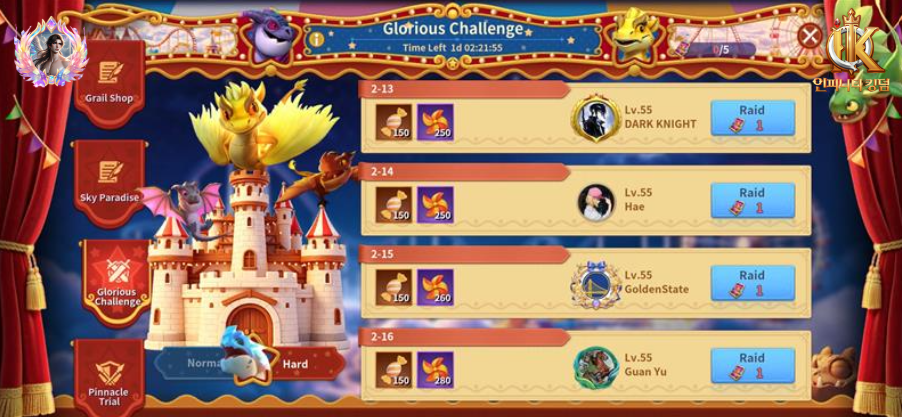
Pinnacle Trial followed a similar pattern.
The mode wasn't particularly flashy, but its rewards remained consistently relevant throughout the event. Tokens of Light, immortal fragments, and Candy all contributed directly to larger objectives elsewhere. Even partial progress often felt worthwhile because every reward found a use somewhere else within the event ecosystem.
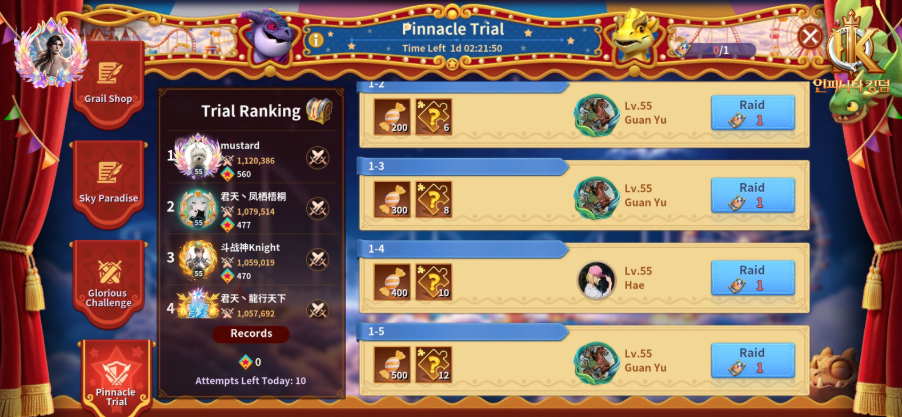
Looking back, neither mode stole the spotlight.
But together, they quietly powered much of the progression happening behind the scenes.
Without them, Candy Defenders would have felt slower, the puzzle system would have felt harsher, and the overall event would have offered far less momentum across its ten-day duration.
Maël's Opinion: This is probably the section many players underestimated. On their own, Glorious Challenge and Pinnacle Trial looked very similar to previous seasonal events. But once Candy Defenders became the event's centerpiece, both modes suddenly felt much more important. They weren't just daily activities anymore. They became fuel for everything happening elsewhere.
5. Tokens, Grails, and Difficult Choices
Every seasonal event in Infinity Kingdom eventually revolves around the same question:
What should you do with your Tokens of Light?
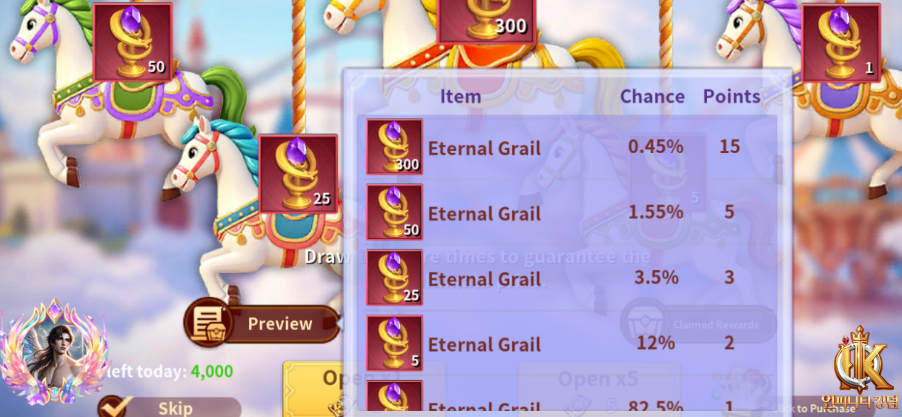
Sky Paradise was no different, but the answer felt far less straightforward than usual.
In many previous events, Tokens followed a relatively predictable journey. Players accumulated them, exchanged them through Dazzling Wish, generated Grails, and slowly worked toward Chaos immortals, artifacts, or other long-term progression goals. The system was familiar and largely self-contained.
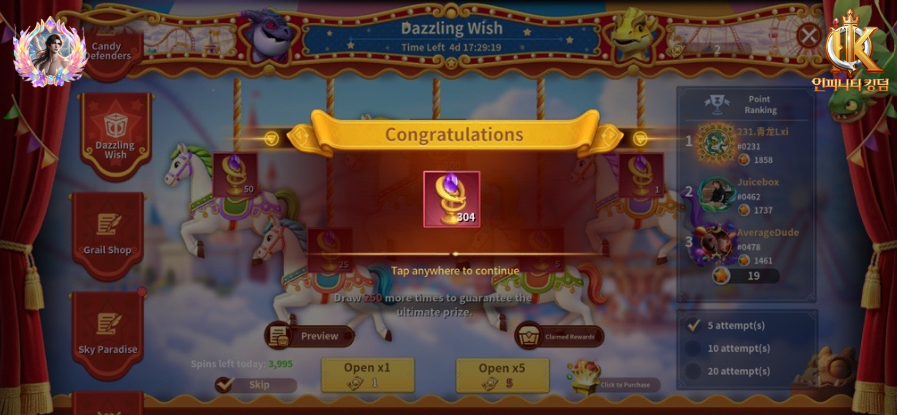
This time, however, Tokens seemed to have more jobs than ever.
The Puzzle Challenges continuously pulled on the same resource pool. Dazzling Wish remained essential for Grail generation. Event progression demanded attention elsewhere. Suddenly, spending Tokens stopped feeling like a simple progression decision and started feeling like a balancing act.
And that balancing act became one of the event's defining characteristics.
The interesting part wasn't that players lacked resources. Most active participants generated a respectable amount of Tokens throughout the event. The challenge came from the fact that every Token spent in one direction often meant slowing progress somewhere else.
That created an unusual level of tension for a seasonal event.
Normally, earning resources feels like the hard part. During Sky Paradise, deciding where those resources belonged often felt harder than obtaining them in the first place.
The same applied to Grails.
As always, the Grail Shop remained one of the event's major attractions. Chaos immortals, artifacts, and various progression materials continued offering long-term value. Yet the Puzzle Challenges constantly reminded players that immediate spending wasn't always the only consideration. Every decision seemed connected to another objective waiting further ahead.
Looking back, this is probably why so many players finished the event with very different experiences despite participating in the same activities.
Some focused heavily on Chaos progression. Others prioritized puzzle completion. Some pushed Candy Defenders aggressively. Others spread their resources more evenly across multiple objectives.
And interestingly, none of those approaches felt completely wrong.
Sky Paradise rarely forced players into a single path. Instead, it continuously asked them to choose which path mattered most.
Maël's Opinion: I think this was where the event felt the most different from previous seasonal cycles. The issue was rarely resource generation. Most active players earned plenty of rewards throughout the event. The real challenge was deciding what deserved those resources first. That's a much more interesting problem to solve than simply asking players to grind harder.
Conclusion: A Seasonal Event Defined by Timing
Sky Paradise arrived with many of the ingredients players have come to expect from Infinity Kingdom's seasonal events. Tokens of Light, Eternal Grails, challenge modes, battle pass rewards, and long-term progression all returned in familiar form. At first glance, there was little to suggest this event would feel significantly different from previous iterations.
Yet by the time the event ended, a clear identity had emerged.
Candy Defenders became the dominant progression system. The recurring Puzzle Challenges constantly influenced resource decisions. Glorious Challenge and Pinnacle Trial evolved into critical sources of progression rather than simple daily activities. Even familiar systems such as Dazzling Wish and the Grail Shop felt different because they existed alongside so many competing priorities.
More than anything, Sky Paradise became an event about timing.
Not timing in the sense of rushing objectives, but timing in the sense of understanding when resources would matter most. The players who navigated the event comfortably were often the ones who maintained flexibility, adapted to new objectives as they appeared, and resisted the temptation to spend everything the moment it became available.
That gave the event a very different rhythm from many seasonal cycles.
It wasn't the most spectacular event Infinity Kingdom has ever released. It didn't introduce a new immortal or completely reinvent the seasonal formula. Instead, it refined familiar systems and combined them in a way that continuously encouraged players to think ahead.
And sometimes, that's enough.
Maël's Final Opinion: Looking back, Sky Paradise succeeded because it created meaningful decisions without becoming unnecessarily complicated. Most of its individual mechanics were easy to understand, but the way they interacted with each other added depth throughout the event. Candy Defenders, the Puzzle Challenges, and the seasonal economy constantly pushed players to balance immediate rewards against future opportunities. That tension remained present from the first day to the last, and ultimately became the event's defining characteristic.
For more insights, check out my previous articles here.
download Infinity Kingdom now and script your legend.
Until next time — Maël, Press Officer
Translate

Popular Posts
1

Children’s Day Festival 2026 A Seasonal Event Built Around Choices
191 discussions 301 views
2
!["Hipólita y el Reino de las Mil Voces" [Rincón de las Historias] - Infinity Kingdom](https://oss.gtarcade.com/forum/gif/2026-06-21/546754_b94cab52-978e-4e89-83ea-ce96ff836a0d_221906.gif?x-oss-process=image/resize,w_150,h_150)
"Hipólita y el Reino de las Mil Voces" [Rincón de las Historias] - Infinity Kingdom
178 discussions 209 views
3
!["Haz Más Fuerte Toda Tu Cuenta" El Secreto de las Insignias [Guía Nivel Avanzado] - Infinity Kingdom](https://oss.gtarcade.com/forum/gif/2026-06-21/546754_03fcca36-2733-49b7-8694-573f725a9eef_220923.gif?x-oss-process=image/resize,w_150,h_150)
"Haz Más Fuerte Toda Tu Cuenta" El Secreto de las Insignias [Guía Nivel Avanzado] - Infinity Kingdom
143 discussions 168 views