
Infinity Kingdom Press Officer

m a ë l
After years of absence, Battle of Asteria finally returns to Infinity Kingdom in patch 2.9.5.
And surprisingly, very little actually changed.
The camps, alliance bosses, progression structure, and even the famous 1-troop coordination strategy all remain incredibly close to the original version older players remember. But despite that familiarity, Asteria no longer feels like the same event.
Not because of its mechanics.Because of the game surrounding it.
Power levels are higher. Alliances are stronger. Progression systems are broader. And now, with Affinity progression tied directly into the event through the new Otherworld Crystal currency, Asteria suddenly sits at the center of something much larger than artifact farming.
This is not really a redesign. It’s a reintegration.
Table of Contents
- The return of an old event
- Personal challenges and progression pacing
- Alliance bosses and the return of 1-troop coordination
- The new reward structure
- Otherworld Crystals and Affinity progression
- Why Asteria feels different today
- Final thoughts on the event’s return
Introduction
When Battle of Asteria first appeared years ago, the event mainly existed as a valuable source of artifact progression. At the time, artifacts represented one of the most important long-term investments in Infinity Kingdom, making Asteria an event players actively waited for despite its relatively simple structure.
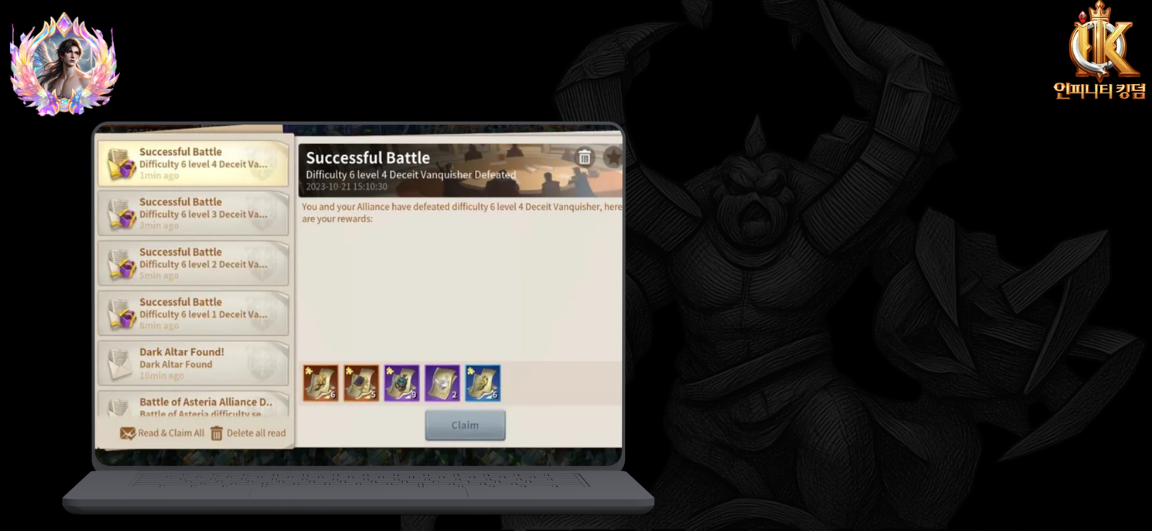
Now the event is back. And mechanically, it feels almost frozen in time.
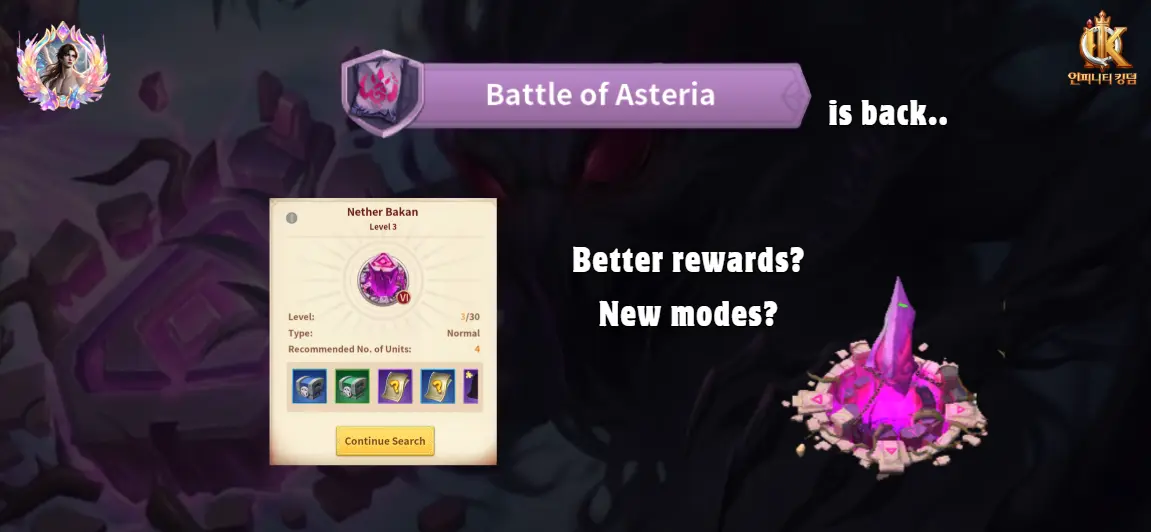
The challenge progression remains extremely familiar. Players push through increasingly difficult Shadow Rogue camps, alliances coordinate against summoned bosses, and the classic participation strategies immediately return. Veteran players will probably recognize the entire flow within minutes.
But the context around the event changed completely.
Infinity Kingdom today is far more layered than it was during the original Asteria cycles. Affinity progression, seasonal systems, broader immortal development, and account-wide progression mechanics now shape how rewards are valued. As a result, Asteria no longer feels like a side event focused mostly on artifacts.
It now feels integrated into the larger progression ecosystem of the game.
And honestly, that may be the smartest thing about its return.
Personal Challenges and progression pacing
The personal side of Asteria remains extremely recognizable.
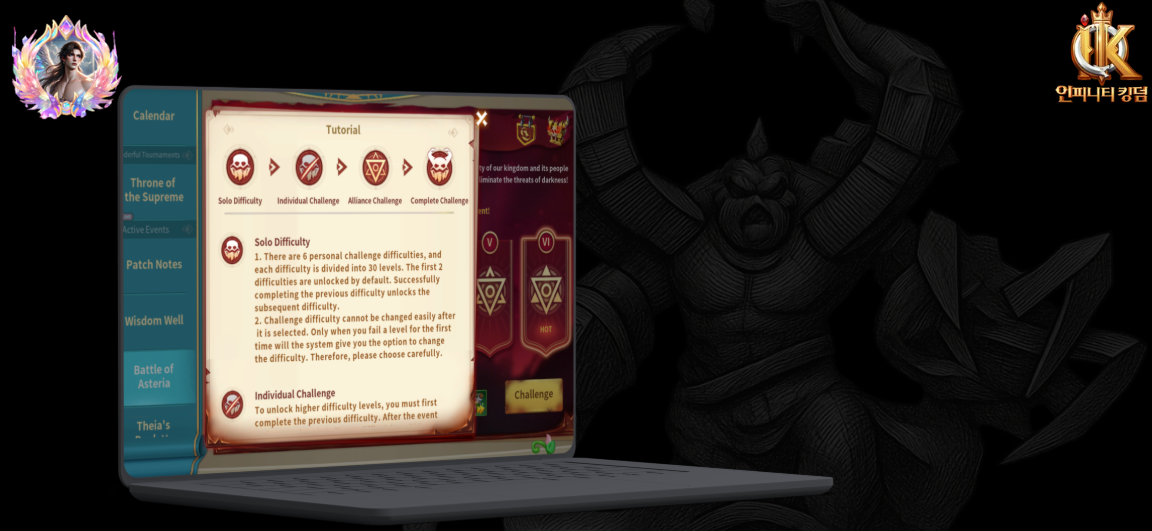
You move through progressively harder Shadow Rogue camps, gradually increasing the difficulty until reaching the higher challenge tiers. The structure itself barely changed. Older players will immediately recognize the pacing, the checkpoints, and the feeling of slowly pushing deeper into the event over multiple runs.
And honestly, that familiarity works in Asteria’s favor.
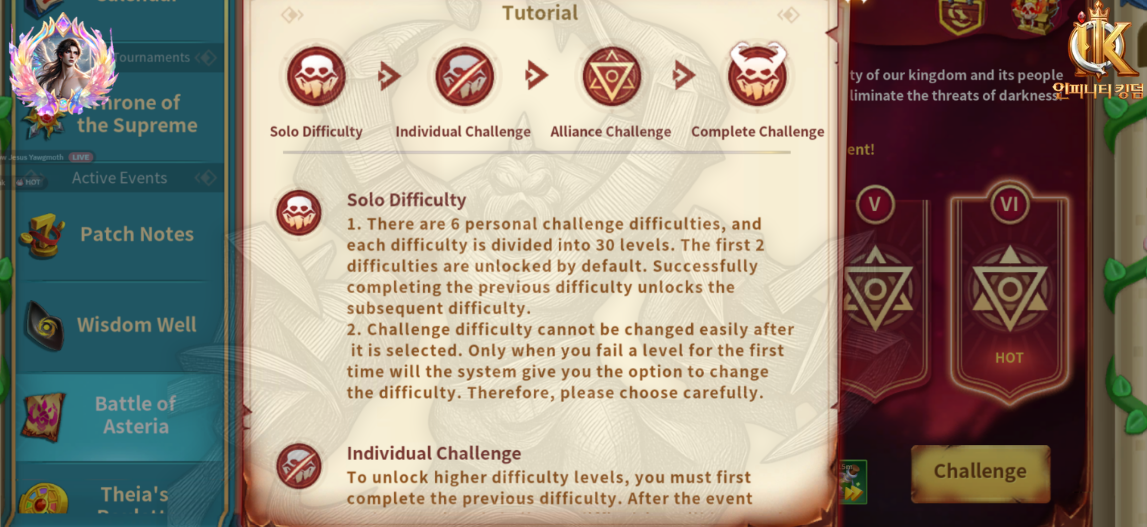
The mode never needed a complete redesign mechanically. The progression loop was already solid. What changes now is how modern accounts interact with it.
Today’s immortals are stronger, sustain tools are broader, and PvE optimization is far more developed than it was during the original release. As a result, the event feels less punishing overall, even at higher levels. Enemies survive long enough to make fights meaningful, but incoming pressure no longer feels overwhelming for developed accounts running proper PvE utility setups.
That creates a different rhythm compared to older Asteria cycles.
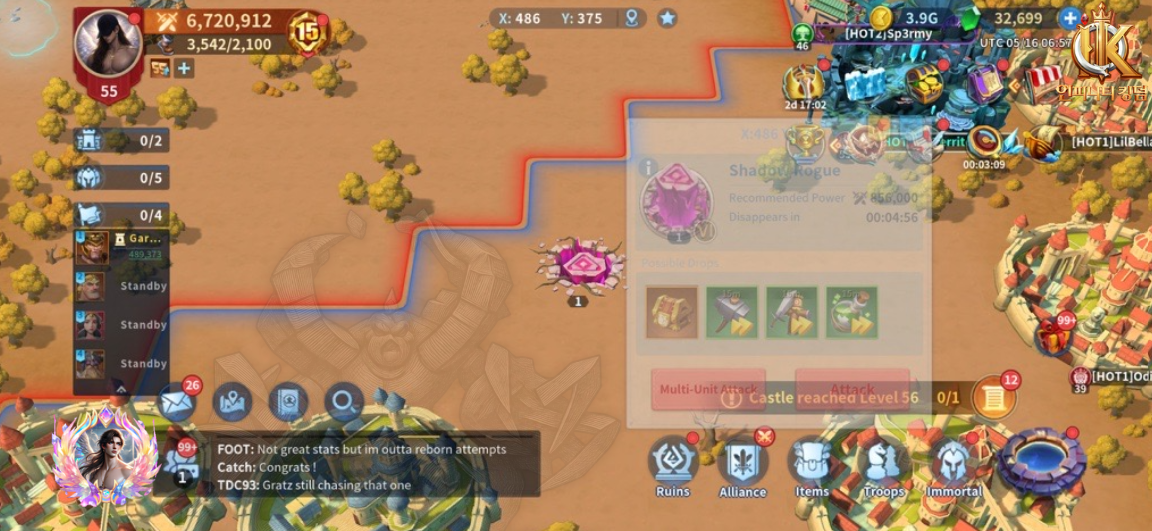
Originally, progression often felt like survival. Now it feels more like optimization. The challenge is less about simply clearing the camps and more about doing it efficiently. That part of the event almost feels unchanged despite the overall power creep surrounding it.
Maël’s Opinion: This is probably the cleanest part of the rework because it barely tries to reinvent itself. The structure already worked years ago, and modern account progression actually makes the pacing feel smoother today instead of outdated.
Alliance bosses and the return of 1-troop coordination
If there is one thing veteran players immediately remembered after Asteria returned, it was the alliance bosses.
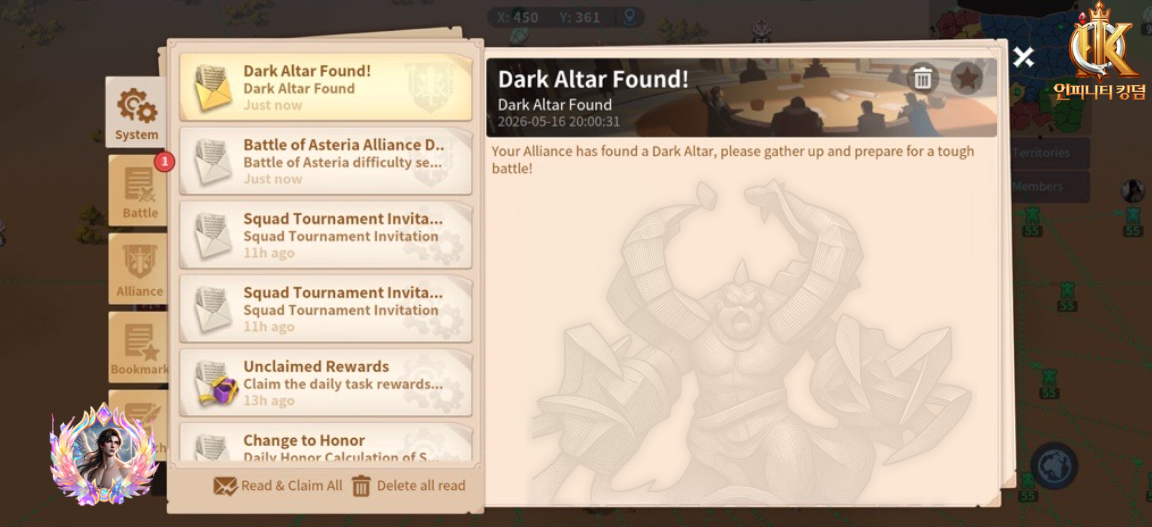
And more specifically:
the 1-troop strategy.
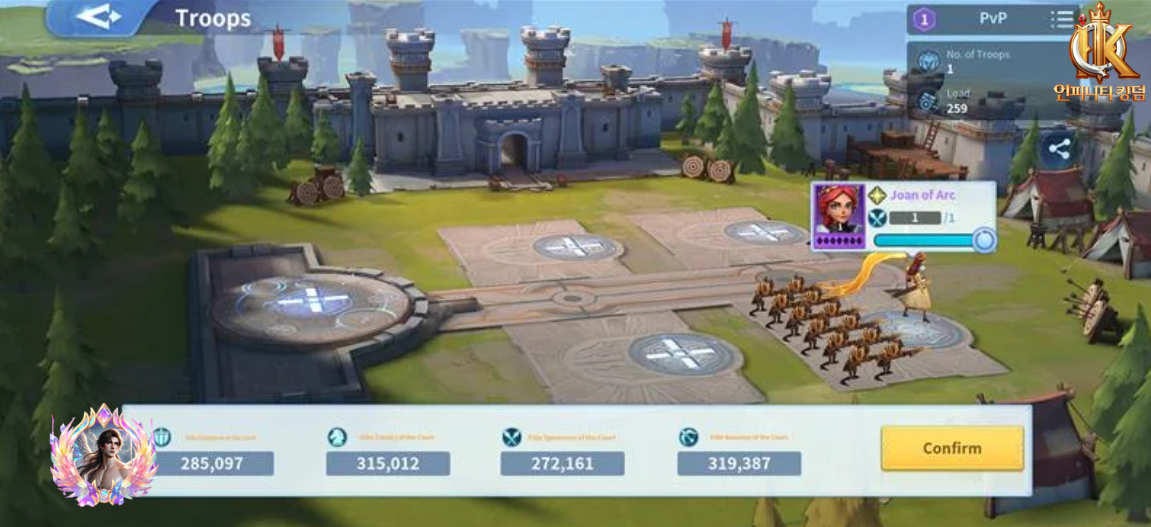
Mechanically, the alliance phase feels almost identical to the original version. Once enough members complete their personal progression, alliance bosses unlock and the entire alliance converges on a single target. The structure itself remains simple, but the coordination around it is where things become interesting again.
Or problematic.
Modern servers are dramatically stronger than they were during the original Asteria cycles. Even moderately developed conquest alliances now possess enough burst damage to erase these bosses extremely quickly. And because participation rewards still depend on tagging the encounter, the old issue immediately returns: bosses die before everyone gets credit.
That’s why the famous 1-unit march strategy instantly came back the moment Asteria returned.
- Gather the alliance.
- Summon the boss.
- Everyone have a hit.
- Then finish it afterward.
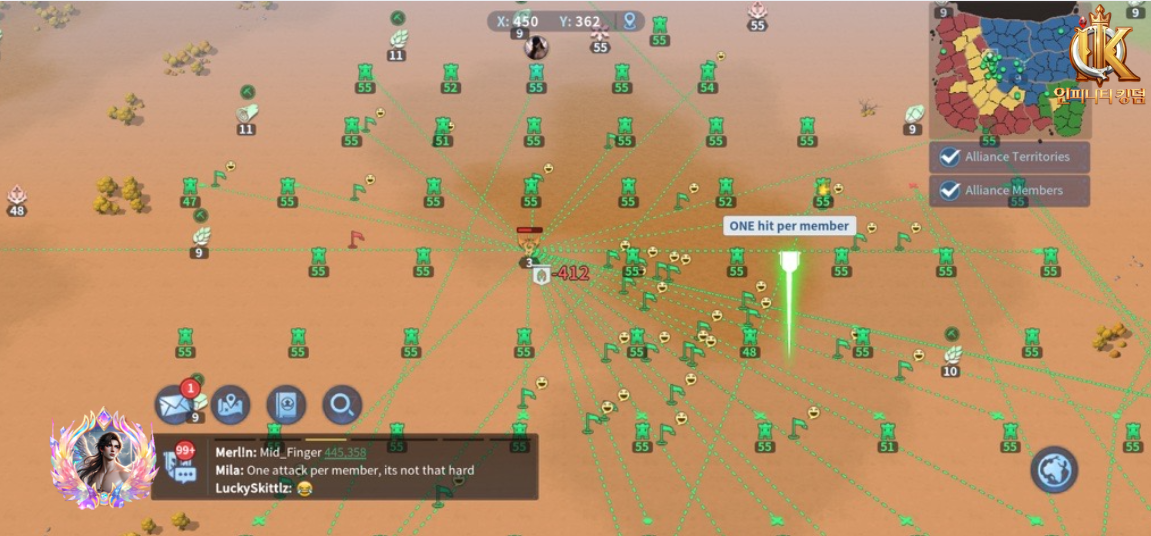
It sounds primitive, but honestly, it’s still the safest way to handle the event fairly on strong servers.
And in a strange way, this is also part of Asteria’s identity. Unlike many modern events built around automation or passive participation, Asteria still creates moments where alliances need actual coordination, even for something as simple as not killing the boss too fast.
That social aspect is probably why older players remember the mode so clearly.
Not because the mechanics were revolutionary.
Because alliances actually had to organize themselves.
Maël’s Opinion: The funniest part is that the oldest strategy in Asteria is still probably the best one. If anything, modern power creep made coordination even more important than before because bosses disappear absurdly fast now.
The new reward structure
Mechanically, Asteria feels very close to the original version.
The rewards do not.
Years ago, the event was mostly remembered as a strong source of artifact progression. At the time, artifacts represented a major long-term investment, so simply participating in Asteria already carried real value for both free-to-play and active alliances.
Now the reward structure feels much broader.
Speedups, Dragon Chest Keys, philosopher stones, immortal fragments, and especially Otherworld Crystals all push the event far beyond simple artifact farming. Instead of feeding one progression system, Asteria now contributes to several parts of account development simultaneously.
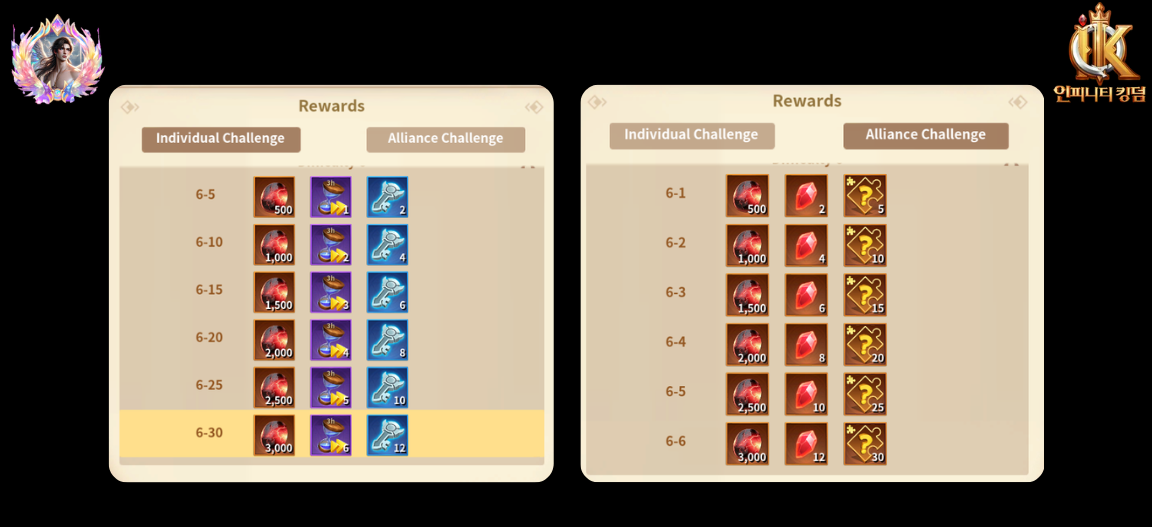
And honestly, that changes the event more than the mechanics themselves.
The most important addition is clearly Otherworld Crystals. The currency directly connects Asteria to the new Affinity system, transforming the event into part of the game’s larger progression ecosystem rather than a standalone activity.
That integration matters because it gives the event long-term relevance beyond its three-day duration. You are no longer just farming temporary resources. You are feeding systems designed to grow over future patches.
At the same time, the rewards themselves feel surprisingly generous for the current balancing standards. Fully completing both personal and alliance objectives provides enough currency to interact meaningfully with the event shop without immediately feeling restricted.
Which is probably intentional.
The developers clearly want Asteria to become part of the regular progression cycle again rather than a forgotten side event.
Maël’s Opinion: This is where the return of Asteria actually becomes interesting. The mechanics are familiar, but the rewards now connect directly into modern account progression systems. That makes the event feel much more relevant than it used to.
Otherworld Crystals and Affinity progression
Otherworld Crystals are what truly anchor Asteria into the current version of Infinity Kingdom.
Without them, the event would mostly feel like a nostalgic return with updated rewards. With them, Asteria suddenly becomes part of the game’s newest progression layer.
The currency itself is straightforward. You earn crystals through both personal and alliance objectives, then spend them in the event shop on Affinity-related materials and progression items. But once players started looking closer at the shop structure, another layer immediately appeared: efficiency.
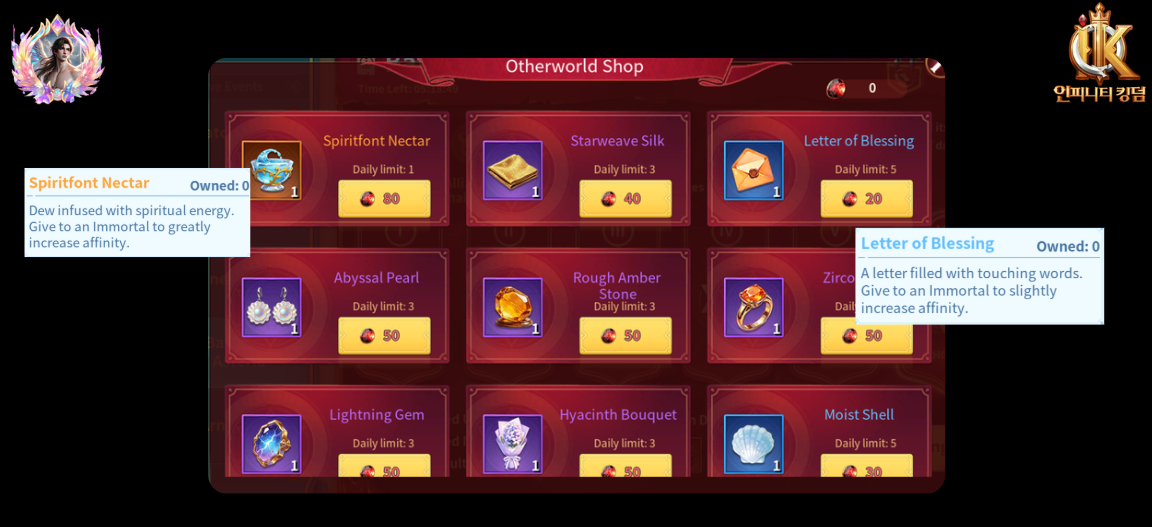
Not all Affinity materials seem equally valuable.
Some items appear universal, usable across Chaos, Holy, and Shadow immortals, while others look tied directly to specific elemental factions. That distinction may end up mattering far more than the raw crystal income itself, especially once players begin optimizing long-term Affinity progression seriously.
And this is where modern Infinity Kingdom differs heavily from older Asteria cycles.
Back then, the event was mostly about obtaining rewards.
Now, it’s also about deciding how to allocate them correctly.
That creates a slower optimization layer around the event. Players are not just clearing content anymore, they are already trying to determine which purchases remain efficient weeks or months later once Affinity progression expands further.
Interestingly, the event does not fully answer those questions yet. Affinity values, progression efficiency, and long-term bottlenecks still remain somewhat unclear right now, which makes the shop feel more experimental than solved.
And honestly, that uncertainty is probably intentional at this stage.
Maël’s Opinion: The crystals themselves are generous. The real challenge is probably not obtaining them, but understanding what will actually remain efficient long-term once the Affinity system expands further.
Why Asteria feels different today
What makes Asteria interesting is not really the event itself.
It’s the fact that Infinity Kingdom changed around it while the core structure stayed almost the same.
Years ago, Asteria felt like a relatively isolated progression event. You participated for artifacts, some resources, alliance rewards, and that was mostly it. The event existed on its own.
Now, almost every part of it feeds into something larger.
The rewards connect into Affinity progression. Affinity connects into insignias. Seasonal pacing is faster. Alliances are stronger. Account progression systems are layered on top of each other far more heavily than before.
As a result, Asteria no longer feels like a temporary side activity. It feels integrated into the broader progression rhythm of the game.
And interestingly, the event benefits from not trying too hard to modernize mechanically.
The simplicity of the structure actually contrasts well with how dense Infinity Kingdom became over time. Clear camps, alliance bosses, progression checkpoints, straightforward coordination. There’s something almost refreshing about an event that still feels readable inside a game now filled with overlapping systems.
At the same time, modern power scaling also exposes some of the event’s age. Bosses melt extremely quickly, optimization begins almost immediately, and alliances already know how to exploit the structure efficiently because many of the old strategies still work perfectly.
So Asteria now exists in a strange middle ground:
old design philosophy inside a much newer progression ecosystem.
And honestly, that’s probably why the return feels so nostalgic for veteran players.
Maël’s Opinion: Asteria feels less like a new event and more like reopening an older part of Infinity Kingdom that the game slowly grew around over the years. Mechanically simple, but surprisingly relevant again because of everything now connected to it.
Conclusion
Battle of Asteria returns almost exactly how older players remember it.
The progression structure is familiar. The alliance coordination remains chaotic in the same strangely organized way. Even the classic 1-troop strategy survives completely unchanged despite years of power creep and evolving metas.
And honestly, that familiarity is probably part of why the event works.
The real difference today is not the mechanics themselves, but how much more connected the event now feels inside the broader Infinity Kingdom ecosystem. Rewards no longer stop at artifacts or simple progression materials. They now feed directly into Affinity systems, long-term collection mechanics, and account-wide development layers that simply did not exist during the original Asteria cycles.
That makes participation feel more meaningful than before.
At the same time, the return also highlights how much the game evolved while Asteria was gone. Modern alliances are stronger, optimization is faster, and progression systems are far more layered. The event still carries an older design philosophy, but it now operates inside a much denser progression environment.
And strangely enough, that contrast works.
Asteria does not need to reinvent itself completely to feel relevant again.
It just needed a reason to matter in modern Infinity Kingdom.
Maël’s Final Opinion:The smartest thing about Asteria’s return is probably that the developers did not over-redesign it. The event still feels recognizable, but the surrounding reward ecosystem gives it a completely different importance today. It’s less about nostalgia itself and more about finally reconnecting an older event to the modern progression systems of Infinity Kingdom.
For more insights, check out my previous articles here.
download Infinity Kingdom now and script your legend.
Until next time — Maël, Press Officer
Translate

Popular Posts
1
!["El Latido Bajo las Raíces" [Capítulo 99] La Última Sanadora - Infinity Kingdom](https://oss.gtarcade.com/forum/gif/2026-06-06/546754_fb7850e3-793d-4991-8d34-40779b18b2ca_095837.gif?x-oss-process=image/resize,w_150,h_150)
"El Latido Bajo las Raíces" [Capítulo 99] La Última Sanadora - Infinity Kingdom
160 discussions 204 views
2

Infinity Kingdom Patch 2.9.6 : Refining the Adventure?
77 discussions 188 views
3
![“Himiko y el Reino del Vacío” [Rincón de las Historias] - Infinity Kingdom](https://oss.gtarcade.com/forum/gif/2026-06-07/546754_99720720-6347-427e-aea8-39d6ab917f6f_223424.gif?x-oss-process=image/resize,w_150,h_150)
“Himiko y el Reino del Vacío” [Rincón de las Historias] - Infinity Kingdom
90 discussions 133 views