
Infinity Kingdom Press Officer

m a ë l
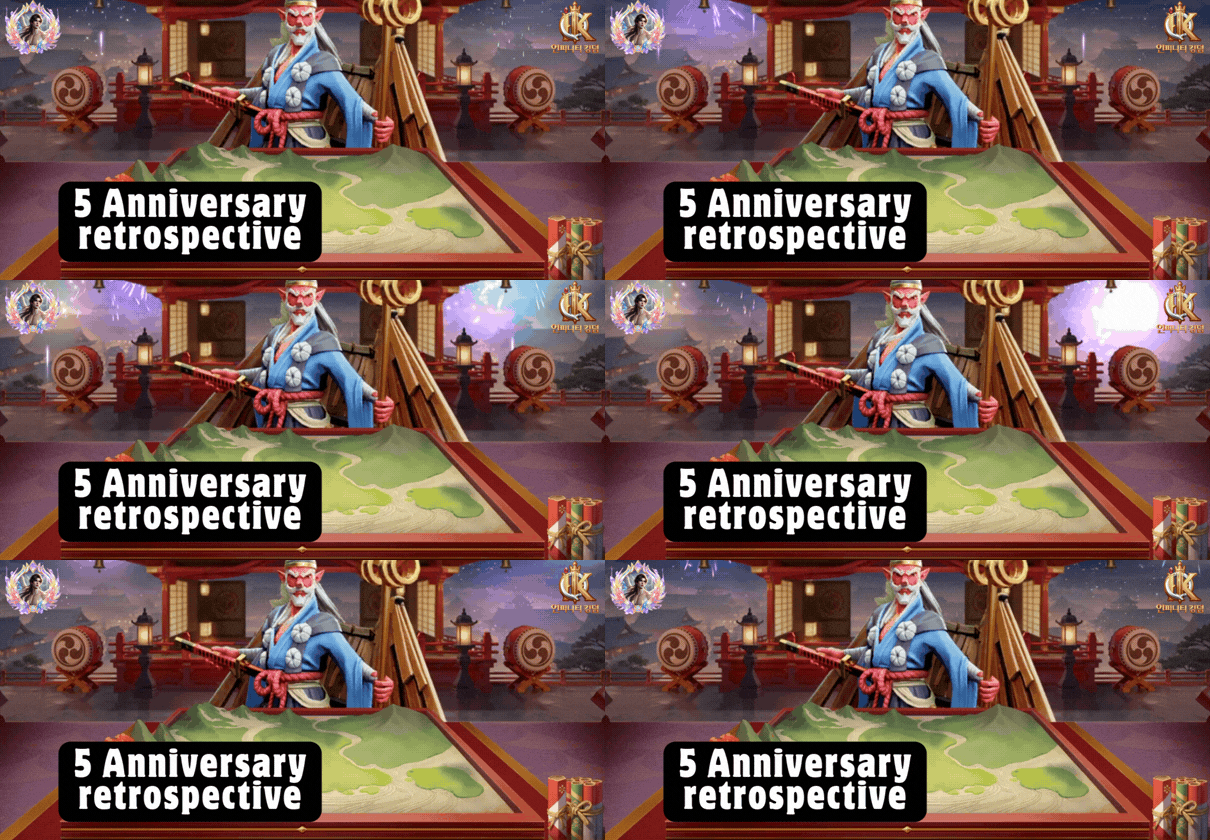
Five years in Norheim.
The 5th Anniversary event did not reinvent the seasonal formula.
It layers two new mini-systems on top of the familiar engine.
New Chaos Immortal access.
A cooperative cake ladder.
A 2048-style puzzle with ranking pressure.
Let's see how it was and give us your feedback about this new formula.
Table of Content:
- Event Structure and Core Currencies
- Lucky Koi & Daily Token Flow
- Hall of Divine Might Battle Pass
- Fruit Frenzy – The 2048 Layer
- Celebration Cake – Cooperative Progression
- Glorious Challenge – Anniversary Coins Engine
- Pinnacle Trial – Limited High-Value Push
- Dazzling Wish & Grail Shop
- Challenge Shop – What Actually Matters
- Maël’s Opinion – Anniversary or Inflation?
1. Event Structure and Core Currencies
The 5th Anniversary event followed the established seasonal template.
- Ten days.
- PvE ladder.
- Battle Pass.
- Wish sink.
- Event shop.
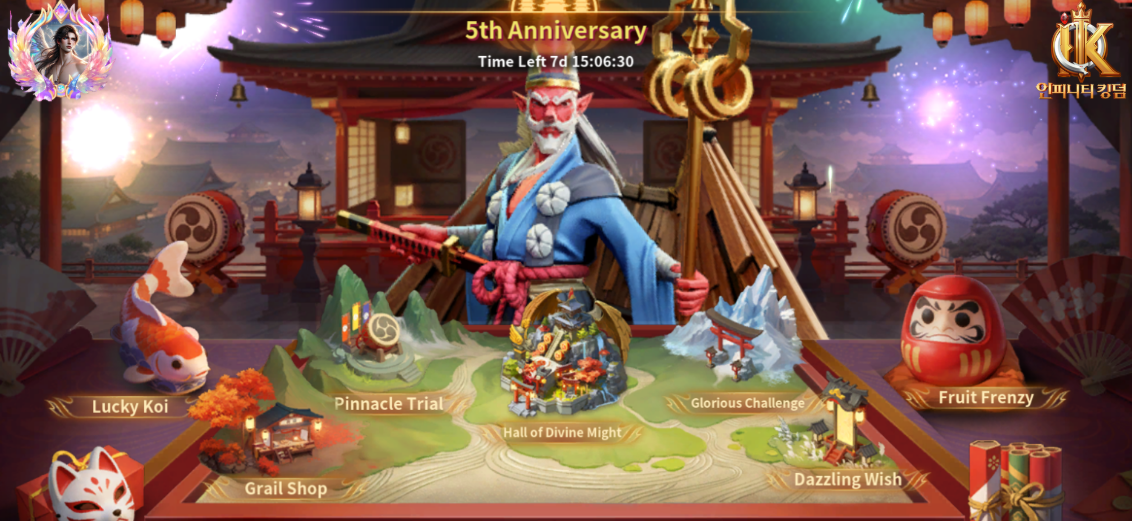
The difference this time is currency density. Three main currencies interact:
- Fish Tokens
- 5th Anniversary Coins
- Tokens of Light and Eternal Grails
This created parallel progression tracks instead of one dominant path.
- Coins feed the Challenge Shop
- Tokens of Light feed Dazzling Wish
- Grails feed Chaos scaling
- Fish Tokens feed the mini-game ladder
This event was not about doing everything.
It was about identifying which currency aligns with your account’s next breakpoint. If you chase everything, you dilute value. If you prioritize, the structure becomes manageable.
Maël’s Opinion: Anniversary events are rarely about innovation. They are about stacking systems. The key question is not “Is it fun?” but “Where does power accumulate?” So far, Chaos scaling and Token flow look like the real anchors.
2. Lucky Koi & Daily Token Flow
As the event is now closed, this is the simplest system to evaluate. The daily sign-in gives one Token of Light. It looks small, but over ten days that is ten permanent tokens added to your long-term pool. Tokens do not expire. They stack. They convert into Eternal Grails through Dazzling Wish. Over time, consistency here outperforms any short burst of spending elsewhere in the event.
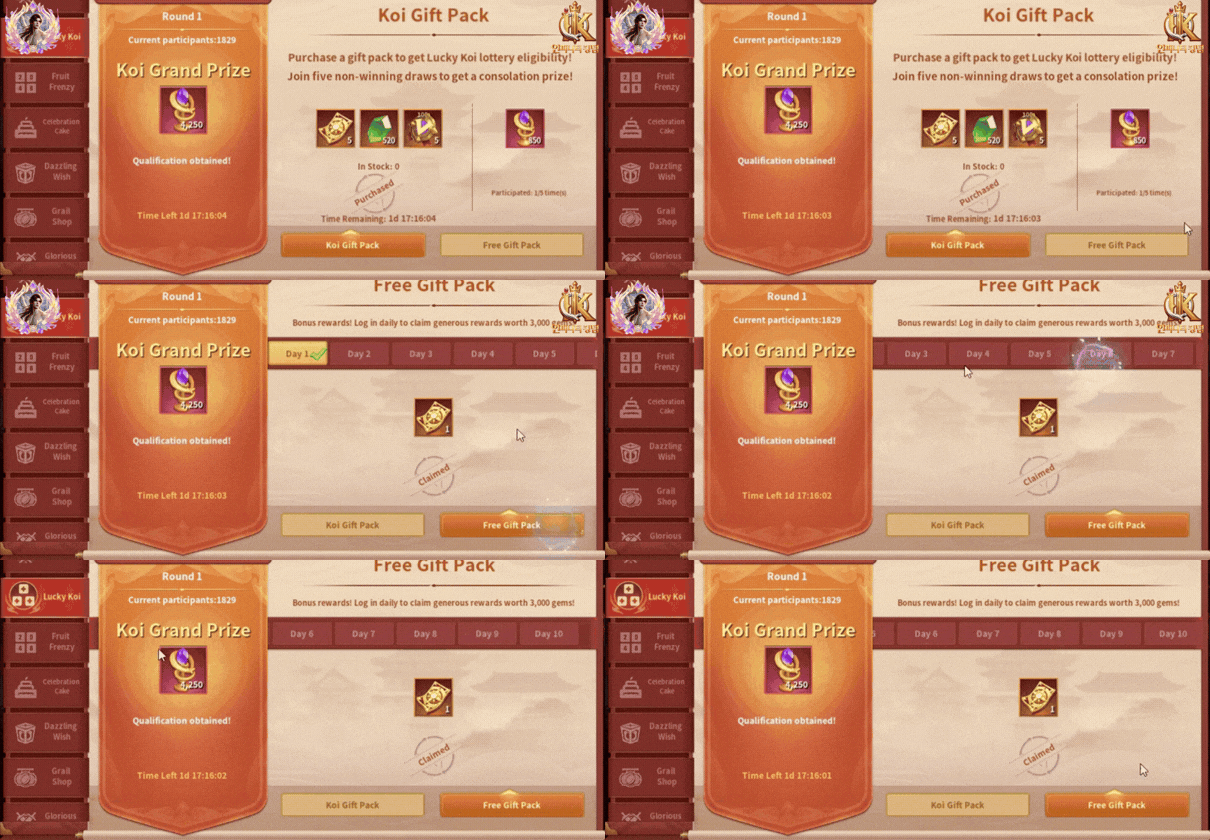
The Lucky Koi pack remained the light-spender lever. Modest cost, Tokens of Light, Gems, VIP points, and a Grail lottery component. Five purchases guarantee a fixed Grail return even without hitting the jackpot. That makes it structured, not pure gambling.
What changes this anniversary was competition for attention. Tokens of Light now share space with Fish Tokens and 5th Anniversary Coins. You cannot maximize everything. That forces prioritization. If your goal is Chaos scaling through Grails, Tokens remain core. If you chased mini-games and rankings, their relative weight feels smaller.
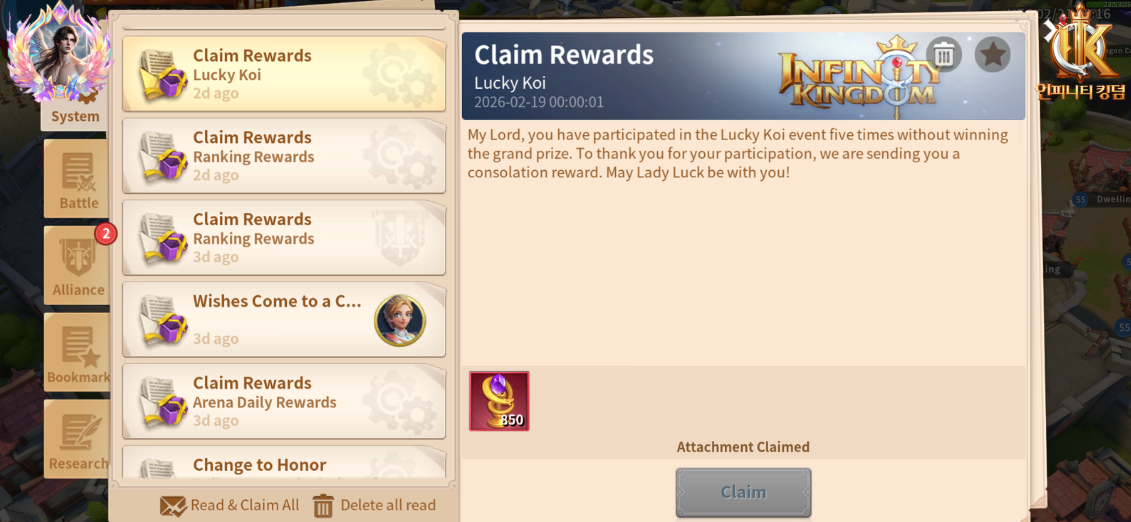
Maël’s Opinion: The daily Token is still one of the highest long-term ROI actions in the game. Skipping it weakens future cycles more than most players realize. The Koi pack remains efficient for Grail-focused accounts, but if you diluted resources across multiple anniversary systems, its impact naturally shrinks
3. Hall of Divine Might — Anniversary Battle Pass
The structure followed the established seasonal model. Thirty levels, a free track, and a premium track. No surprises.
The free side delivers a steady stream of Tokens of Light. The premium side significantly increases that flow and introduces the anniversary-exclusive Hall of Divine Might castle skin. There is no layered mechanic behind it. No hidden system. It is straightforward: Tokens plus one featured cosmetic.
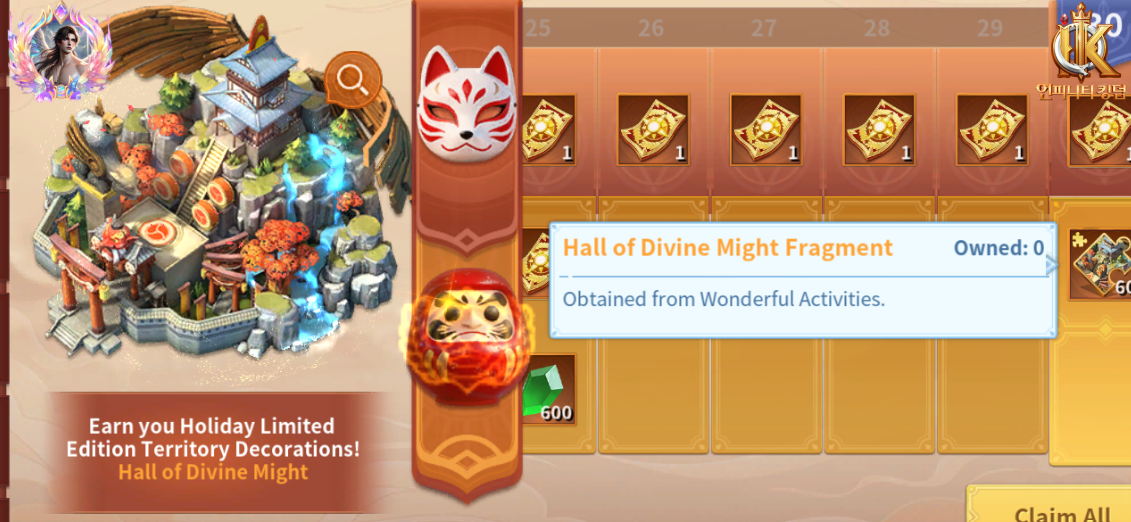
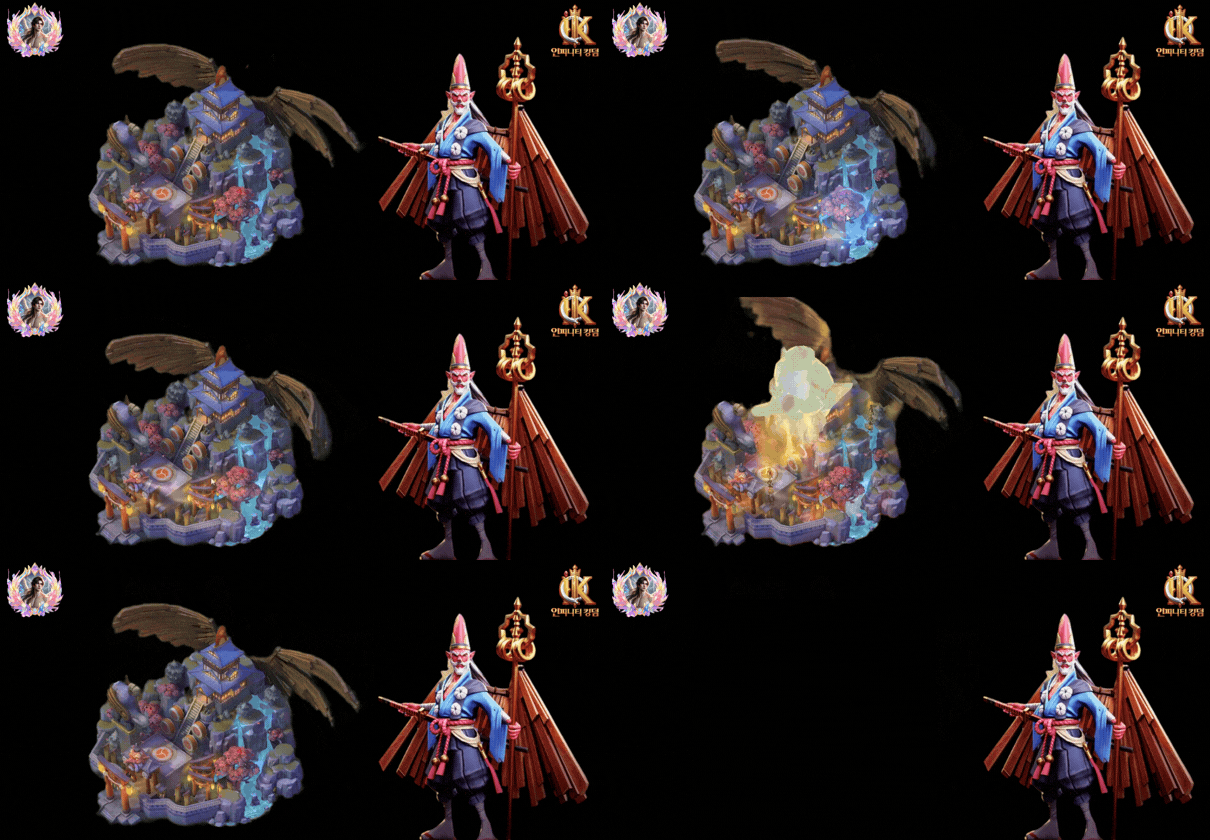
The skin itself boosts Troops Attack and Troop Load. At base level, the stats are solid and usable. At maximum development, it becomes competitive — but reaching that level requires eleven copies. That is the quiet cost behind every seasonal castle skin. The initial version feels accessible. Full scaling rarely is.
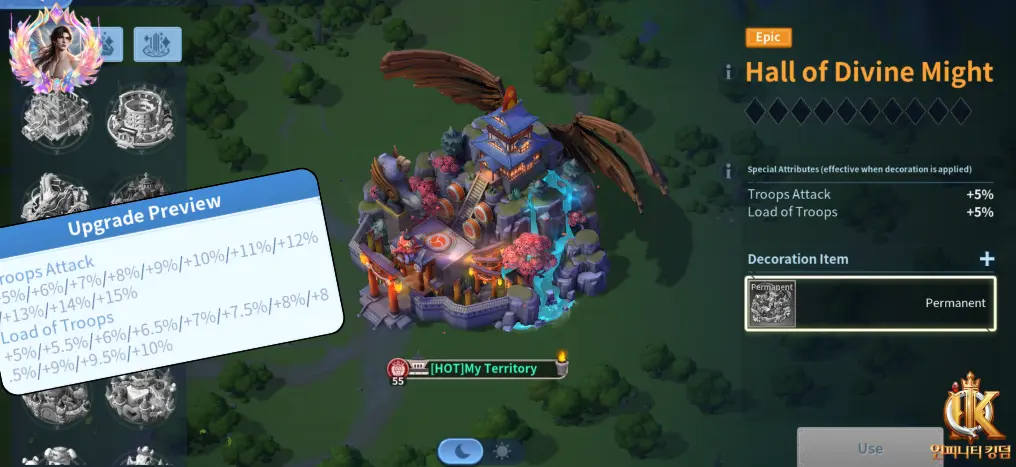
This Battle Pass is not designed to create a sudden power spike. It is a currency accelerator. If your objective is to push Dazzling Wish or convert Tokens into Grails efficiently, it becomes one of the most direct injection points in the entire event.
Maël’s Opinion: This pass does not transform your account. It feeds it. If you are playing the Grail game, it fits naturally. If you are chasing raw stat efficiency, calculate carefully before committing. Anniversary skins look impressive. Their full development cost usually tells a different story.
4. Fruit Frenzy — The 2048 Anniversary Experiment
The anniversary’s most visible addition was Fruit Frenzy, a 2048-style mini-game layered into the event economy. On paper, it looks casual. In practice, it is resource-gated and ranking-driven.
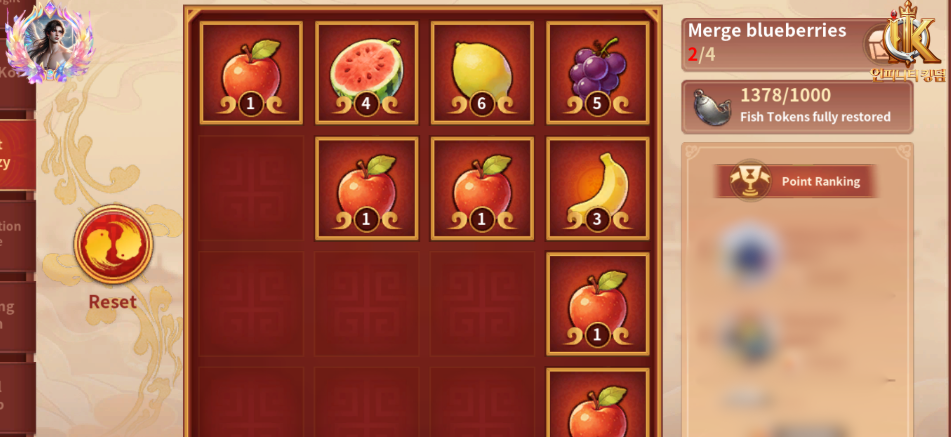
Each move consumed Fish Tokens. You merge identical fruits, scale the board, and unlock milestone rewards as your score increases. Progression is tied to execution. Rankings are tied to volume.
That distinction matters.
If Fish Tokens are limited, efficiency defines your ceiling. If extra Fish Tokens are monetized aggressively, leaderboard spots will lean toward heavy spenders. That has been the pattern in past limited-move events.
This mode was not about randomness. It is about discipline. Corner stacking, controlled merges, and preserving board space matter more than speed. One inefficient streak can force additional token purchases just to stay competitive.
The question is not whether Fruit Frenzy is fun. The question is whether the rewards justify the Fish Token burn rate.
If ranking rewards are token-heavy or coin-heavy, expect competition. If milestone rewards are strong enough on their own, free-to-play players should ignore leaderboards and focus strictly on guaranteed thresholds.
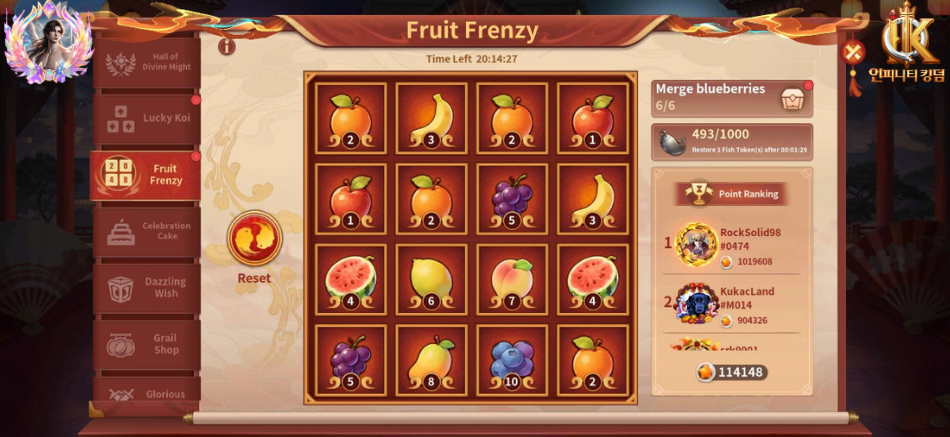
Maël’s Opinion: Fruit Frenzy was the experimental layer of this anniversary. It can reward skill. It can punish impatience. If extra Fish Tokens are expensive, leaderboard chasing becomes optional rather than rational. Play clean. Secure milestones. Spend only if the math supports it. Would you like similar mini games like that in future events?
5. Celebration Cake — Cooperative Progression
Celebration Cake shifted the anniversary from solo optimization to paired progression. You choose one collaborator per cake, craft up to two cakes, and level each through thirty stages using Delicious Cream. Every upgrade rewards both partners.
This is not cosmetic fluff. It is a structured progression ladder.
Cream comes from anniversary activities and Recharge packs. That creates a split ceiling. Free players will progress steadily but may stall before full completion. Moderate spenders can likely clear both cakes. High spenders can secure full value without friction.
The real variable was your partner. Look at me disapointing Myrahk.
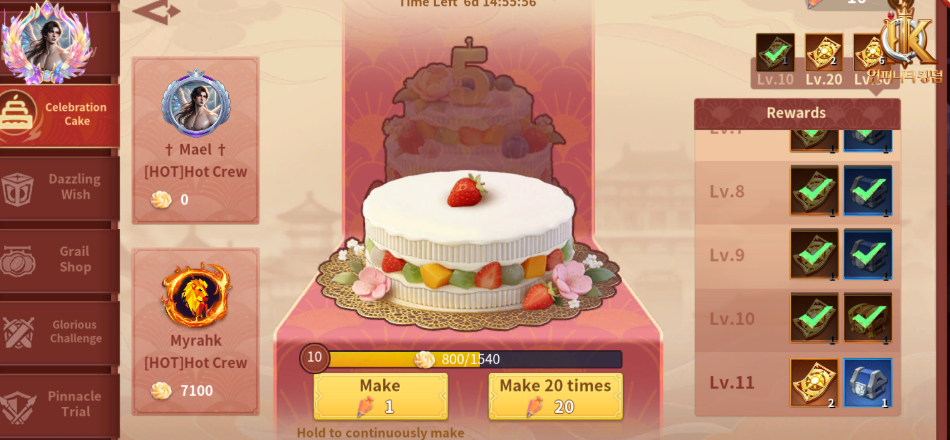
If your collaborator is inactive or inconsistent, your progress slows. If both players stay engaged, rewards scale smoothly. Activity level and pacing matter more than raw power.
This system rewards coordination, not combat strength. That is a subtle but important difference.
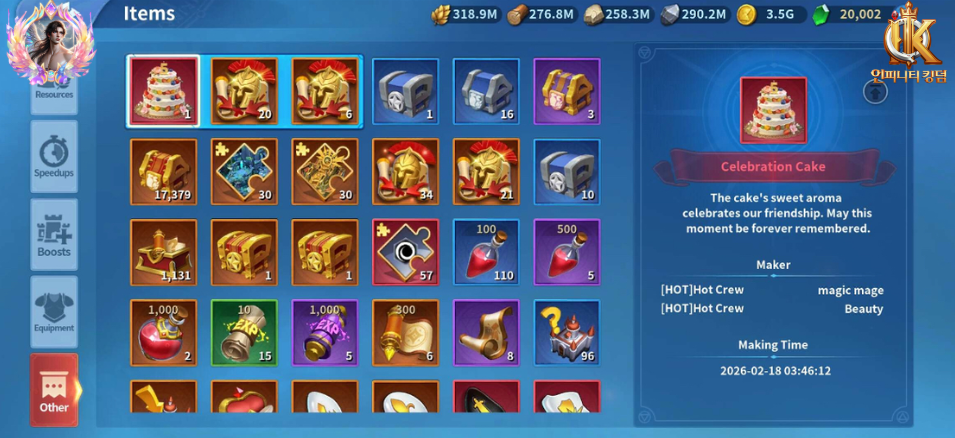
Maël’s Opinion: Celebration Cake is simple but strategic. Choose your partner carefully. Similar activity level. Similar commitment. This is not about skill. It is about reliability. If both sides show up, the system works. If one side drifts, rewards stall.
6. Glorious Challenge — The Coin Engine
Glorious Challenge remained the economic core of the anniversary event.
Normal mode opens immediately. Hard mode unlocks on day two. Clearing stages grants Gems on first completion and, more importantly, 5th Anniversary Coins. Those Coins feed directly into the Challenge Shop.
This made Glorious Challenge non-optional.
If you want Tokens of Light, Stardust, artifact chests, or limited cosmetics from the shop, this is where your currency originates. No coins, no shop progression.
The daily stock system changed the pacing. Key items such as Tokens of Light and Stardust refreshed each day. That means early participation matters. In past seasonal events, players could wait for Hard mode before investing attempts. Now, securing daily purchases can justify buying extra attempts earlier, even before Hard mode opens.
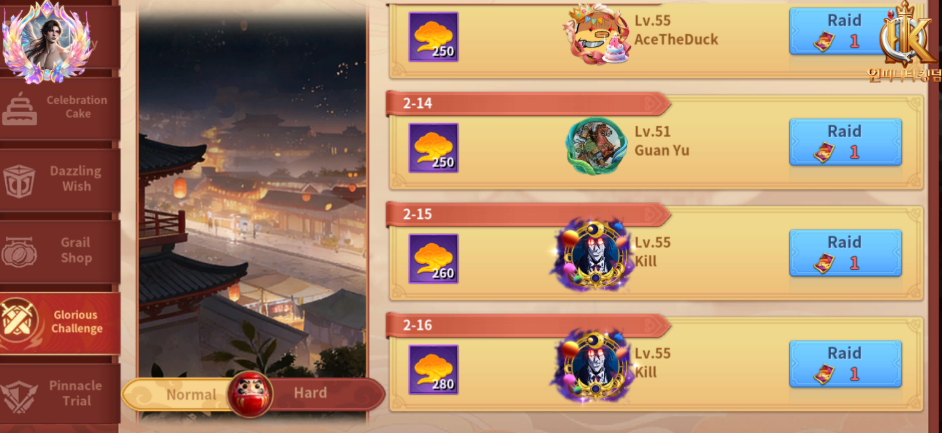
Hard mode was manageable for most developed accounts. It is not a wall. It is an efficiency multiplier.
Maël’s Opinion Glorious Challenge was and is always the backbone of free progression in this and seasonal event. Ignore rankings. Focus on coin flow. Secure daily Tokens and Stardust first. Everything else is secondary. Efficiency here determines how strong the rest of your anniversary feels.
7. Pinnacle Trial — Pushed as Far as You Can?
Pinnacle Trial returned in its anniversary format. Five preset stages. One attempt per day. No extra tickets to buy your way through mistakes.
Later stages scaled sharply. Preset enemy builds included strong skill combinations and punish weak positioning. This mode rewards optimized marches, not raw power alone.
Clear once, unlock raid. That was the real objective.
Rewards included Random Immortal Shards, Tokens of Light, and Sun Chariot castle fragments. Ranking battles also return. You can challenge top players without penalty for losses. Points accumulate, rewards distribute at the end.
For most players, Pinnacle Trial was not a leaderboard race. It was a progression checkpoint.
If you cleared all stages, excellent. If you stalled, you shoulad have secured the highest raid tier you can and move on.
This mode supplemented Token flow. It does not define the event economy.
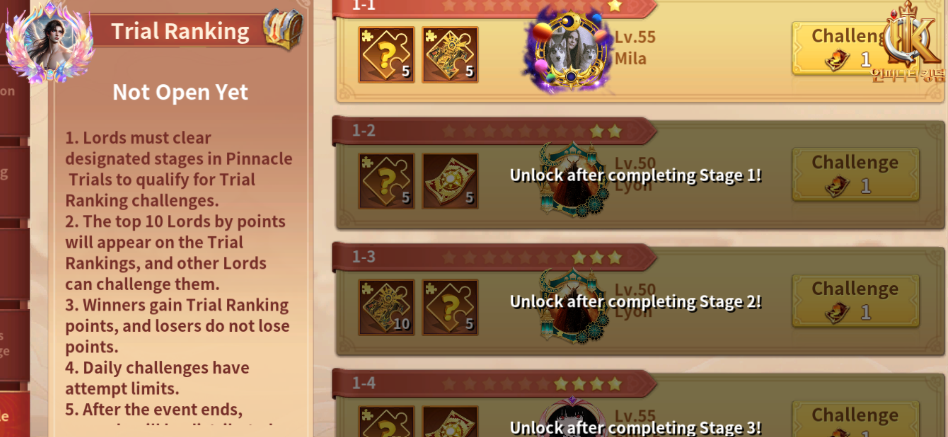
Maël’s Opinion: Pinnacle Trial was and always is a discipline test. Push early, unlock raid, collect consistently. Ranking is optional. Progression is not.
8. Dazzling Wish — Controlled Spending Window
Dazzling Wish followed the now-standard anniversary structure. Tokens of Light in, Eternal Grails out. No secondary fluff layered into the top tier rewards this time. The focus remains clean: Grails.
Each Token spent adds leaderboard points and advances toward guaranteed milestone rewards. The randomness still exists, but the structure is familiar.
There were no dramatic mechanical changes here. What matters was context. Tokens now competed with Fish Tokens and Anniversary Coins for your attention. That shifted pressure onto Dazzling Wish decisions.
If your objective was Chaos progression, this is still the primary conversion funnel for any future events. If your objective is cosmetics or mini-game ranking, the opportunity cost becomes real.
The mechanic itself did not change. The ecosystem around it did.
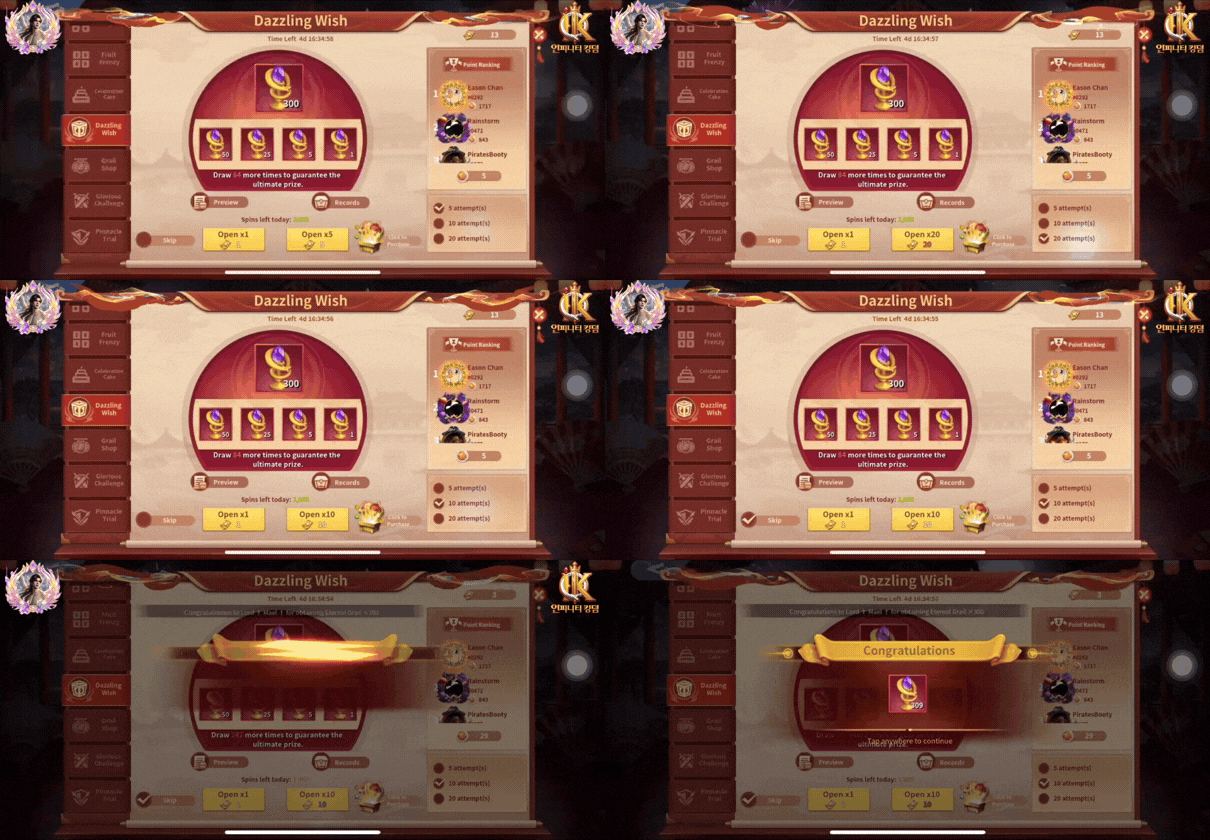
Maël’s Opinion: Dazzling Wish remains the strategic anchor of seasonal events. It is not exciting. It is efficient. The only mistake is splitting Tokens across too many parallel systems. Decide early whether you are chasing Grails or experimenting elsewhere.
9. Grail Shop & Challenge Shop Where Progress Became Permanent
At the end of the event loop, everything converged into two shops. This is where temporary activity turned into lasting value.
The Challenge Shop consumsed 5th Anniversary Coins earned from Glorious Challenge. The structure is clear and daily-limited. Tokens of Light, Stardust, Unique Artifact Chests, Philosopher’s Stones, and cosmetic frames. The daily cap on key items changes optimization. If you skip early farming, you cannot fully catch up later. Consistency matters more than burst spending.
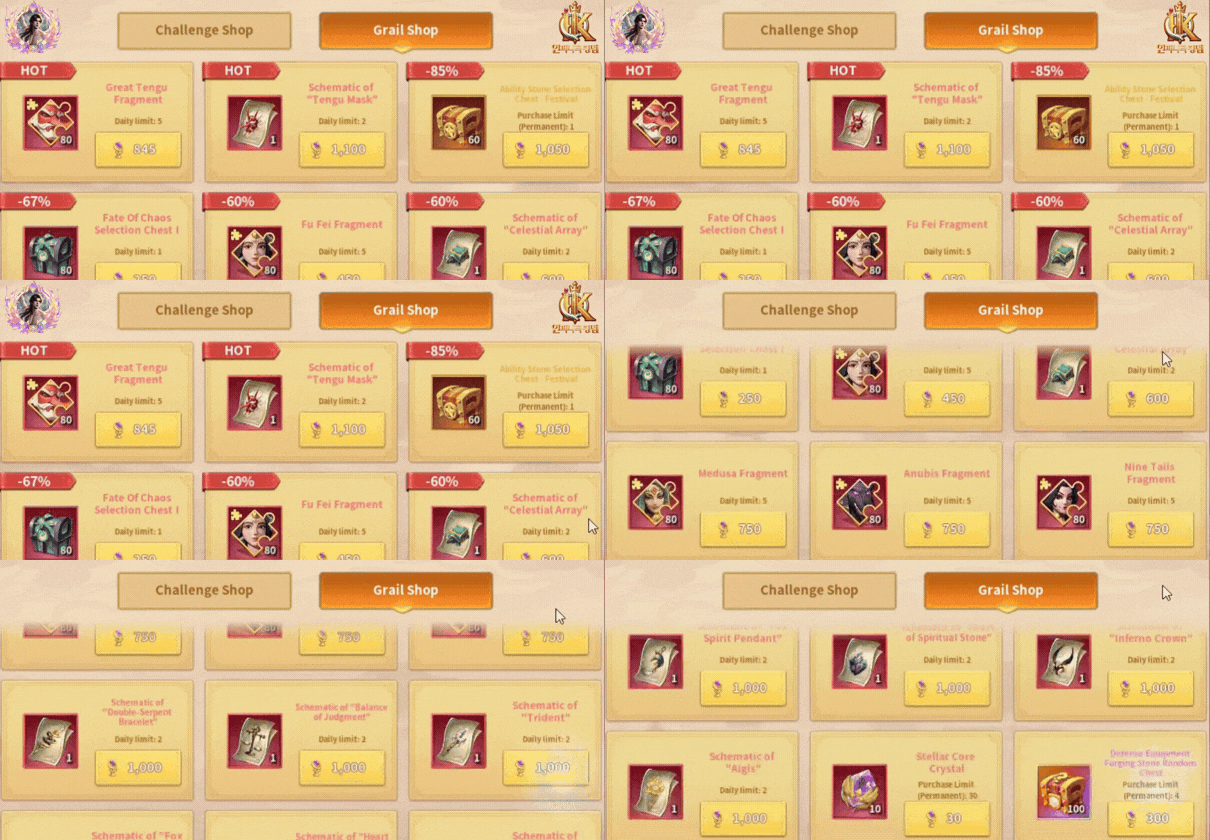
The Grail Shop remained the long-term scaling engine. Eternal Grails converted directly into Chaos Immortal fragments, Chaos artifact chests, and in this anniversary cycle, access to Great Tengu fragments through the Grail path. This wasnot short-term value. This was account direction.
The difference between the two shops was time horizon.
Challenge Shop → Immediate seasonal resources.
Grail Shop → Permanent Chaos scaling.
That distinction will define your priorities for next seasonal event!
10. Final Wrap-Up — What the 5th Anniversary Actually Delivered
The 5th Anniversary did not reinvent Infinity Kingdom.
It reinforced its seasonal model.
Multiple currencies.
Parallel progression tracks.
One or two experimental systems layered on top.
Fruit Frenzy added activity pressure.
Celebration Cake added coordination pressure.
Glorious Challenge and Pinnacle Trial remained the backbone for steady value.
Dazzling Wish and the Grail Shop continued to define long-term scaling.
The real question was never “Is this event generous?”
It was “Where does the value concentrate?”
For disciplined players, Tokens of Light and Anniversary Coins were the core.
For Chaos-focused accounts, Grails remained the anchor.
For competitive spenders, rankings in mini-games created short bursts of visibility — but not structural advantage.
As the event closes, the difference between accounts will not come from one lucky pull. It will come from how cleanly resources were allocated.
Did you chase leaderboards?
Did you spread across every system?
Or did you choose one scaling path and commit?
Anniversary events rewarded clarity more than intensity.
Maël’s Opinion: This fifth anniversary was structured, not explosive. It rewarded planning over impulse and cooperation over isolation. The systems were readable. The value was there but only for players who ignored distraction and followed the currencies that persist.
Translate

Popular Posts
1

Infinity Kingdom Patch 2.9.5: Identity, Progression, and Faster Seasons
116 discussions 170 views
2
!["Saladino y las Tres Heridas del Huracán” [Rincón de las Historias] - Infinity Kingdom](https://oss.gtarcade.com/forum/gif/2026-05-10/546754_6110abd2-e9e0-409c-968f-507349f89ddc_005146.gif?x-oss-process=image/resize,w_150,h_150)
"Saladino y las Tres Heridas del Huracán” [Rincón de las Historias] - Infinity Kingdom
111 discussions 130 views
3
![“¡Introducción a Björn!” Uno de los Tanques más Resistentes del Elemento Sombra [Manual de Inmortales] - Infinity Kingdom](https://oss.gtarcade.com/forum/gif/2026-05-10/546754_cc1ec8bf-b6dd-4386-a92f-4f1638605161_004113.gif?x-oss-process=image/resize,w_150,h_150)