
Infinity Kingdom Press Officer

m a ë l
Rune Factory is not a side event.
It replaces Sparks of Galaxy.
That alone makes it worth examining carefully.
In practice, it also removes one of the most quietly generous loops in the game, especially for free-to-play and low-spending players.
This article breaks down how Rune Factory works, what it replaces, what it changes, and what questions remain unanswered before we can call it an improvement.
Table of Contents
- Why Rune Factory Matters
- How Rune Factory Works
- Energy Cores and Probability
- Rewards, Shops, and What Actually Progresses
- Rune Factory vs Sparks of Galaxy
- Chaos Progression: The Real Shift
- Open Questions — Now That Rune Factory Is Live
- Maël’s Take: Make your Voice Heard, Wait, Watch, Measure
1. Why Rune Factory Matters
Rune Factory is not just a new recurring event. It replaces Sparks of Galaxy, and that alone makes it worth examining with care.
Sparks was never flashy, but it was reliable. It rewarded consistency, not timing, and over time it delivered a wide range of resources. For many players, especially free-to-play and low spenders, it was one of the few events that felt quietly generous.
This is not about saying the new system is worse or better on day one. It is about recognizing a shift in philosophy.
Sparks spread rewards across different resources. Rune Factory funnels progression into one core loop and one currency. That alone changes how players plan, save, and engage.
Whether this feels like progress or restriction will depend on how accessible Energy Cores are, how often pity cycles are reached, and how rewarding the shop feels over multiple rotations.
Maël’s Opinion: Replacing Sparks is a structural change, not a cosmetic one. Sparks worked because it delivered value quietly and often. Rune Factory can be healthy, but only if access and pacing remain fair. This is a system to observe closely before forming strong conclusions.
2. How Rune Factory Actually Works
Rune Factory is built around a single, very explicit loop.
You spend Energy Cores.
Each activation gives you a random reward and fills an Energy bar.
When the bar reaches 100%, you receive x70 Rune Insignia, and the bar resets.
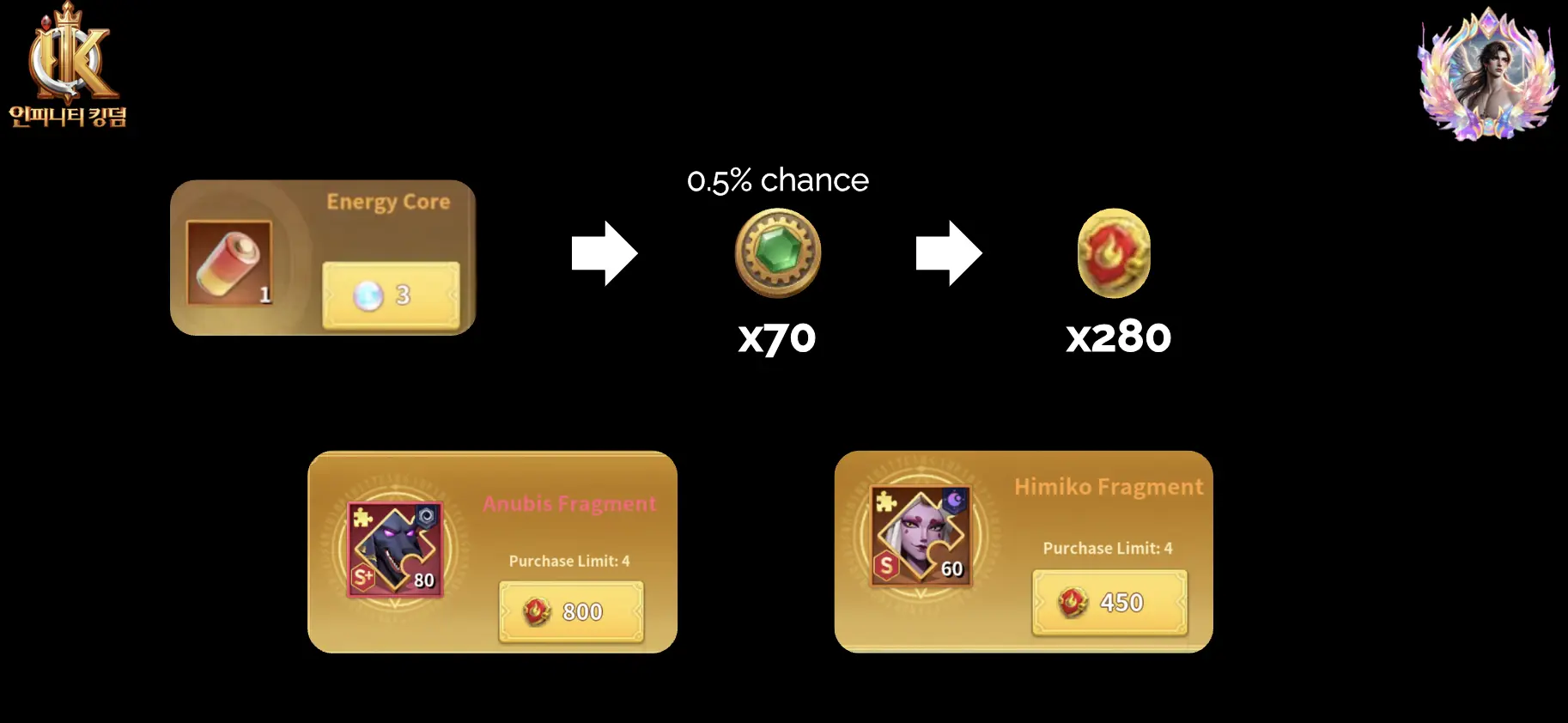
That is the entire core mechanic, quite similar to Sparks of Galaxy..
From preview footage and patch information, and tests over the day, the current structure implies a direct relationship: one Energy Core equals one percent of Energy. If that holds true at launch, a full cycle requires one hundred Energy Cores unless an early reward triggers first.
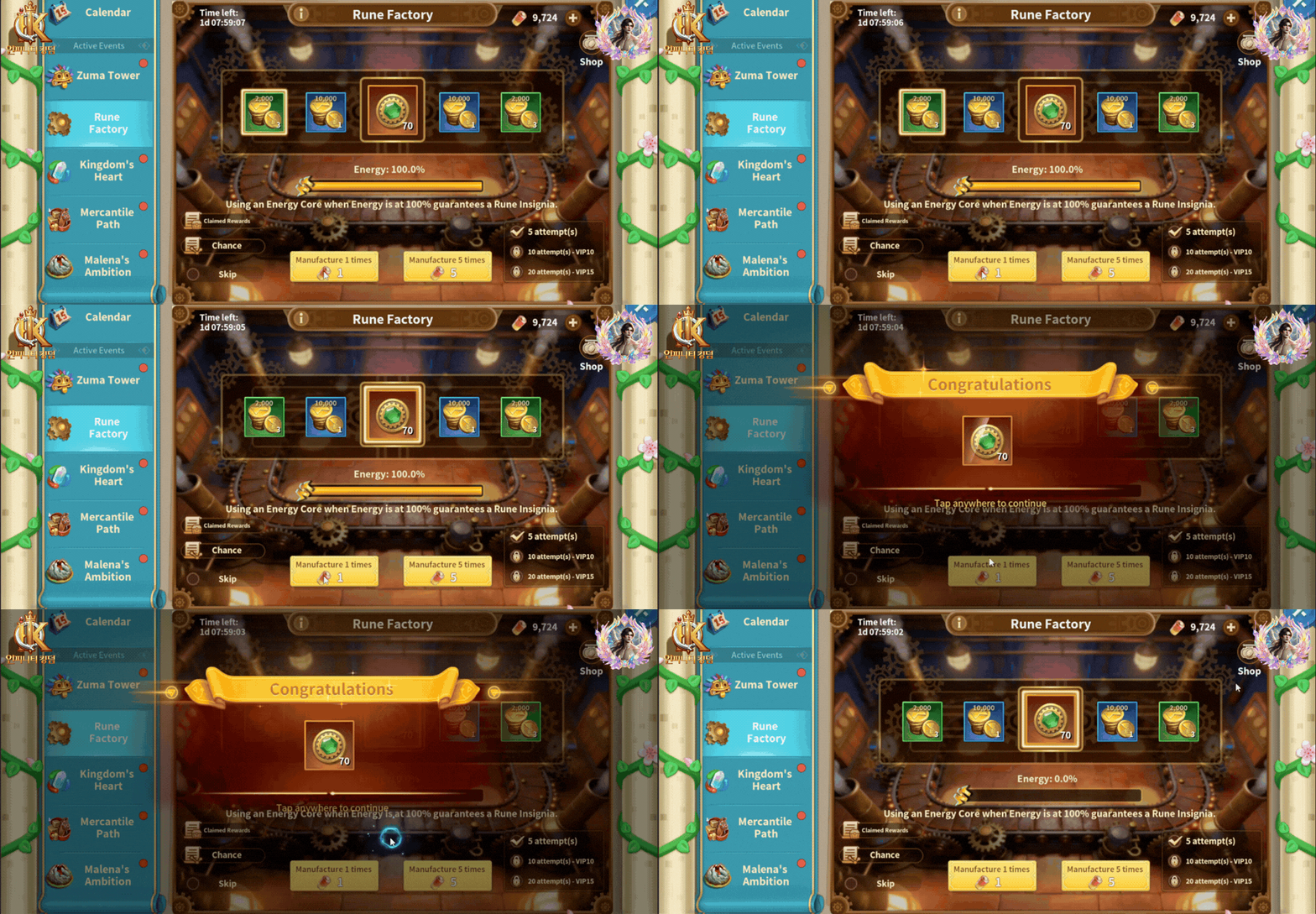
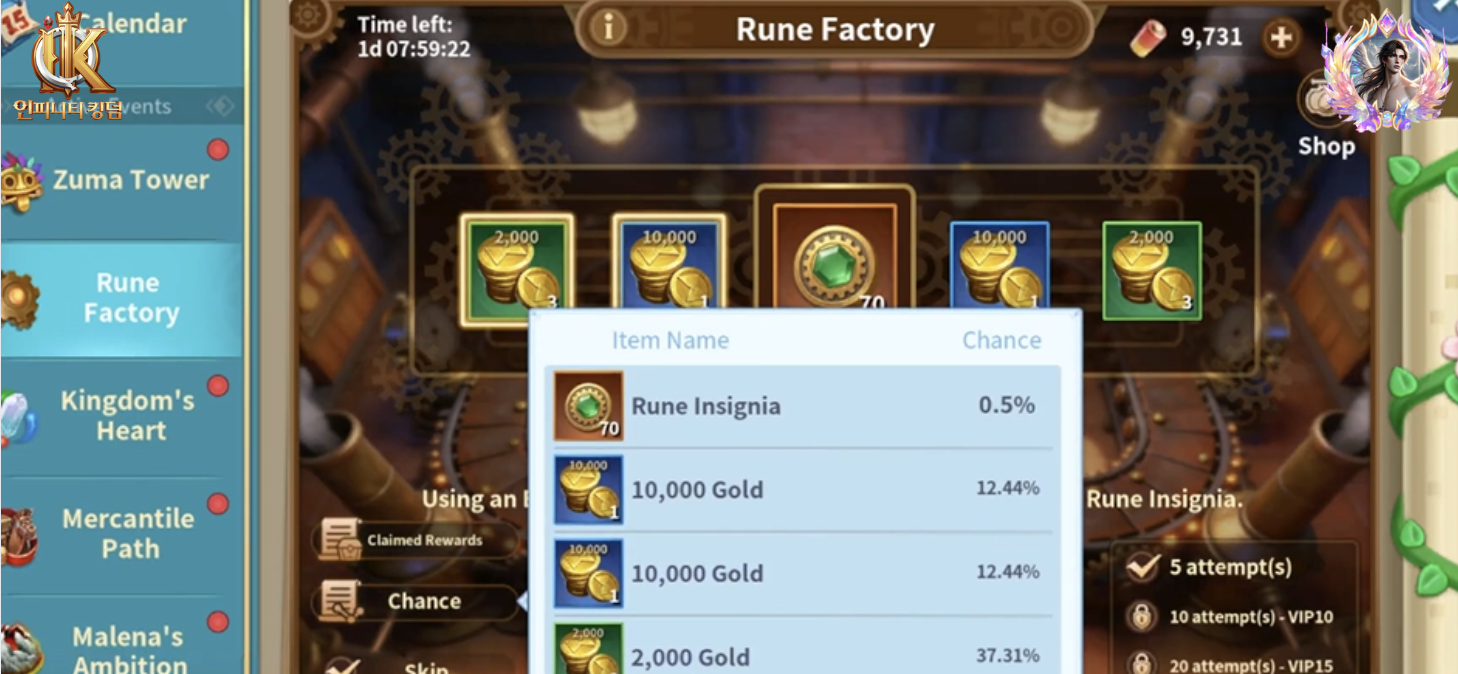
There is an early-drop mechanic, but it is deliberately rare (0.5% chance to get 70 Rune Insignia). Each activation has a very low chance to immediately grant a large batch of Rune Insignias. This means most players should expect to reach the full Energy threshold repeatedly rather than relying on luck.
Frosty Orbs can be converted into Energy Cores at a three-to-one ratio.
What stands out is how linear the system is.
There are no parallel tracks or other valuable rewards. Sparks had artifacts fragments, Dragon Essences and Dragon Crystals.
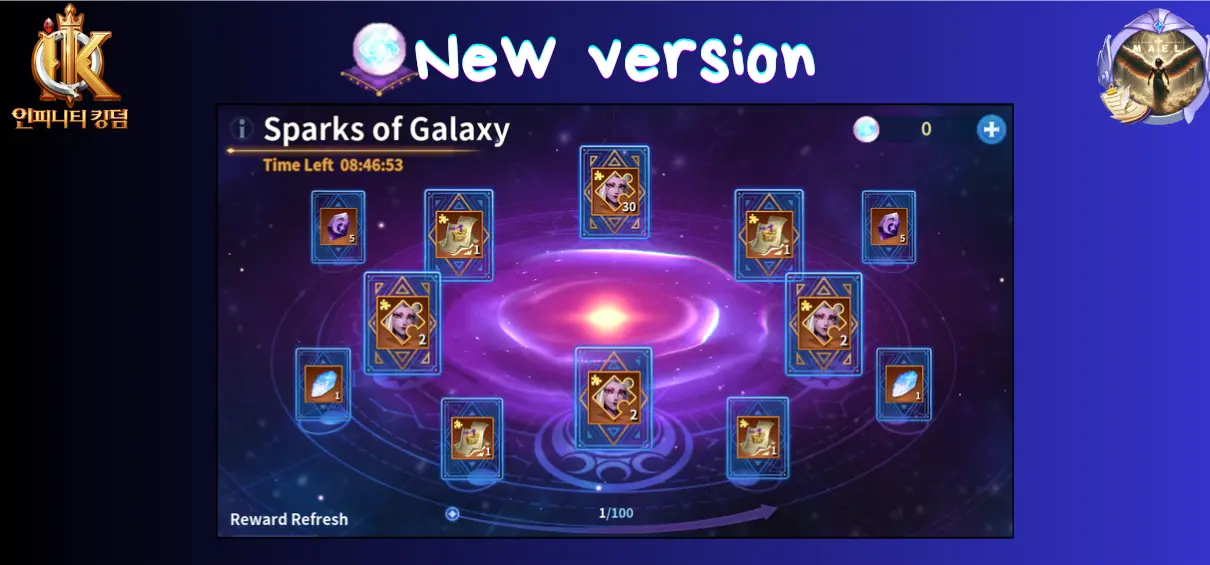
There is no choice inside the event itself. The random rewards along the way are secondary... Gold. The Rune Insignia at the end of the bar is the real objective, and rest feels disappointing and like filler around that central currency.
This is very different from Sparks of Galaxy, where value came from a mix of side but valuable rewards, and long-term accumulation. Rune Factory will need to prove itself viable.
Maël’s Opinion: Rune Factory is easy to understand, which is not a small thing. There is no hidden math once the Energy-to-Core ratio is known. The open question is not how it works, but how it feels over time. A linear system lives or dies by pacing. Rune Factory is cleaner? well it is also more restrictive. Sparks of Galaxy wasn’t flashy, but it was broadly played, generous in subtle ways, especially for free-to-play and low-spending players. This replacement risks narrowing access rather than broadening it. For now, this is a system to watch closely, not celebrate blindly.
3. Energy Cores, Pity, and Probability
Rune Factory is built around a very linear progression loop.
Each Energy Core use grants a random reward and increases an energy bar. When that bar reaches 100%, one Rune Insignia is awarded and the bar resets. Based on what has been shown so far, one Energy Core appears to equal one percent of energy. In practice, this means one guaranteed Rune Insignia every 100 Energy Cores, unless an early drop occurs.
Early drops do exist, but they appear rare. The system is clearly designed around pity rather than frequent lucky outcomes. Most progression is expected to come from completing full cycles, not from occasional spikes along the way.
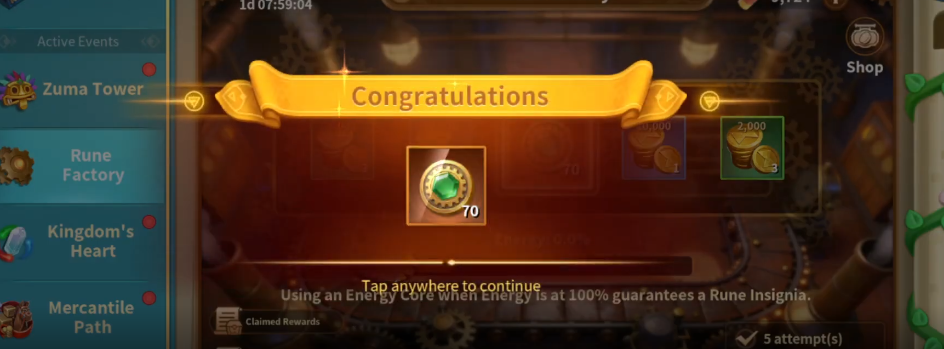
This makes Rune Factory predictable? maybe, but also more rigid. Individual activations matter less on their own, as most of the value is concentrated in the Rune Insignia at the end of each cycle.
Another noticeable difference is the reward pool itself. Outside of Rune Insignias, secondary rewards appear limited. There is no sign of progression materials such as Dragon Essence or other broadly useful resources that Sparks of Galaxy regularly provided. This reinforces the idea that Rune Factory is narrowly focused on its main currency rather than offering layered value per attempt.
Maël’s Opinion: The system is easy to understand and easy to plan around, but it feels narrower. The lack of meaningful secondary rewards makes each cycle more dependent on the Rune Insignia payout alone. Whether that trade-off is acceptable will depend on how valuable the shop proves to be once players engage with it over time
4. Rewards, Shops, and What Actually Progresses
At the end of the Rune Factory loop sits the Rune Shop, and this is where the event’s real purpose becomes clearer.
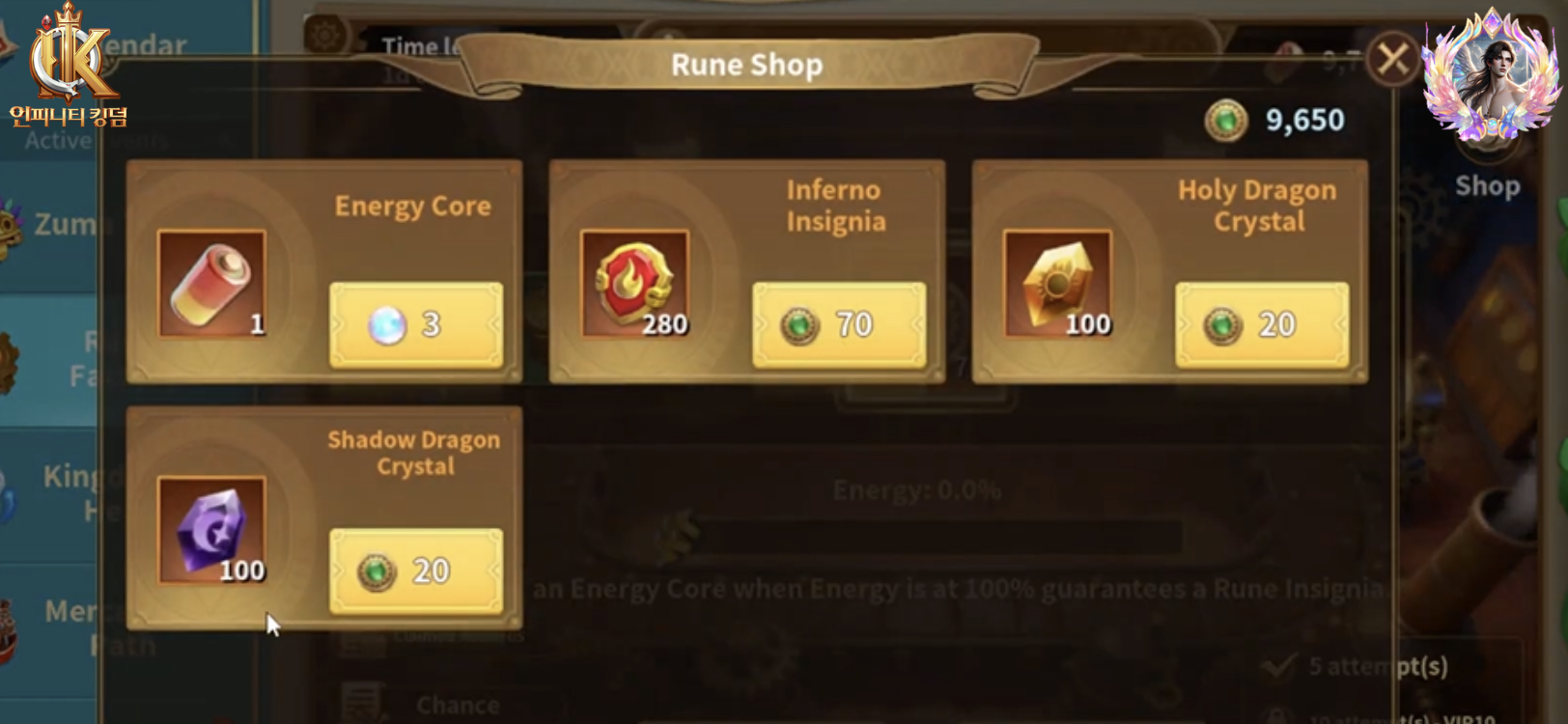
Rune Insignias are not a flexible currency. They are designed to be converted upward. In the current structure, Rune Insignias are primarily used to purchase Inferno Insignias, a currency already tied to the Peak and Legendary Battle Pass ecosystems. From there, Inferno Insignias can be exchanged for high-value items such as Holy and Shadow Immortal fragments, and more importantly, Chaos progression over time.
This design makes Rune Factory less of a “reward per pull” event and more of a conversion layer. You are not farming materials directly. You are farming access to a higher-tier economy.
What is noticeably absent, at least for now, is breadth. Sparks of Galaxy distributed value across multiple axes at once: shards, Dragon Essence, and incidental progression that benefited a wide range of accounts. Rune Factory, by contrast, appears tightly scoped. If you are not interested in what the Inferno Insignia shop offers, the event has little to say to you.
This creates a narrower progression funnel. Players focused on Chaos or long-term Immortal investment may find this appealing. Players (and more particularly, light or mid spenders) who relied on Sparks as a general progression engine may feel the loss more sharply.
Maël’s opinion: Rune Factory makes it very clear what progresses and what does not. That clarity is useful, but it comes at the cost of versatility. The event does not try to be generous in many directions. It asks one question instead: do you want access to higher-tier currencies badly enough to commit to this loop?
5. Rune Factory vs Sparks of Galaxy
The comparison is unavoidable, because Rune Factory is not an addition. It is a replacement.
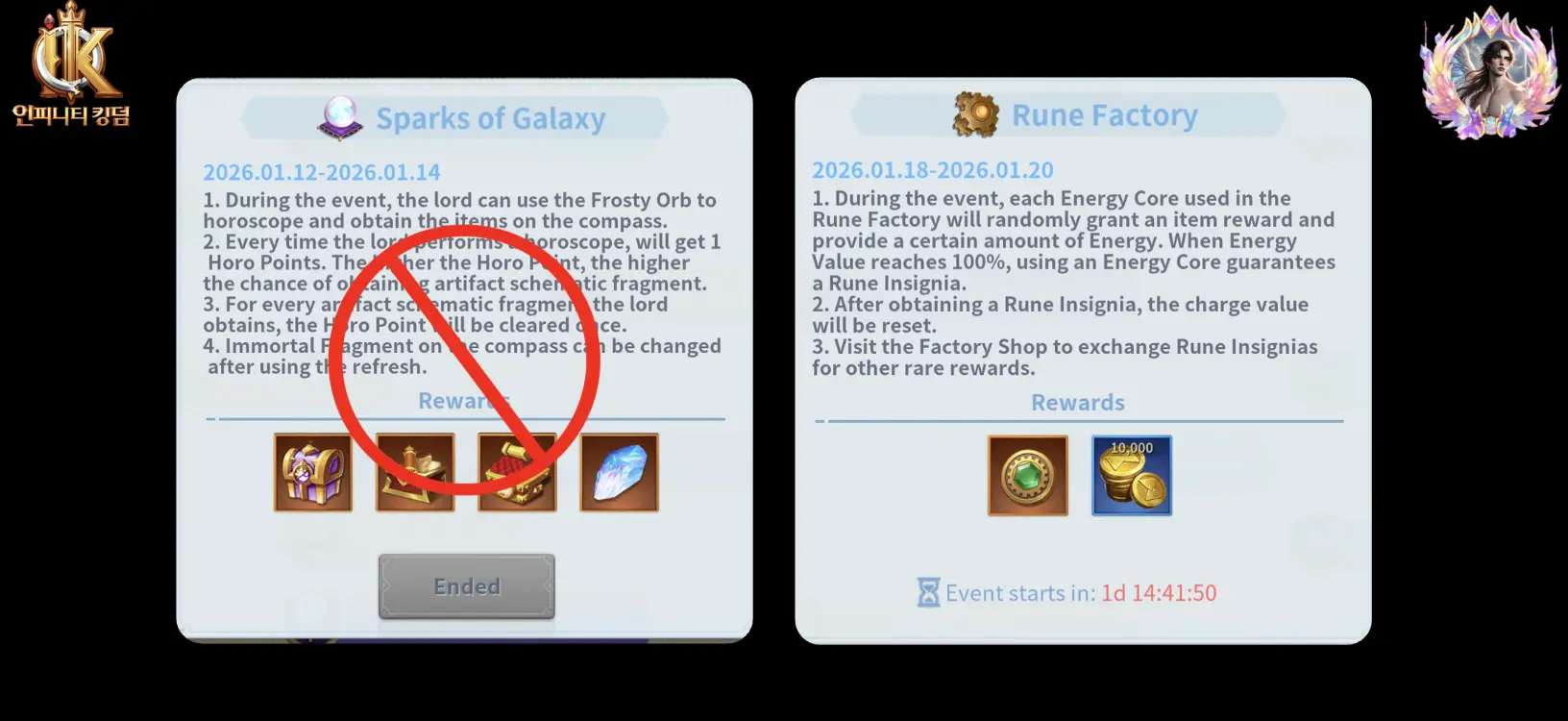
Sparks of Galaxy was a steady event and appreciated by the community.. It did not feel exciting, but it delivered value in small, frequent increments. Dragon Essence, Holy and Shadow shards, and incidental rewards accumulated over time, even with limited participation. For many players, especially free-to-play and low spenders, Sparks functioned as a background progression engine rather than a focused objective.
Rune Factory works differently.
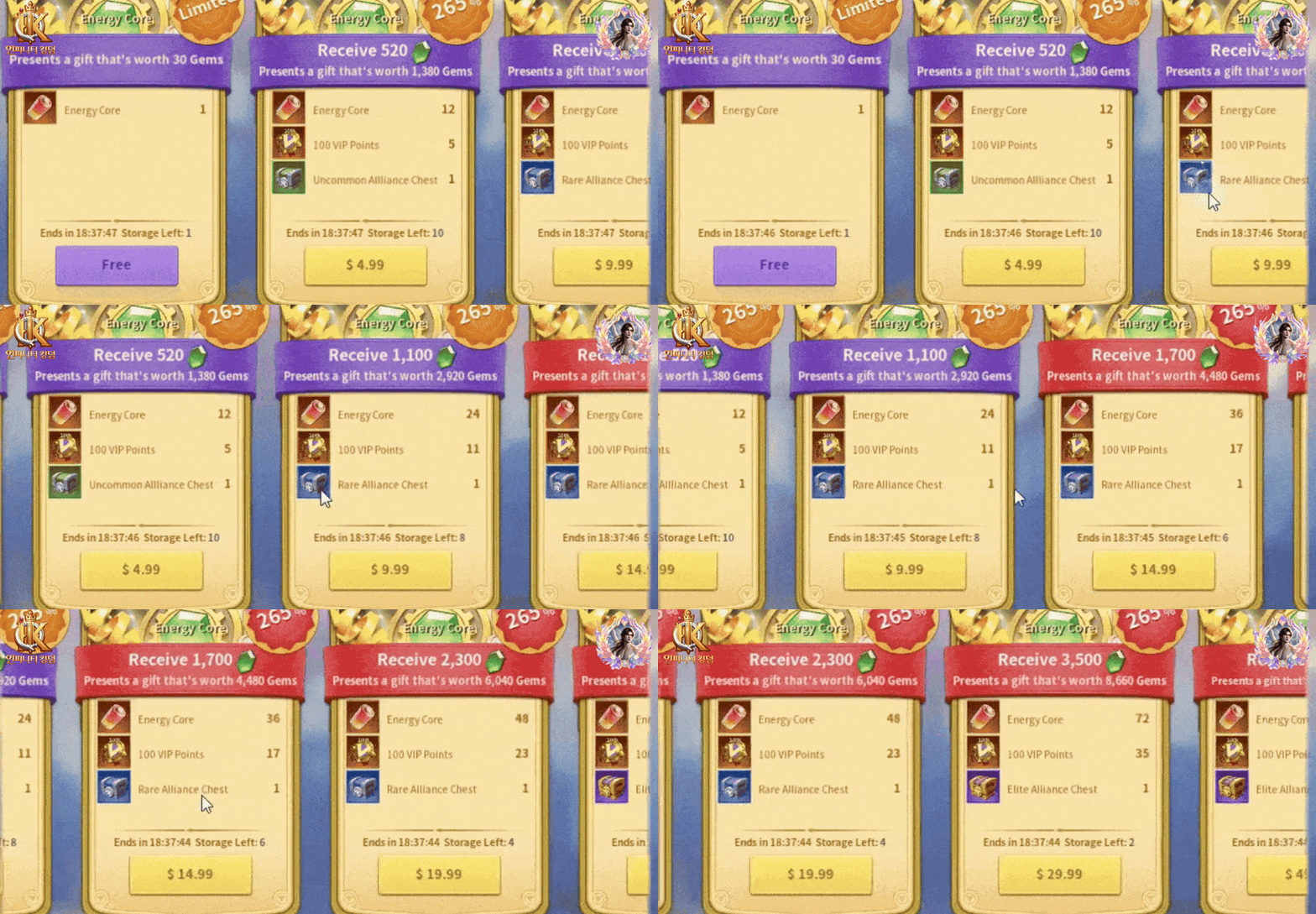
Instead of spreading value across multiple reward types, it concentrates progression into a single funnel. Energy Cores convert into Rune Insignias, which then convert into Inferno Insignias, which finally convert into high-tier rewards. The loop is clear, but also more rigid. Progress happens in steps, not continuously. Access is also narrower as there is no gem-based bundles...
The event offers the same bundles in two places:
- In-game shop
- GTArcade shop
Pricing and value are strictly identical on both platforms.
Available bundles
- Free → 1 Energy Core
- Gem? Inexistant...
- $4.99 → 12 Energy Cores
- $9.99 → 24 Energy Cores
- $14.99 → 36 Energy Cores
- $19.99 → 48 Energy Cores
- $29.99 → 72 Energy Cores
- $49.99 → 120 Energy Cores
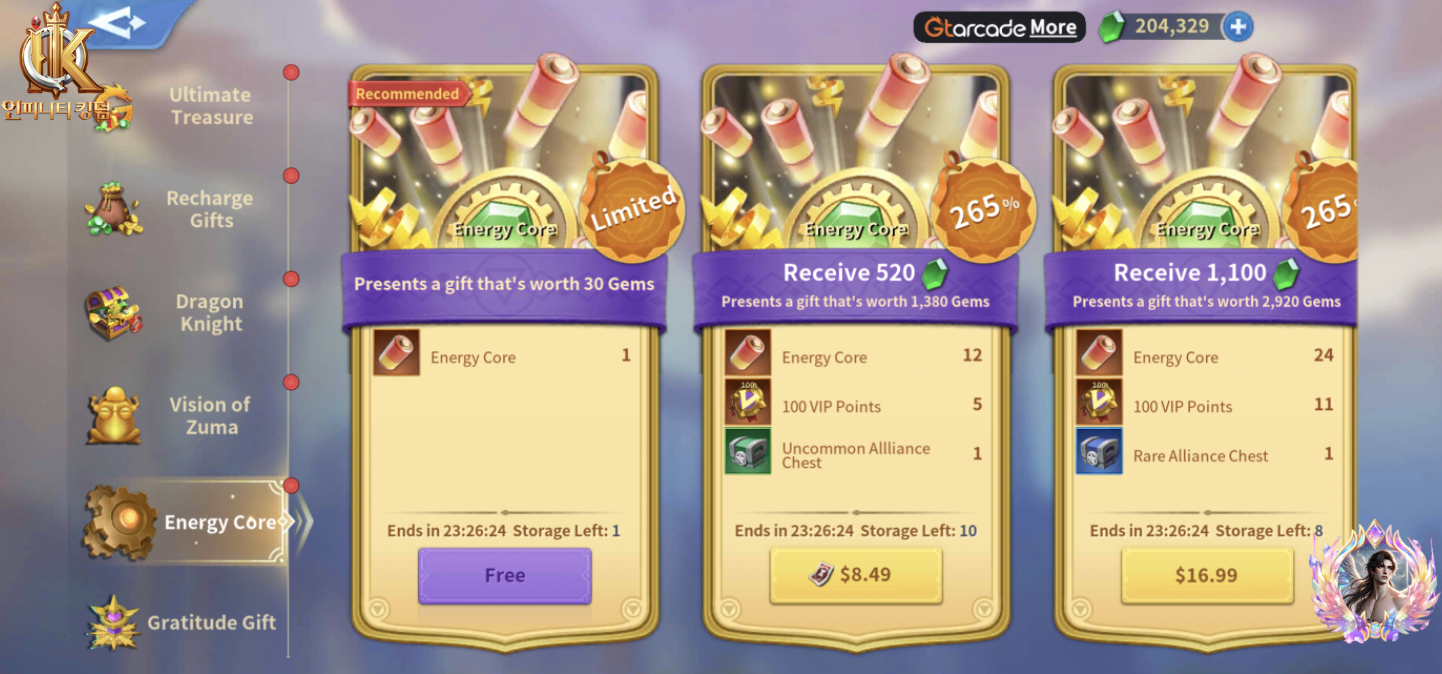
The practical consequence is pacing. Sparks rewarded persistence. Rune Factory rewards completion of cycles.This is neither strictly better nor strictly worse. It reflects a different philosophy.
Sparks favored accessibility and passive accumulation.
Maël’s opinion: Sparks of Galaxy felt forgiving. Rune Factory feels intentional. One rewarded showing up. The other rewards committing resources. Which model works better will depend on how generous Energy Core access turns out to be and whether the game still offers alternative ways to support broad, low-pressure progression outside this event. Adding a gem-based bundle is ESSENTIAL in my opinion.
6. Chaos Way: The Real Shift
This is where Rune Factory meaningfully diverges from Sparks of Galaxy.
Sparks was never a Chaos event. It indirectly supported Chaos development through general resources, but it did not feed Chaos systems in a deliberate or repeatable way. Rune Factory does.
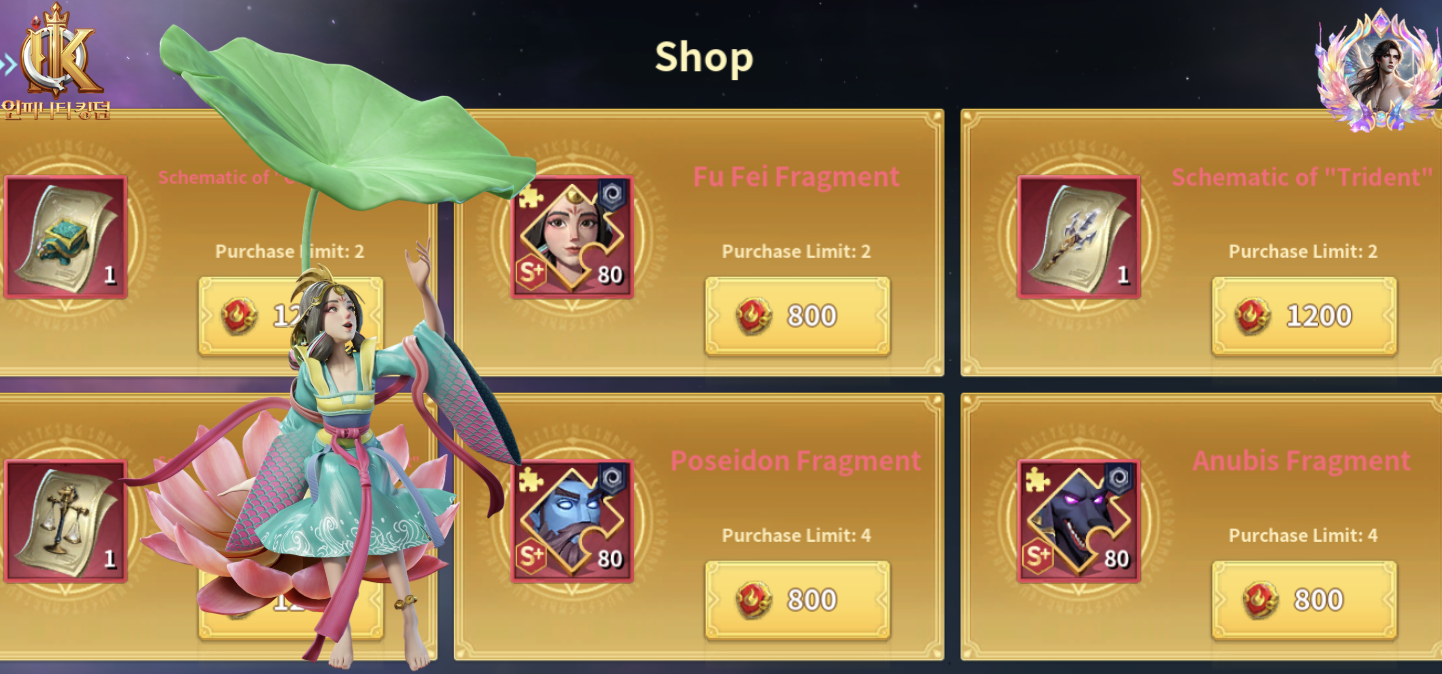
By converting Rune Insignias into Inferno Insignias, the event plugs directly into the Peak and Legendary Battle Pass economy. That matters because Inferno Insignias are currently one of the few predictable ways to progress Chaos Immortals and their exclusive artifacts outside of heavy RNG systems like Chaos Roulette.
In practical terms, Rune Factory introduces a steady, event-based path toward Chaos progression. It is not fast. It is not cheap. But it is structured. Over time, this can smooth out one of the biggest friction points for Chaos-focused accounts: limited access to Insignias when building more than one Chaos Immortal.
This is also where player profiles start to matter.
If your progression focus is Holy or Shadow, Rune Factory may feel like a downgrade compared to Sparks.
If your focus is Chaos, especially long-term Chaos development, the value proposition shifts.
Rune Factory does not make Chaos cheaper. It makes Chaos more planable.
Maël’s opinion:This is another real signal that recurring events are being aligned around Chaos as an endgame axis. Rune Factory is not generous, but it is directional. Whether that direction feels fair will depend on how many Energy Cores players can realistically access without spending, there's one free for now, but this is not enough.
7. Open Questions — Now That Rune Factory Is Live
Now that Rune Factory is accessible in-game, some of the open questions raised before release are no longer hypothetical.
The most immediate one is accessibility.
For free-to-play players and light spenders, the entry point is narrow. Outside of the daily free Energy Core, progression relies entirely on paid bundles. There is no meaningful gem-based alternative and no secondary loop that allows gradual accumulation through play, as Sparks of Galaxy once did.
This makes Rune Factory less of a recurring progression event and more of a conversion mechanism. Players who already have resources or who are willing to spend can engage consistently. Others are largely spectators.
The second issue is pacing.
With Energy Cores tightly gated, most players are forced into full pity cycles. That removes tension and choice, but also limits engagement. The event becomes predictable, but not necessarily satisfying, especially when compared to Sparks of Galaxy, which offered more frequent touchpoints and secondary rewards.
At this stage, Rune Factory feels structurally clean but experientially restrictive.
That does not mean it cannot improve.
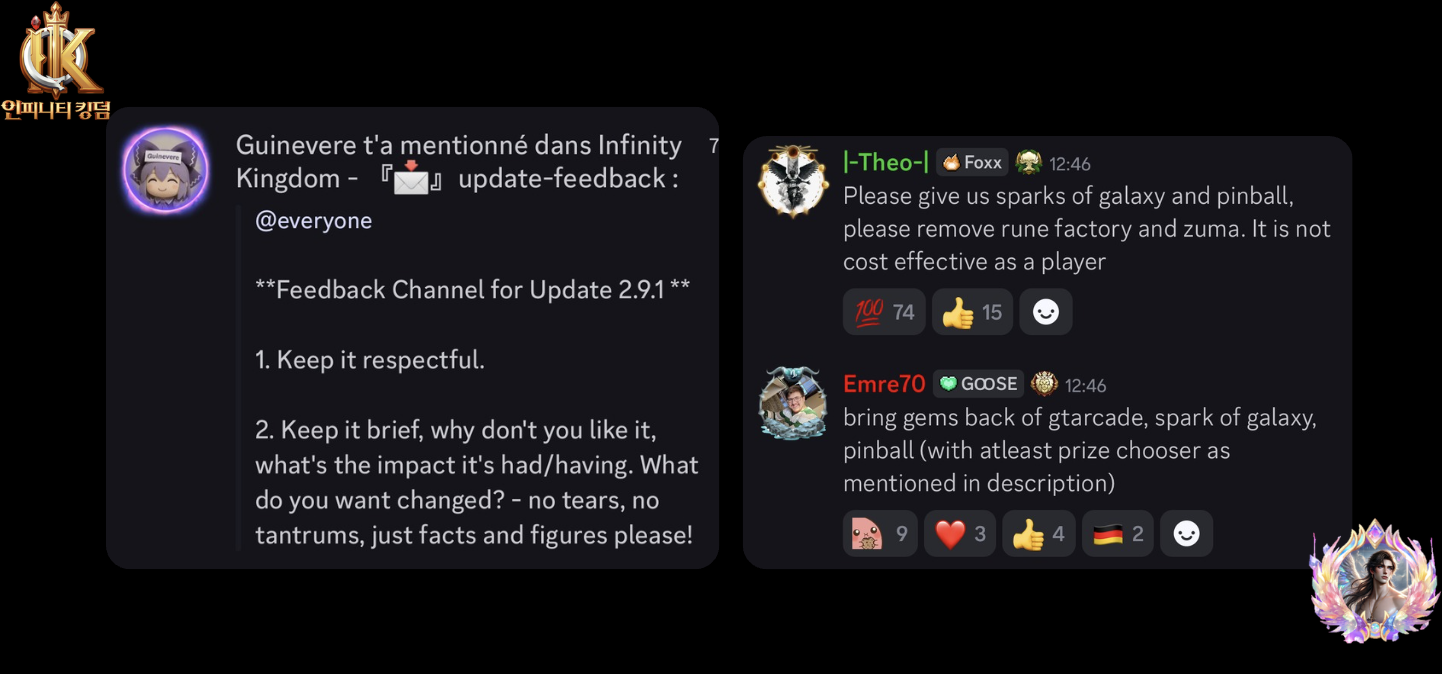
Maël’s opinion: This is precisely the moment where community feedback matters. The event is live, its limits are visible, and its impact is measurable. If the goal is to replace Sparks of Galaxy rather than simply monetize its absence, access needs to widen. A gem-based option, additional free Energy Core sources, or secondary progression rewards would go a long way. The official Discord feedback channels exist for a reason. This is the kind of system that should be shaped with player input while it is still early, not locked in after frustration sets in.
8. Maël’s Take: Wait, Watch, Measure
Rune Factory removes a familiar, low-pressure loop and replaces it with a conversion-driven system. The intent is easier to read. What remains unproven is whether this structure feels as rewarding in practice as Sparks of Galaxy did over time.
For Holy and Shadow–focused players, especially light and mi spenders, the trade-off is immediate. Sparks offered secondary rewards, flexibility, and steady value through regular participation. Rune Factory narrows the reward pool and concentrates progression into a single currency path. That increases the sense of constraint, especially when access is limited.
For Chaos-focused players, the picture is more nuanced. Rune Factory introduces a repeatable source of Inferno Insignias outside of battle passes. That alone changes long-term Chaos planning, even if the conversion rate ultimately proves slow.
At this stage, Rune Factory should neither be celebrated nor dismissed.
It should be measured.
The real verdict will come from real drop rates, and concrete comparisons with Sparks of Galaxy:
This is where community feedback matters most. Not reactions, but facts. Numbers. Side-by-side comparisons. Clear metrics shared through the official feedback channels can still influence how this event is tuned.
Rune Factory is still taking shape.
Whether it becomes a fair long-term system or a restrictive standard depends on what is observed and how clearly the community makes its voice heard.
If Sparks of Galaxy rewarded patience, Rune Factory will test expectations.
For more insights, check out my previous articles here.
- download Infinity Kingdom now and script your legend.
Until next time — Maël, Press Officer
Translate

Popular Posts
1
!["Balduino IV y la Corona del Huracán Silente” [Rincón de las Historias] - Infinity Kingdom](https://oss.gtarcade.com/forum/gif/2026-03-01/546754_900935fd-276b-474c-95b9-fa95ad7ee12a_235640.gif?x-oss-process=image/resize,w_150,h_150)
"Balduino IV y la Corona del Huracán Silente” [Rincón de las Historias] - Infinity Kingdom
231 discussions 263 views
2
!["Between Steel and Flame” [Part 6] Tengu Origins - An Infinity Kingdom Story](https://oss.gtarcade.com/forum/gif/2026-02-28/249175_ec168279-9e25-47be-b908-498d52e8e131_114450.gif?x-oss-process=image/resize,w_150,h_150)
"Between Steel and Flame” [Part 6] Tengu Origins - An Infinity Kingdom Story
147 discussions 177 views
3
!["Donde el Agua Aprende a Escuchar" [Capítulo 88] La Última Sanadora - Infinity Kingdom](https://oss.gtarcade.com/forum/gif/2026-03-01/546754_60b712b3-64d5-4e24-9994-b75b9002fabb_234710.gif?x-oss-process=image/resize,w_150,h_150)
"Donde el Agua Aprende a Escuchar" [Capítulo 88] La Última Sanadora - Infinity Kingdom
73 discussions 110 views