
This user has no description yet

fictions
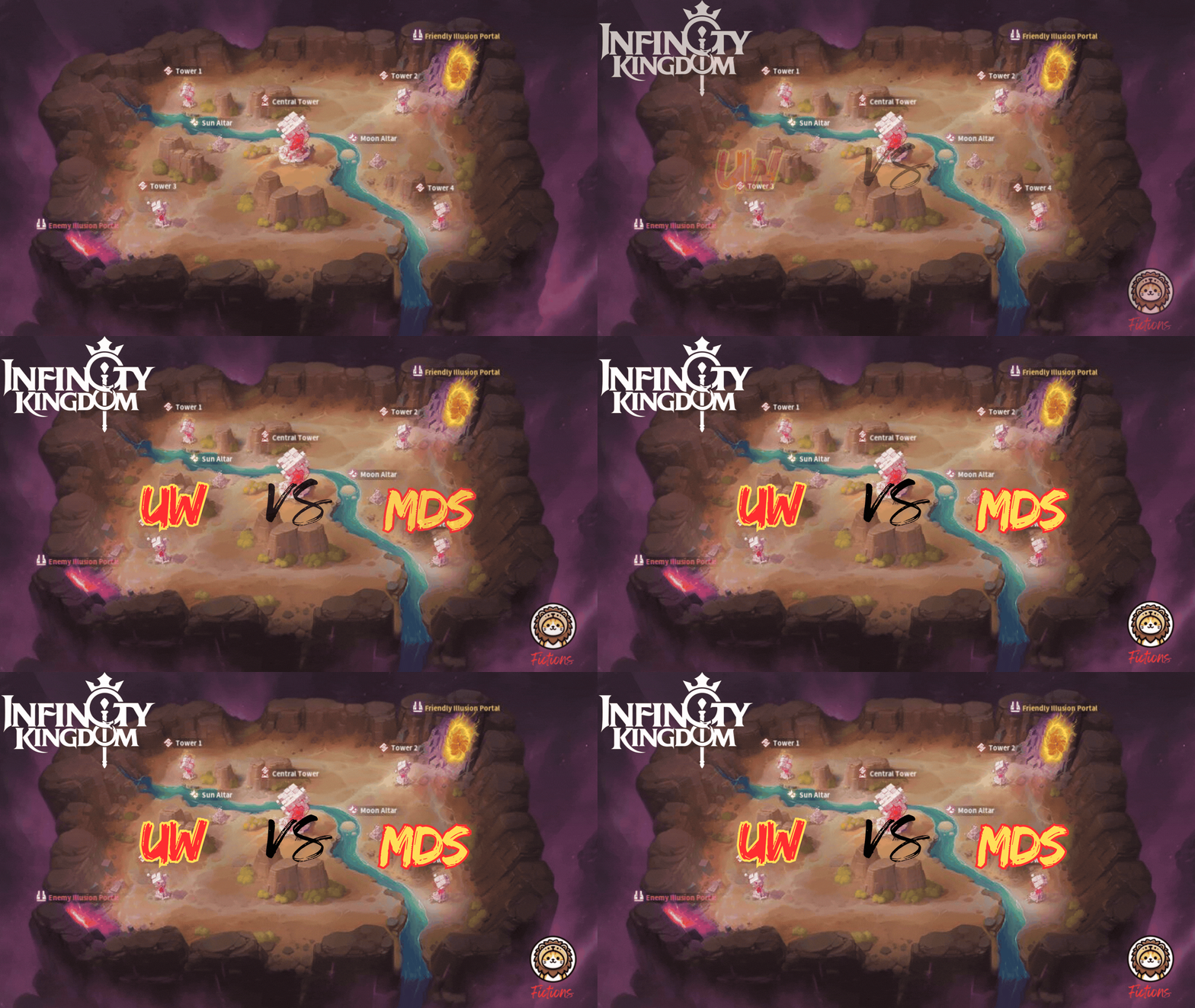
💠Introduction
What’s up, folks? Welcome back to my Illusion Battlefield series, where I take a closer look at different matches and break down the strategies, positioning, and execution that decide them. Unlike Illusion Battlefield League, regular Illusion Battlefield allows players to use their own marches, skills, and builds, making account strength and individual setups much more important. Relocations are also slower, while incoming relocations take fewer hits to destroy, making positioning and relocation defense especially important because poorly placed attempts can be punished much more easily. In this article, I’m going to take a closer look at the matchup between Server 159’s MANDALORIANS (MDS) and Server M021’s Union Warrior (UW).
💠Table of Contents
- Overview
- Starting Positions and Talents
- Tower 1
- Tower 4
- Central Tower
- Altars
- Home Towers
- Play-by-Play
- Summary
💠Overview
MDS and UW are relatively evenly matched alliances with similar attendance levels and comparable overall strength. However, MDS holds a slight advantage in firepower, boasting a somewhat stronger roster than its opponent. While UW is not far behind in terms of individual player strength, its teamwork and coordination are noticeably weaker than MDS’s, which could prove costly in a closely contested match. With neither alliance enjoying a significant manpower advantage, the outcome should depend less on raw attendance and more on how efficiently each team allocates players, protects relocations, and adapts when an objective is lost. MDS should enter the matchup as the slight favorite, but UW has enough strength to remain competitive if it can avoid wasting players on lost objectives and make better use of its local advantages.
🐀tarting Positions and Talents
MDS
- Started with 14 players and ended with 19
- 7 Attack talents
- 6 Defense talents
- 1 Support talent
UW
- Started with 13 players and ended with 20
- 9 Attack talents
- 4 Defense talents
- 0 Support talents
Attendance was nearly identical at the start, with MDS holding only a one-player advantage, while UW eventually finished with one more player overall. The more meaningful difference was talent distribution. UW leaned more aggressively into Attack talents, while MDS brought a more balanced spread between Attack and Defense. That should theoretically give UW more offensive pressure in short engagements, but MDS’s more balanced setup could be better suited for sustained objective fights. Since both alliances were operating with relatively low attendance, the efficiency of every player mattered far more than the raw talent totals.
💠Tower 1
At Tower 1, MDS committed four players while UW sent only two, giving MDS a two-player advantage at the objective. One of UW’s players attempted to position himself to block three incoming MDS relocations, but both UW players were late in reaching the area, leaving their own relocations vulnerable instead. With MDS expected to arrive well ahead of UW, they should have enough time to intercept and destroy the incoming relocations before UW could establish a foothold. In regular IB, where relocations are slower and easier to destroy, arriving late is especially costly because the opposing team has more time to react. This should allow MDS to convert a modest numerical advantage into near-complete control if UW fails to adjust quickly.
💠Tower 4
At Tower 4, MDS committed four players, although two relocations overlapped, and all four were positioned relatively far from the objective. UW sent five players, giving them a slight numerical advantage, but none had favorable edge spawns that would allow them to reach the tower especially quickly. Despite MDS’s less-than-ideal positioning, their spawn advantage still gave them a chance to intercept UW’s incoming relocations and reduce the numbers gap before the fight began. However, if all five UW players completed their relocations safely, UW should have the better opportunity to establish early control. This was therefore one of the more balanced opening fights on the map, and the outcome should depend heavily on which side better protected incoming relocations and moved closer to the tower once established.
💠Central Tower
At the Central Tower, MDS committed four players while UW also sent four, giving both alliances equal manpower. Although MDS had one overlapping relocation, all four players were positioned directly beside the tower, providing them with a significant positional advantage. In contrast, UW’s players were stationed extremely far from the objective, leaving them poorly positioned for the opening exchanges. However, because the Central Tower cannot be captured until the 10-minute mark, UW had time to correct that disadvantage. One of its stronger players should have advanced early to disrupt MDS’s position while the remaining teammates moved closer and created a more compact formation. With equal numbers, UW did not need a major strategic gamble to compete here. It simply needed to use the available setup time and avoid allowing MDS to establish uncontested control.
💠Altars
MDS sent one player to the Moon Altar, while UW ignored both altars. With both alliances fielding relatively small opening rosters, committing manpower to lower-value objectives carried some risk. MDS could justify the Moon Altar allocation if it believed the major towers were sufficiently covered, but the player still represented a resource that could have strengthened one of the contested fights. UW’s decision to skip the altars was more conservative and made sense given its already limited numbers.
💠Home Towers
MDS stationed three guards at its home tower while UW assigned two to theirs. Both teams were somewhat conservative considering their low attendance, particularly MDS, which committed more than 20% of its starting roster to home defense. Since neither home tower could be threatened immediately, both alliances could have benefited from using fewer guards during the opening minutes and reinforcing later once an invasion became possible. Those extra players would have had much greater value at Tower 1, Tower 4, or the Central Tower.
💠Play-by-Play
At Tower 1, MDS successfully blocked one of UW’s incoming relocations and immediately began sieging the tower without facing meaningful opposition, capturing the objective just five minutes into the match. One UW player eventually completed his relocation, but he arrived far too late to influence the outcome and was quickly zeroed by MDS. Another UW player then attempted to relocate back toward the tower despite MDS already having complete control of the area. Rather than continuing to waste time and relocations on an objective that was effectively lost, UW should have redirected those players toward the Central Tower, where additional manpower could have created a meaningful advantage. The sequence showed one of UW’s biggest problems throughout the match: poor adaptation after an objective had already become unwinnable.
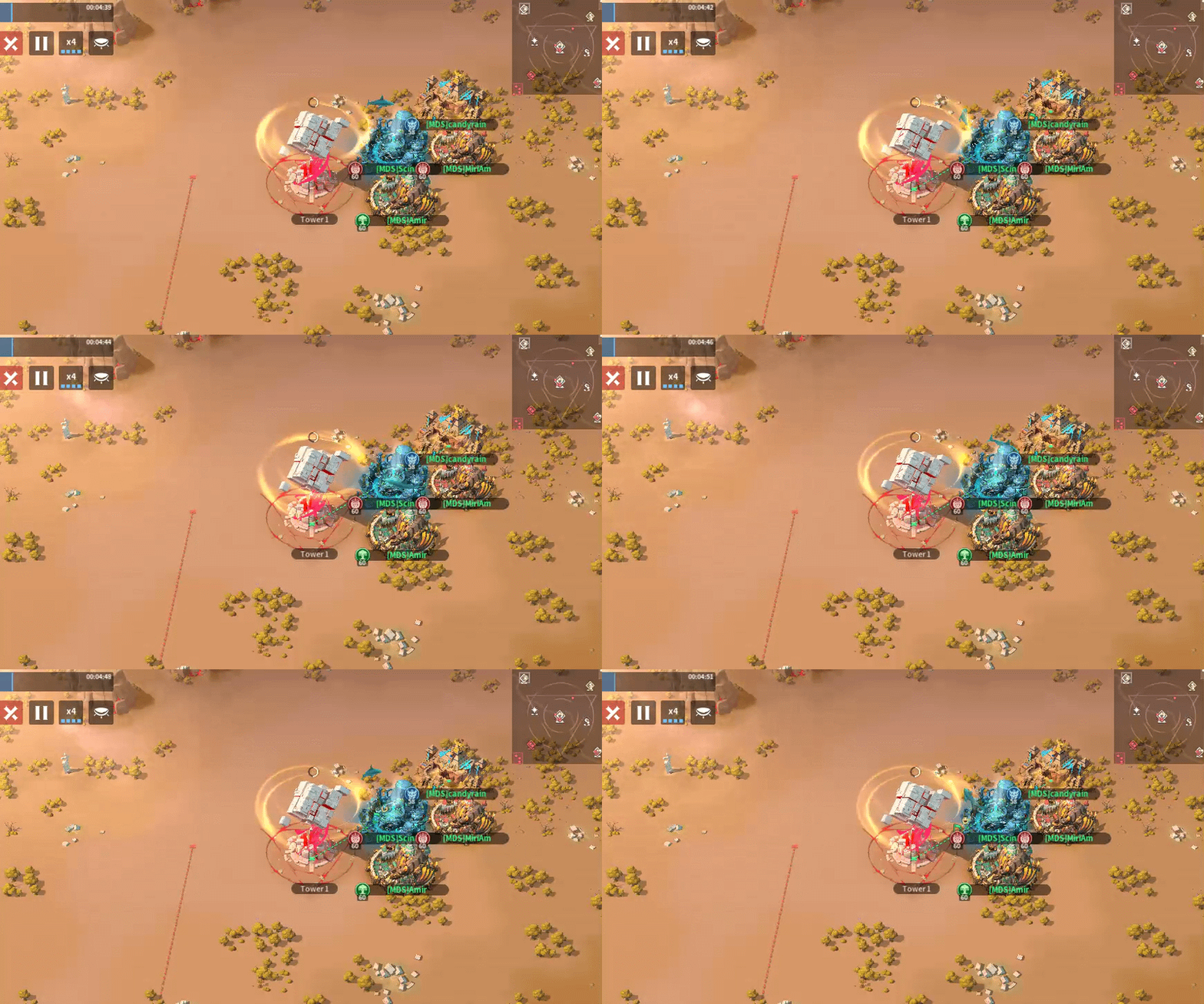
At Tower 4, all five UW players successfully completed their relocations and, despite their unfavorable spawn positions, ended up closer to the objective than MDS’s forces. This allowed UW to establish control early and capture the tower just six minutes into the match. MDS attempted to interrupt the siege with rallies but was unsuccessful, giving UW an important early source of points. Both alliances continued exchanging rallies and trading blows, but the momentum gradually shifted as more MDS players relocated closer to the tower. Rather than aggressively intercepting those incoming relocations while they were still vulnerable, UW allowed MDS to improve its position and build a stronger formation around the objective. Once MDS closed the distance, they began systematically zeroing UW’s defenders one by one. UW had won the opening but failed to convert that advantage into lasting territorial control, allowing MDS to turn a successful start into a favorable mid-game fight.
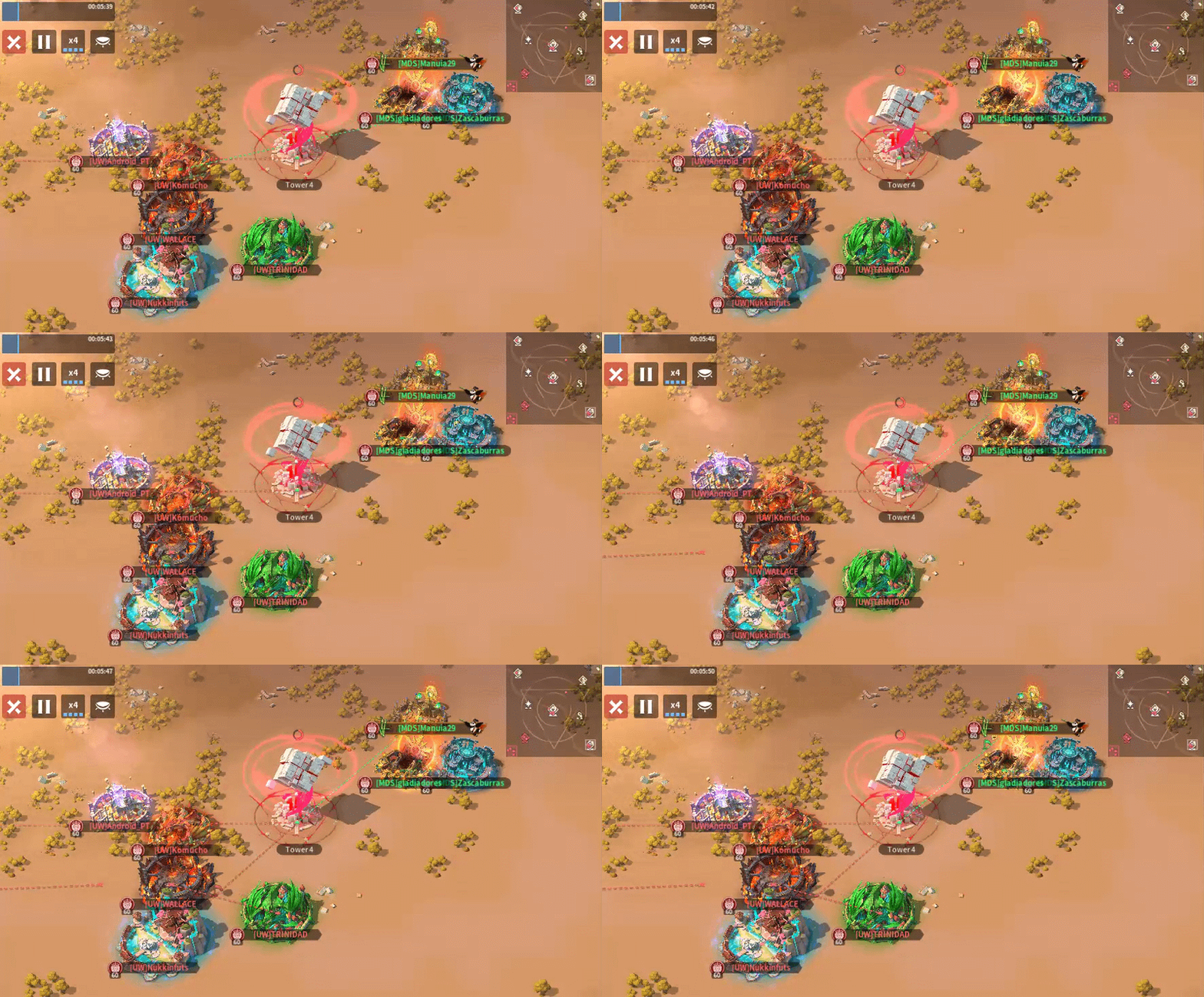
At the Central Tower, MDS steadily applied pressure through repeated rallies until they successfully zeroed two UW players. UW’s scattered positioning became a major weakness because its players were too far apart to reinforce one another efficiently with garrisons or coordinate their defenses. Despite having several minutes before the Central Tower became capturable, UW made no meaningful effort to move closer or establish a compact formation. MDS therefore surrounded the objective with little resistance and began sieging as soon as it became available, capturing the tower at the 13-minute mark. This was one of UW’s clearest strategic failures because the matchup started with equal manpower, yet MDS was effectively allowed to transform a positional advantage into uncontested control.
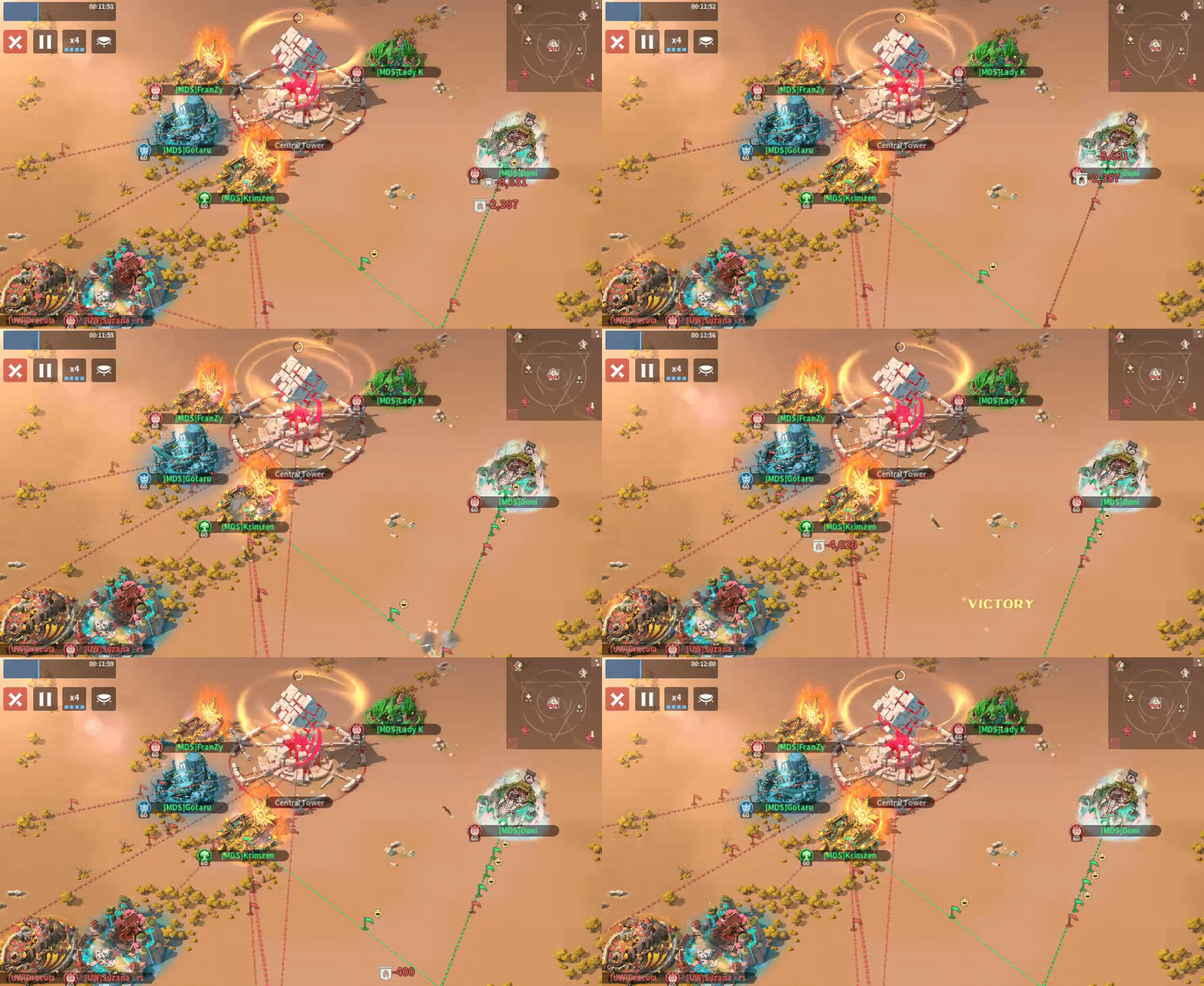
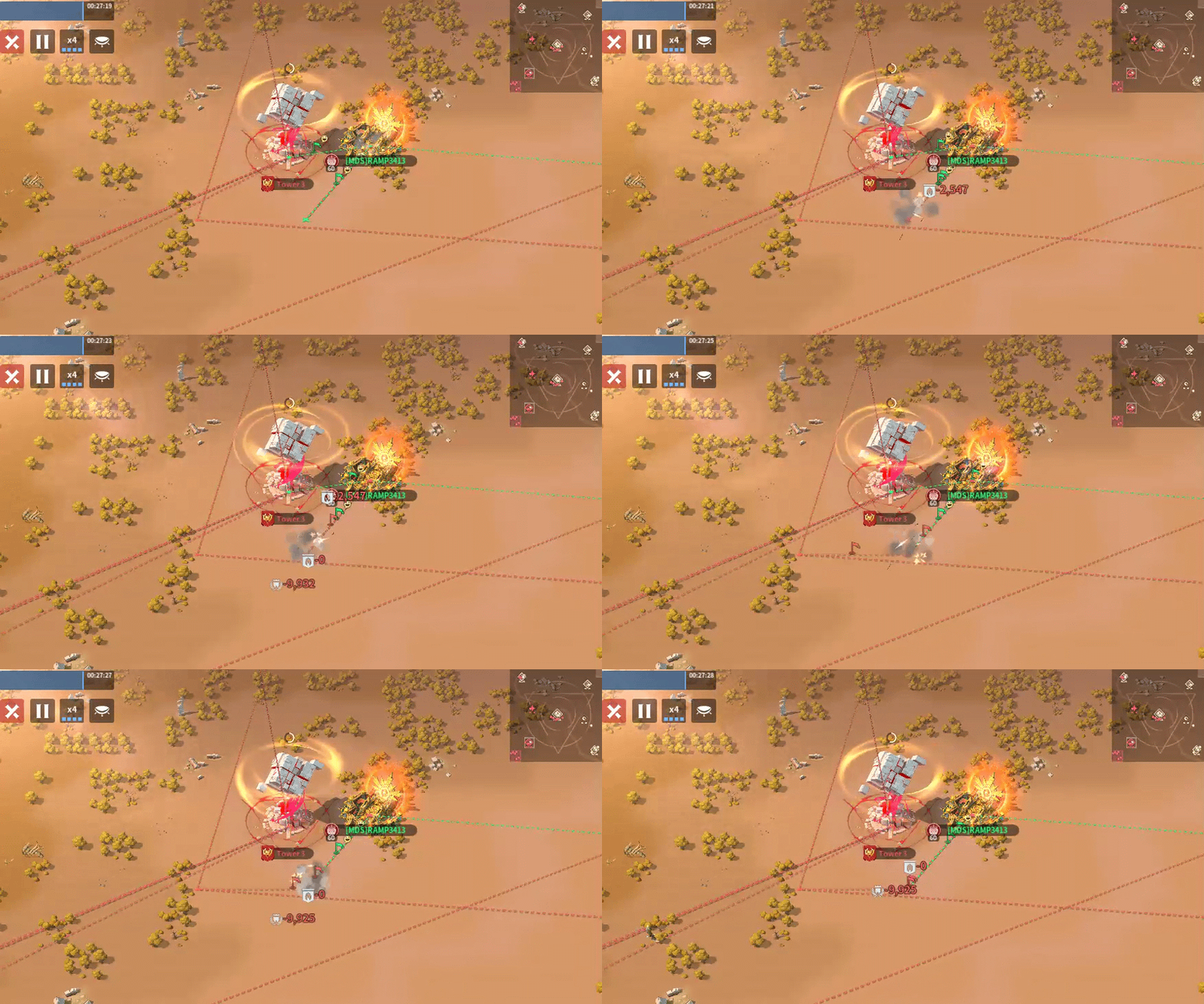
By the 26-minute mark, MDS had already accumulated a 13,000-point lead and began looking to extend its advantage by targeting UW’s home tower. MDS teleported one player into the area, where two weaker UW defenders were stationed. The invader quickly zeroed one defender and forced the other to activate a shield, effectively neutralizing both guards and leaving the tower exposed. MDS subsequently captured UW’s home tower at the 27-minute mark, taking control of all five objectives. The invasion also illustrated the difference in individual effectiveness between the alliances, as a single MDS player was able to neutralize both defenders before reinforcements could stabilize the situation. With UW already behind on points and now losing its final protected objective, the match was effectively decided.
💠Summary
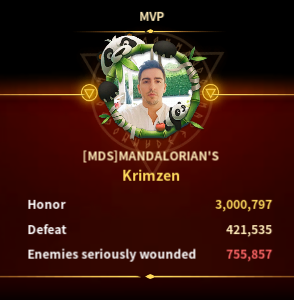
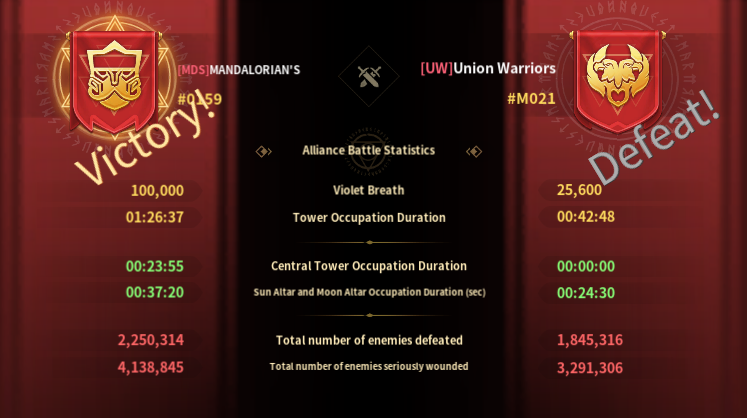
MDS cruised to a dominant 100,000–25,600 victory over UW, with Krimzen earning MVP honors. The final score was far more lopsided than the matchup appeared on paper because UW repeatedly failed to convert reasonable opportunities into lasting control. At Tower 1, UW continued committing players after the objective had already been lost instead of reinforcing the Central Tower. At Tower 4, UW actually secured the stronger opening and captured the objective first, but failed to punish MDS’s incoming relocations and gradually surrendered the positional advantage. The Central Tower was an even clearer missed opportunity, as both teams began with equal numbers but UW’s scattered formation and lack of initiative allowed MDS to establish uncontested control. MDS was not perfect, particularly with some inefficient opening positioning and an arguably excessive home defense, but it consistently adapted better once fights developed. The decisive difference was therefore not simply firepower. MDS recognized opportunities, moved players where they were most useful, and converted local advantages into sustained objective control, while UW repeatedly allowed temporary advantages to disappear. That execution gap ultimately turned what should have been a relatively competitive matchup into a complete rout.
What matchup do you want to see next? Let me know in the comments below!
💠Related Links
Version 3.0.0
Infinity Kingdom Official Website
PC
iOS
Android
#infinitykingdom #mds #uw
Translate

Popular Posts
1

Hi there any one can help
192 discussions 216 views
2

[Beginner's Guide] Turn Gnome Battles into Reusable Immortal EXP | PT-BR & ES
83 discussions 126 views
3
Follow me for more code
138 discussions 194 views